SECTION 02
Production
01 QUARRY
The block leaves the massif
Extraction happens in blocks. The massif is cut along the bed, the block is lifted out, marked and sent to the yard. Every month the quarry gives up more than thirteen hundred cubic metres.
FIGURES
-
1,300+ m³
blocks per month -
2004
working with stone -
2015
Petro Stone established
BLOCK
WHAT THAT GIVES
-
Our own face
Extraction runs on our own quarry, with nobody standing between the massif and production.
-
Selected at the face
Raw material selection starts on site: colour and structure are judged before the first cut.
-
One address
Quarry and production sit side by side, so a block does not cross the country to reach the saw.
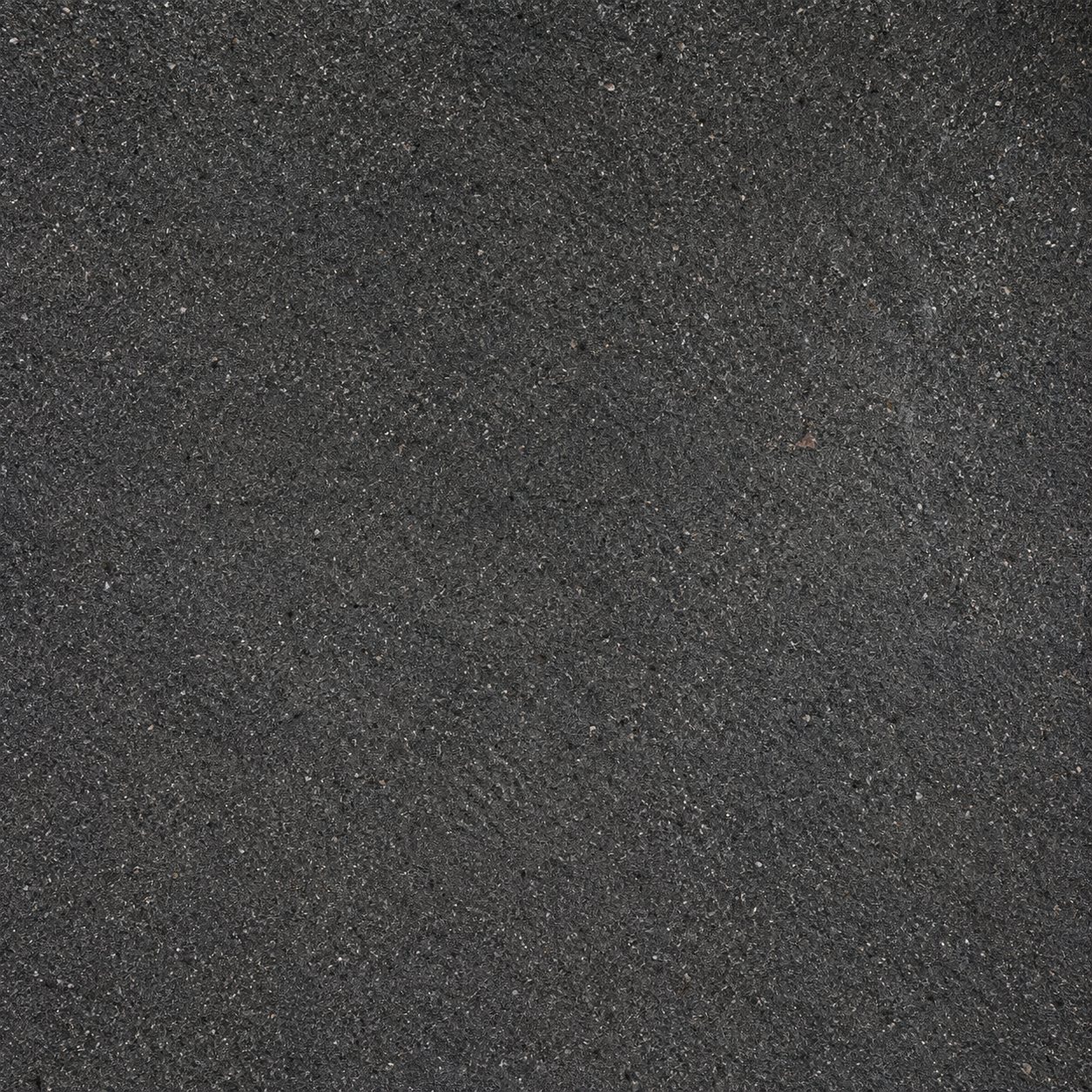
THE BLOCK GOES UNDER THE BLADE
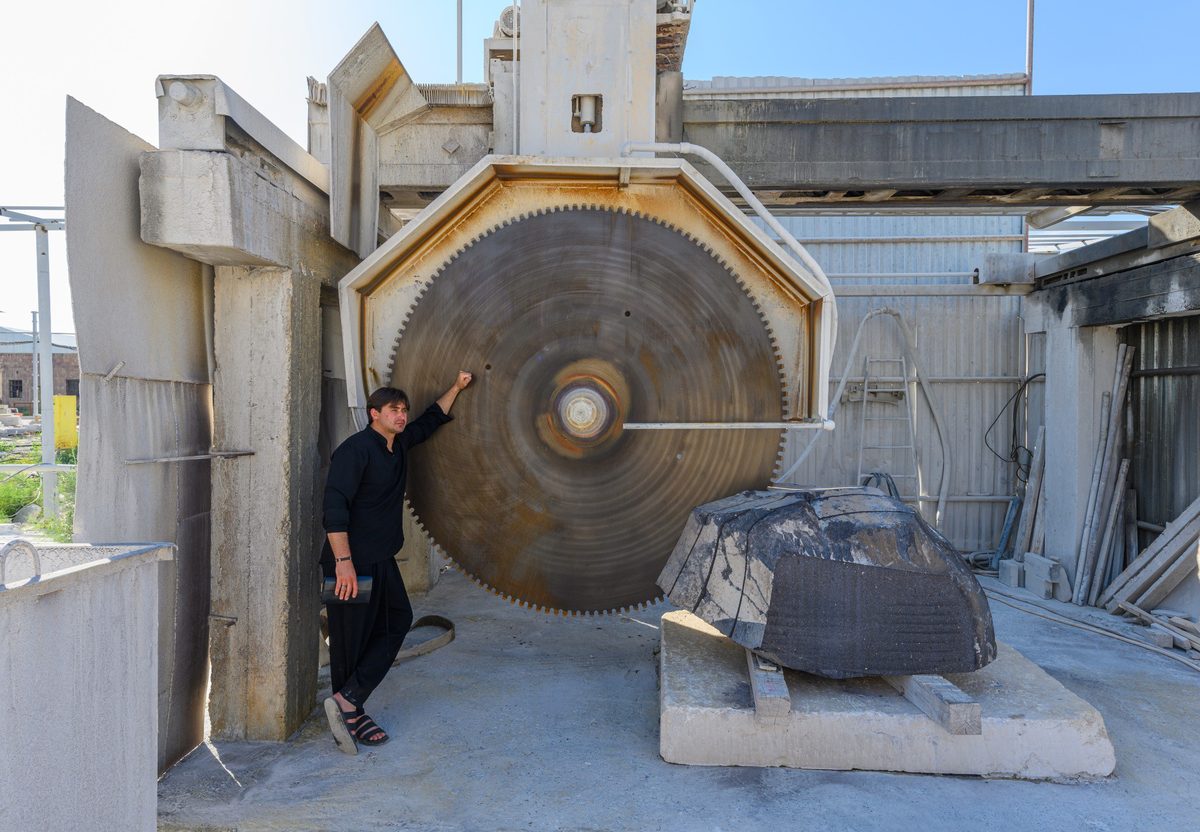
02 PRODUCTION
The block is opened
A MAN AT THE BLADE — FOR SCALE
The block arrives whole. Then it is opened: a disc saw passes through the stone and turns mass into plane. Everything that follows is born here.
A cutting diagram, not a photograph of a product.
BLOCK
Slab. A plane taken off the block whole.
Tile. The same plane, cut to size.
4,500+ m²
cladding and cut-to-size, per month1,900+ linear m
custom elements, per month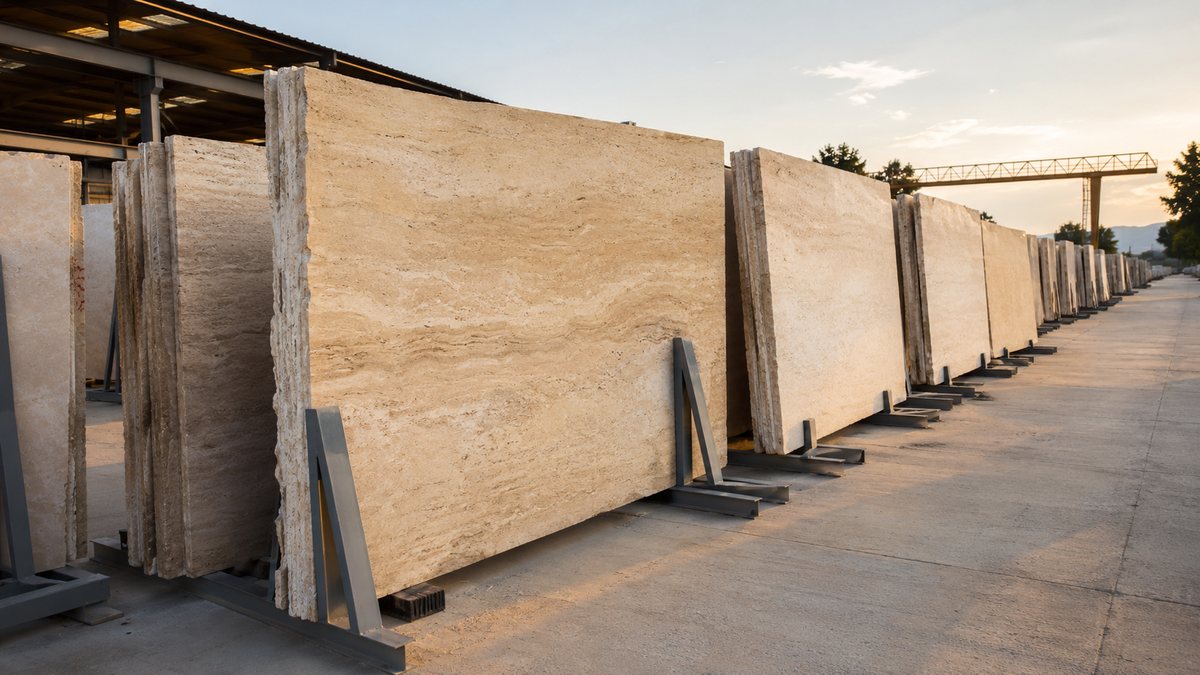
FOUR STEPS
-
Block intake
The block is received, inspected and a cutting plan is set for the specific order.
-
Sawing
Disc sawing in the yard. The block gives up slabs and blanks of the required thickness.
-
Cutting and calibration
The blank is brought to format: size, thickness, edge.
-
Surface finish
The finish is set at this stage and checked against the reference sample.
FILMED AT THE FACTORY
This is what it looks like live
A bridge saw cuts a travertine slab. Water cools the blade and settles the dust - the edge comes out clean, without chipping.
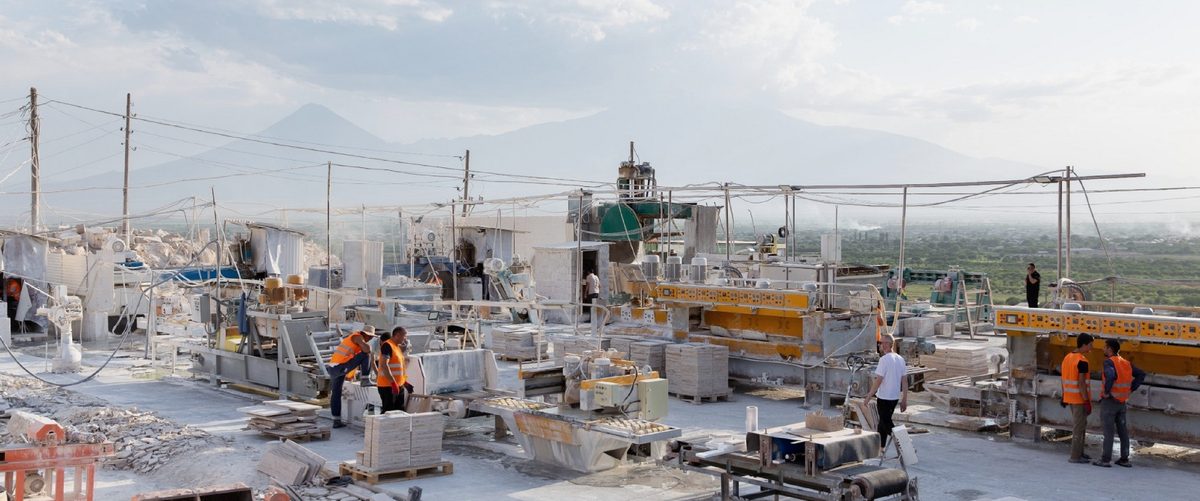
What leaves the yard
FROM BLOCK.
TO FINISHED
ELEMENT.
03 MADE TO DRAWING
Your project does not have to fit a standard size
A separate line of work: not a catalogue, but a piece made for one specific junction. You send the drawing, we deliver the finished stone element.
An element from your drawing
- Drawing You send the drawing, or a dimensioned sketch of the junction.
- Material We choose the stone for the task: travertine, tuff or basalt.
- Production Cutting and finishing follow the geometry of the drawing.
- Quality control Dimensions, thickness and finish are checked against the drawing and the reference sample.
- Finished element The element is packed and prepared for dispatch.
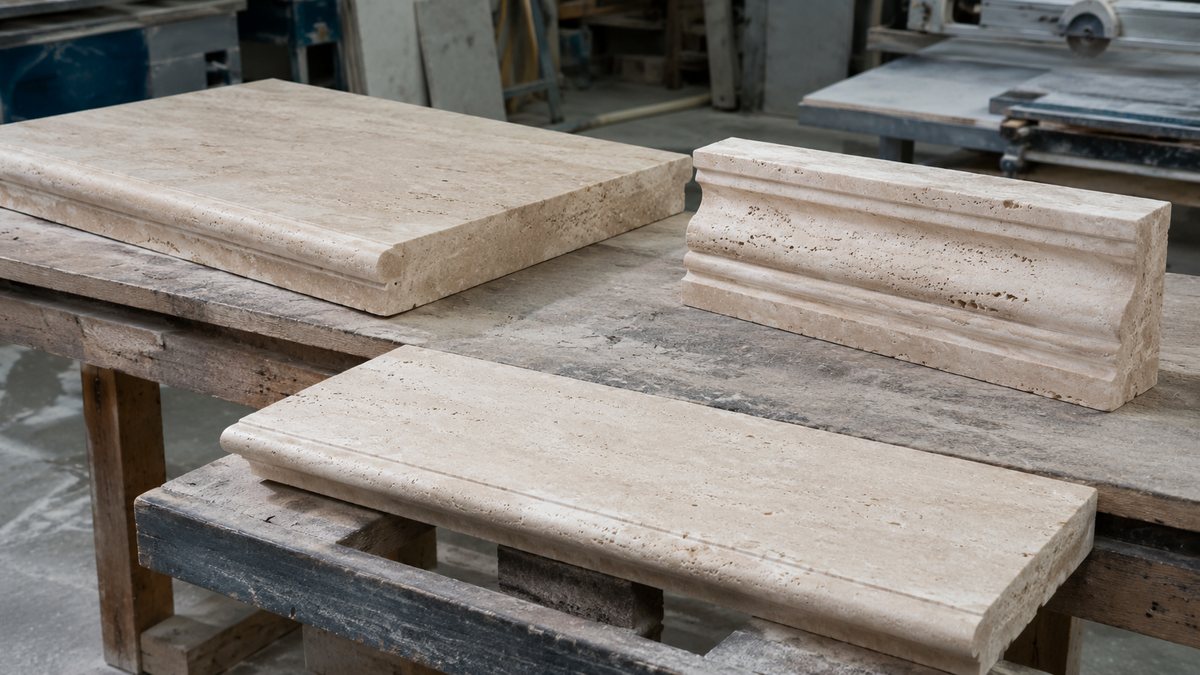
1,900+linear m custom elements per month
What we make to drawing
Manufactured from the drawings you provide.
04 QUALITY CONTROL
Natural variation.
Managed professionally.
Stone cannot be redone once it is laid. So inspection is not left to the end; it runs at every step, from the face to the closed crate.
REFERENCE SAMPLES
INSPECTION FRAME
-
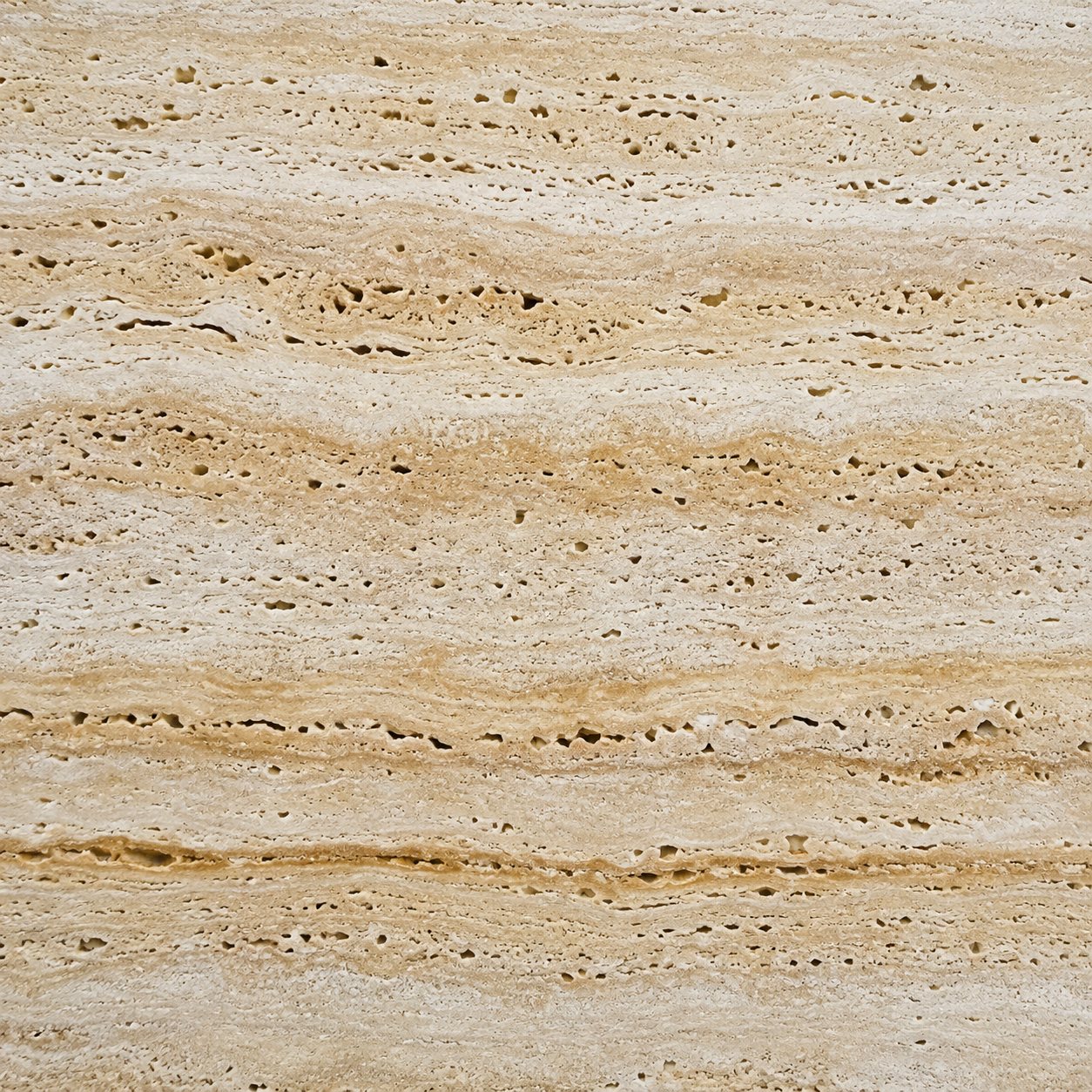 Travertine
 -
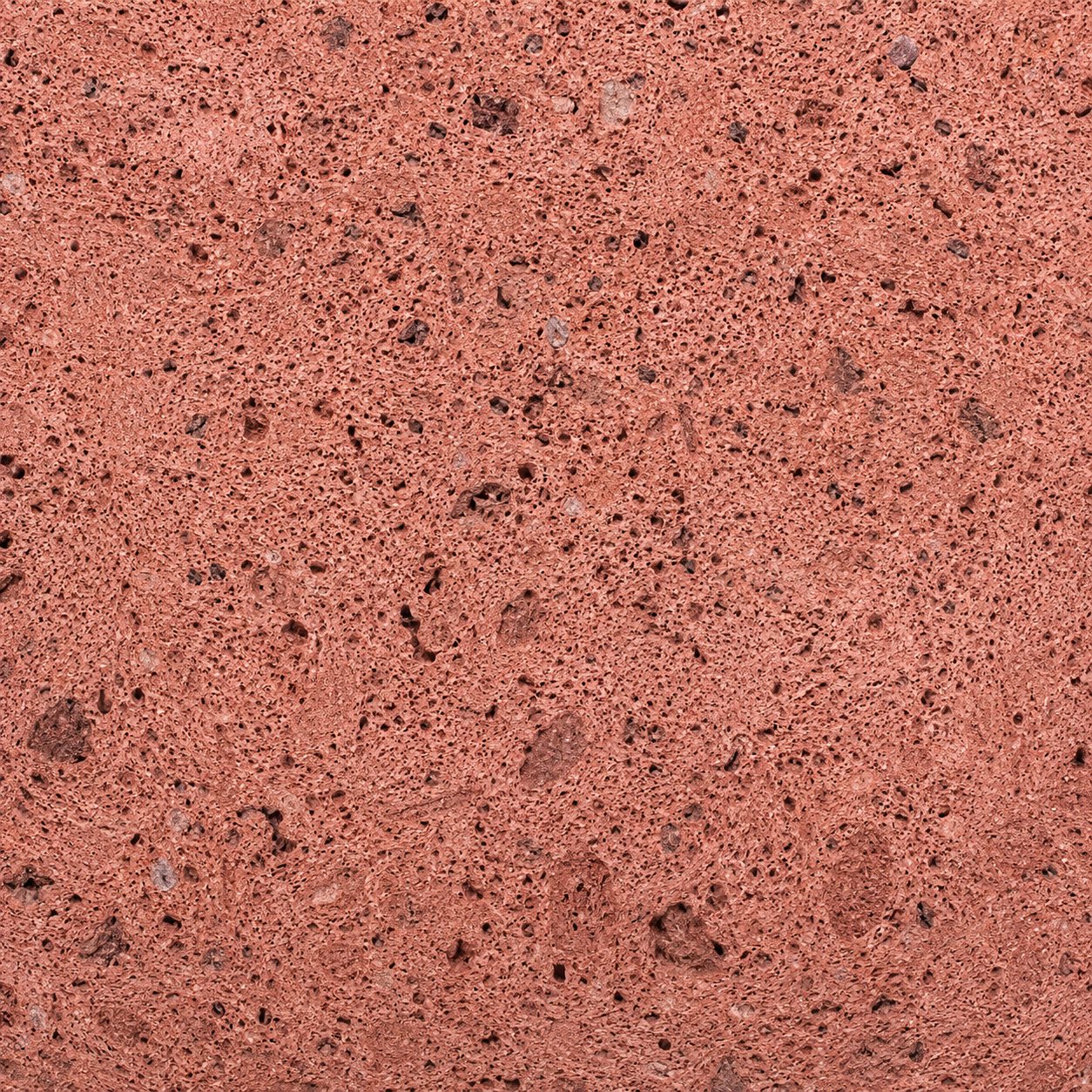 Tuff
Tuff - Basalt
- COLOUR
- STRUCTURE
- THICKNESS
- FINISH
- PACKING
Six checks before dispatch
-
Raw material selection
Material is selected before sawing, at block level.
-
Reference sample
The batch is matched against the approved sample.
-
Colour and structure
Tone and pattern are assessed across the batch.
-
Dimensions and thickness
Geometry is checked against the stated format.
-
Surface finish
The texture is checked against the specified finish.
-
Packing inspection
The last check before the crate is closed.
Six points of control, not one final sign-off.
05 PACKING AND EXPORT
Prepared for
international delivery.
Between the yard and the site lies the road. The job of packing is simple: the stone must arrive exactly as it left inspection.
CRATING
PETRO STONE ARMENIA ARMENIAN NATURAL STONE ORIGIN: ARMENIA
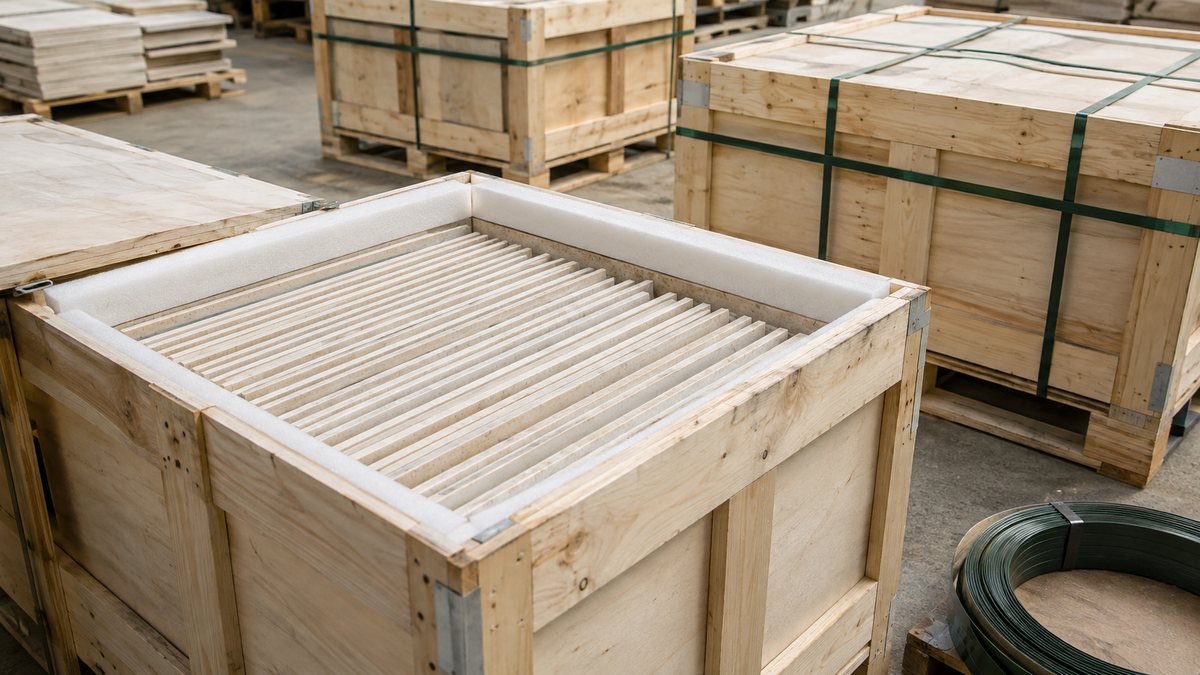
PACKING
-
Wooden crates
Rigid crating for the long haul.
-
Pallets
Built for forklift handling and stacking.
-
Protective packaging
Surfaces and edges protected inside the crate.
-
Labelling
Every package is marked and identifiable on unloading.
LOGISTICS
-
Packing lists
An itemised list of packages and contents per shipment.
-
Loading
Truck or container loading on site.
-
Export coordination
Coordination of the export shipment.
DIRECTIONS
Stone travels a long way
ARMENIA
- EUROPE
- CIS
- CAUCASUS
- ASIA-PACIFIC
Generalised shipping directions, not a list of countries served.
NEXT STEP
Discuss your project