

05 Production
Production in Armenia
How our travertine is quarried, cut, finished and packed for export, and where tuff and basalt come from.
01 Sources
Where the stone comes from
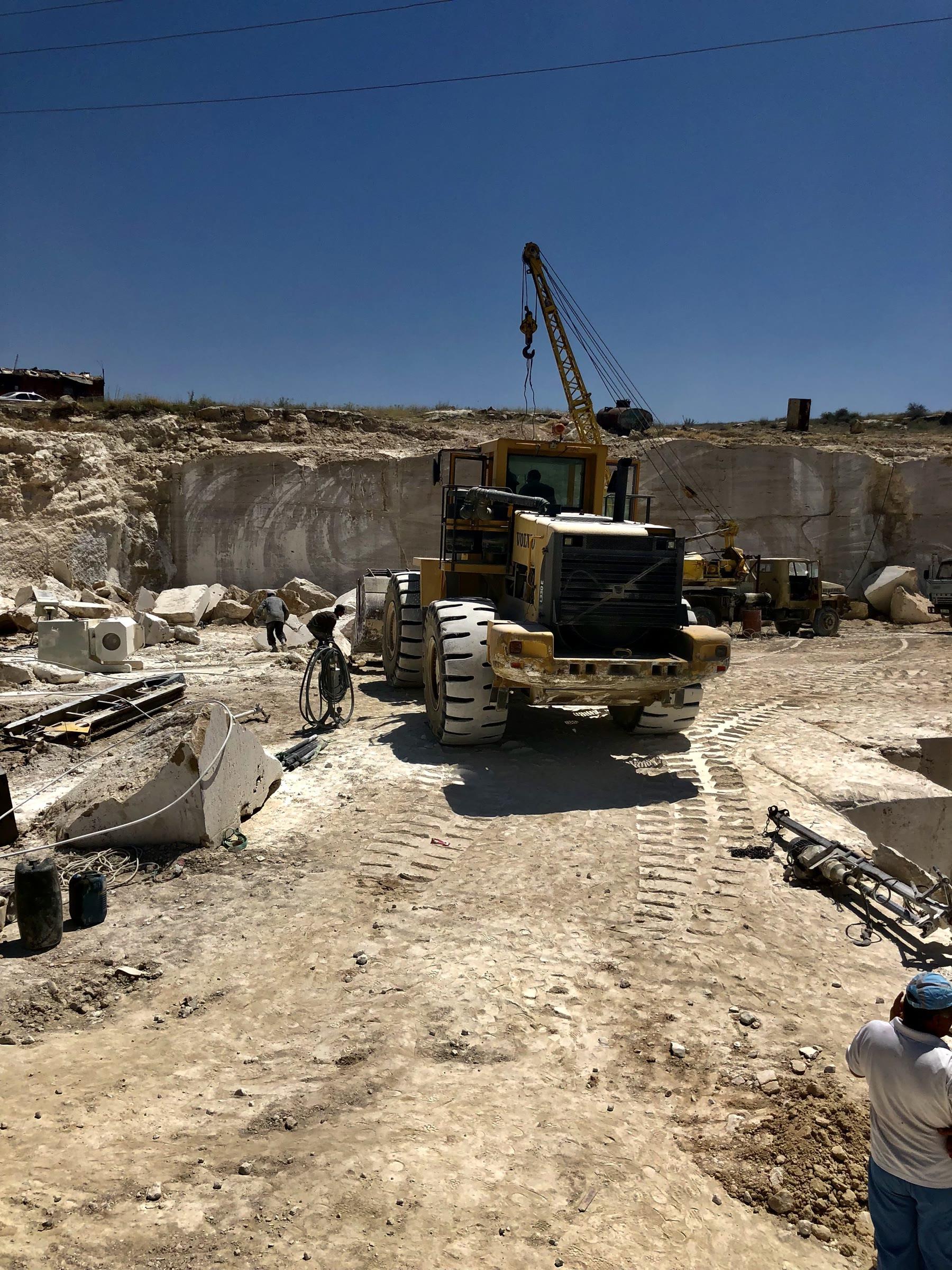
Travertine comes from our own quarry. Tuff and basalt do not: they are supplied through partner quarries in Armenia. Name the stone in every enquiry, because dark stones in particular are easy to confuse.
- 01
Travertine
Own quarryView TravertineQuarried at the Ararat deposit in Armenia.
- Available
- Blocks · Slabs · Tiles · Cut-to-size · Pavers · Steps · Architectural elements
- Maximum block size
- 300 × 150 × 150 cm
- 02
Tuff
SuppliedView TuffSupplied through partner quarries in Armenia.
- On request
- Slabs · Tiles · Cut-to-size · Architectural elements
- Maximum block size
- 200 × 100 × 100 cm
- 03
Basalt
SuppliedView BasaltSupplied through partner quarries in Armenia.
- On request
- Slabs · Tiles · Cut-to-size · Architectural elements
- Maximum block size
- 250 × 150 × 120 cm
Other sizes on request.
The photographs and video on this page show travertine.
02 Process
From quarry to project
Eight steps, from the working face of the quarry to the delivery on site. This is the process in general: stone and orders differ, and every detail is confirmed in the quotation.
-
Step 1 of 8
Quarry
Travertine is quarried at our own quarry on the Ararat deposit in Armenia.
Blocks are cut from the working bench with chain saw and wire saw machines, then lifted and moved by crane and wheel loader.
Tuff and basalt do not come from this quarry. They are supplied through partner quarries in Armenia, and we do not present their extraction as our own.
In the pictures
- Chain saw and wire saw machines
- Wheel loader and crane
- Layered travertine bench
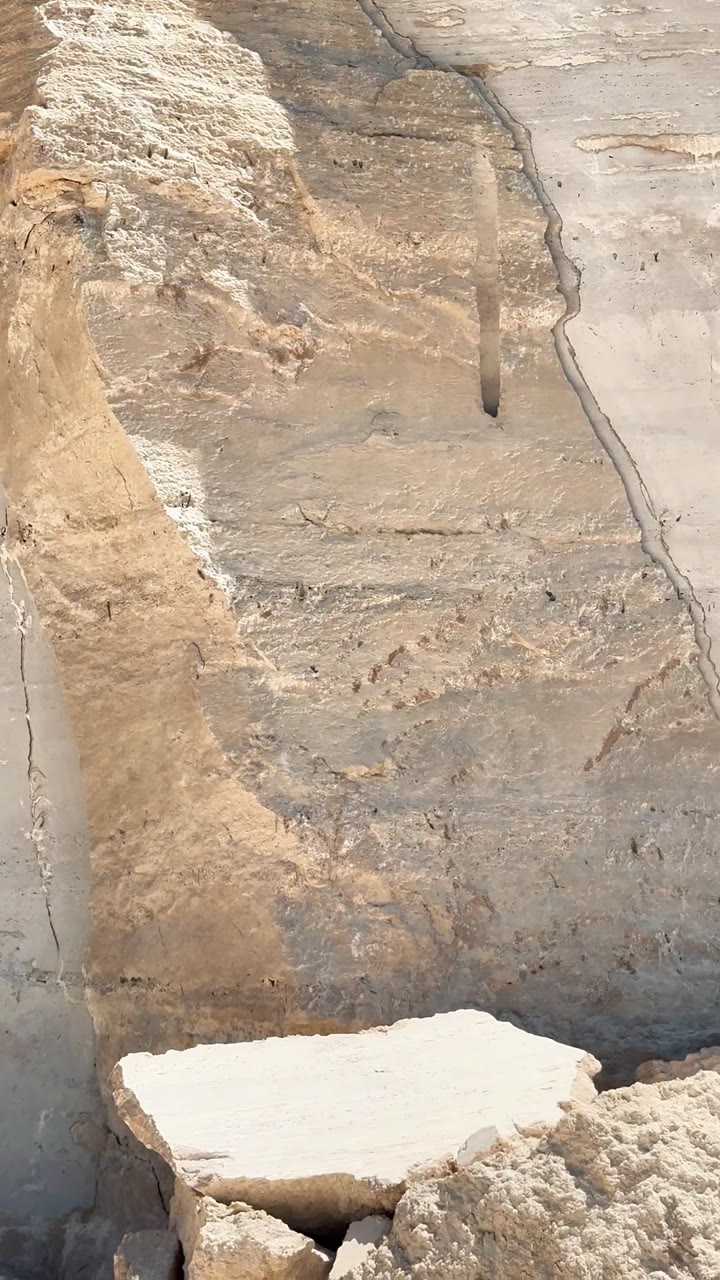
Travertine Machine cutting at the travertine quarry, then the layered rock face 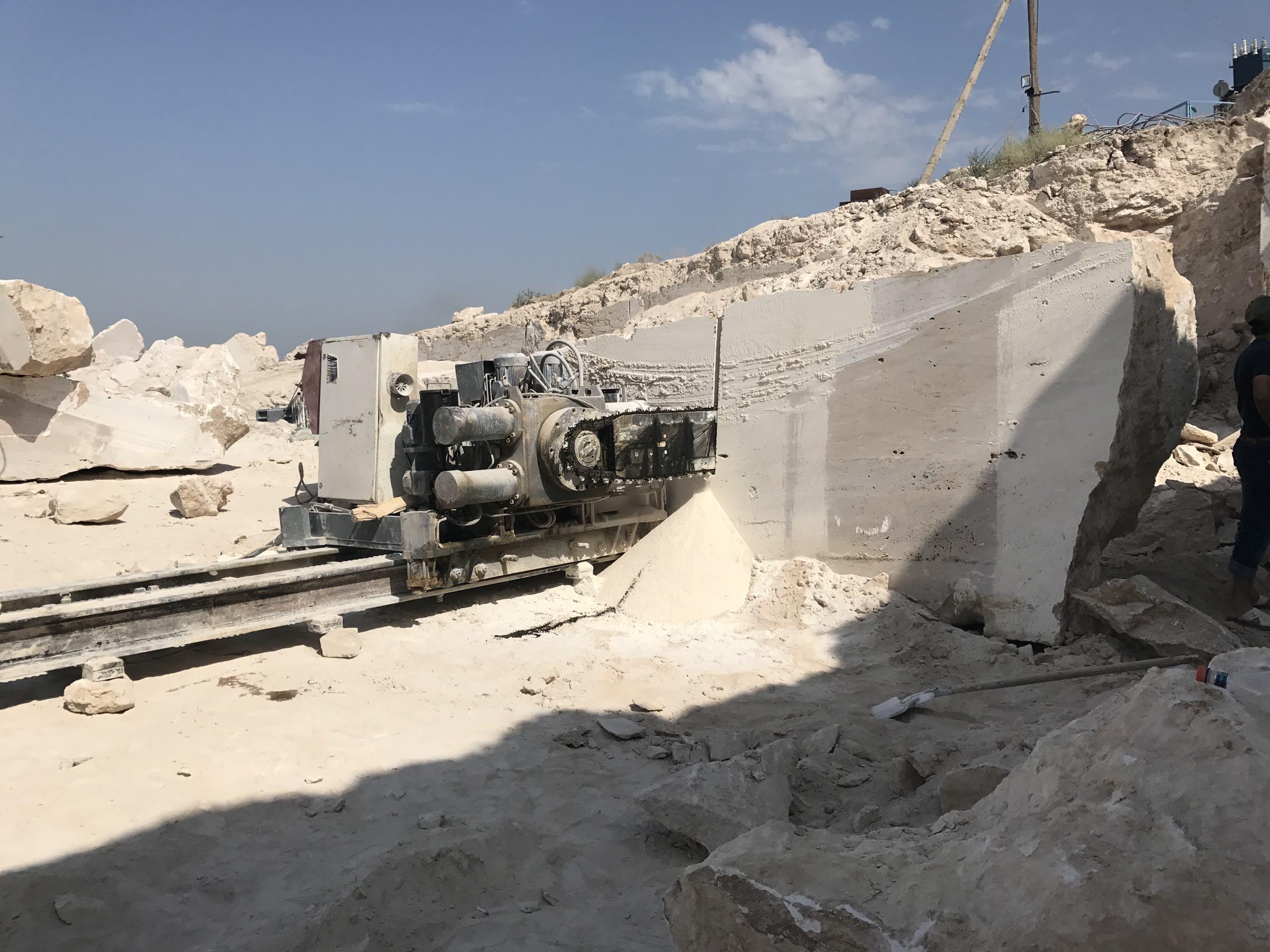
Travertine Chain saw machine cutting into a travertine bench at the quarry 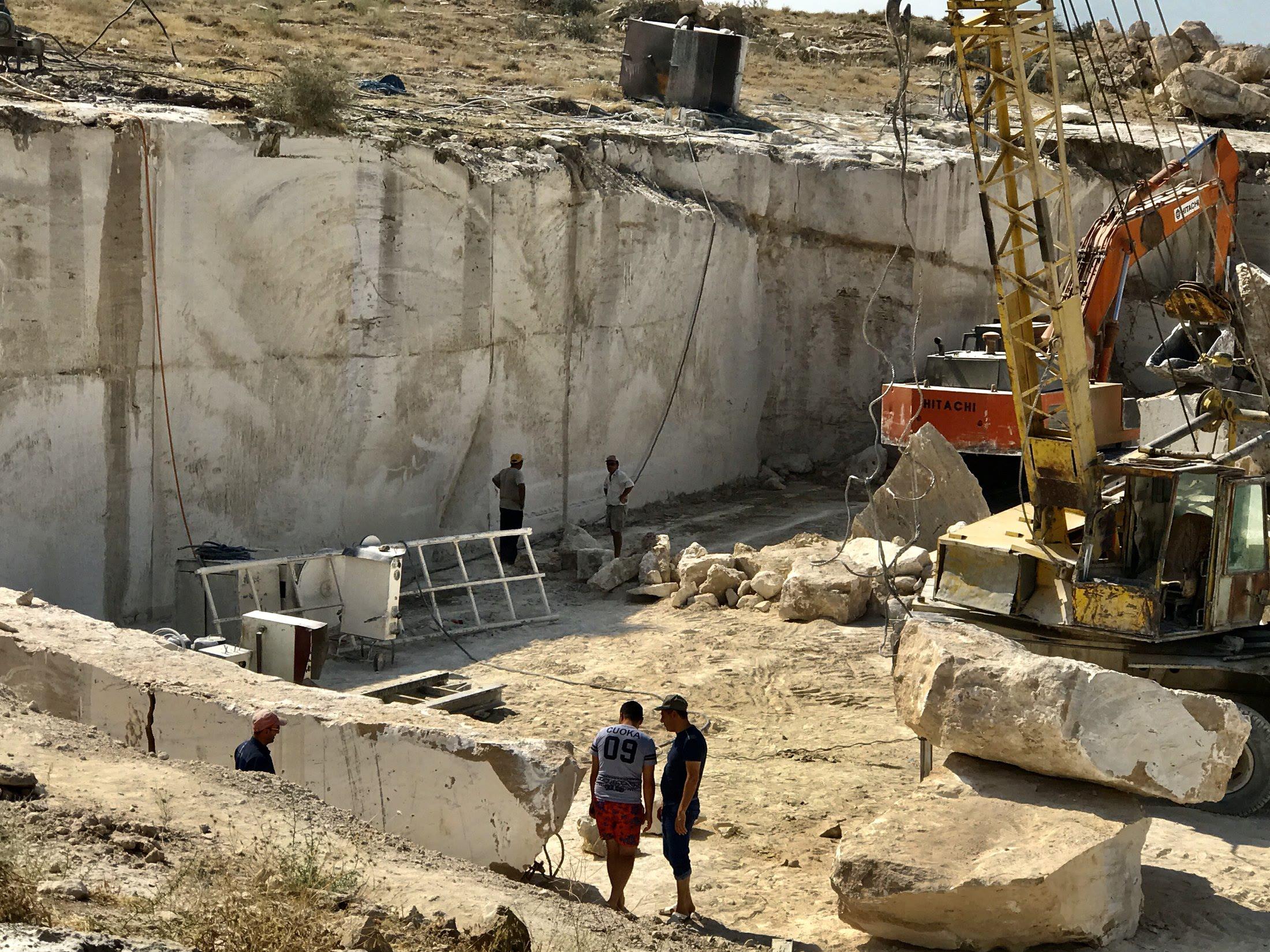
Travertine Crane and quarry workers beside freshly cut travertine blocks -
Step 2 of 8
Block selection
Colour and banding are fixed at the block, so blocks are chosen before anything is cut.
Travertine varies in tone and pattern between blocks and within a block. Squared blocks wait in the stock yard on pallets, and the block you choose decides the colour and the pattern of everything cut from it.
If your project needs continuity across a large area, say so in the enquiry. It changes which material is chosen and how it is grouped for packing.
In the pictures
- Blocks squared and stacked on pallets
- Loader handling at the quarry
- Tone and banding differ from block to block
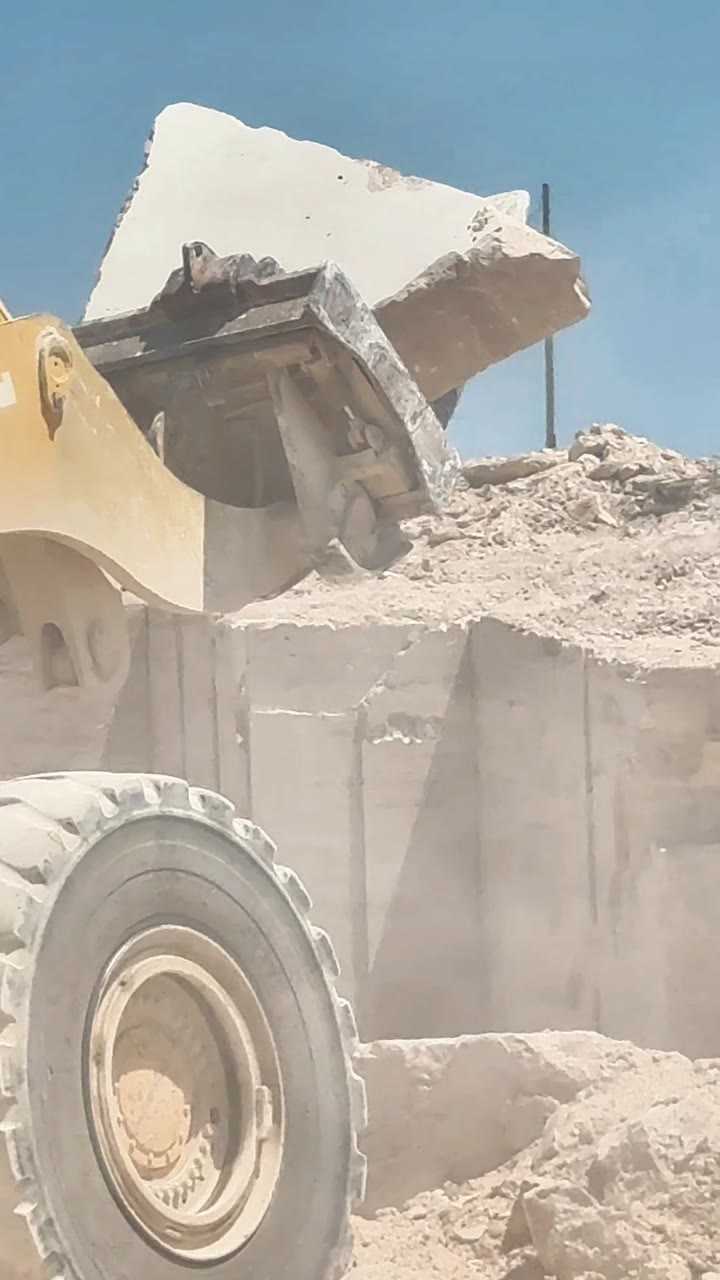
Travertine Wheel loader lifting a travertine block at the quarry 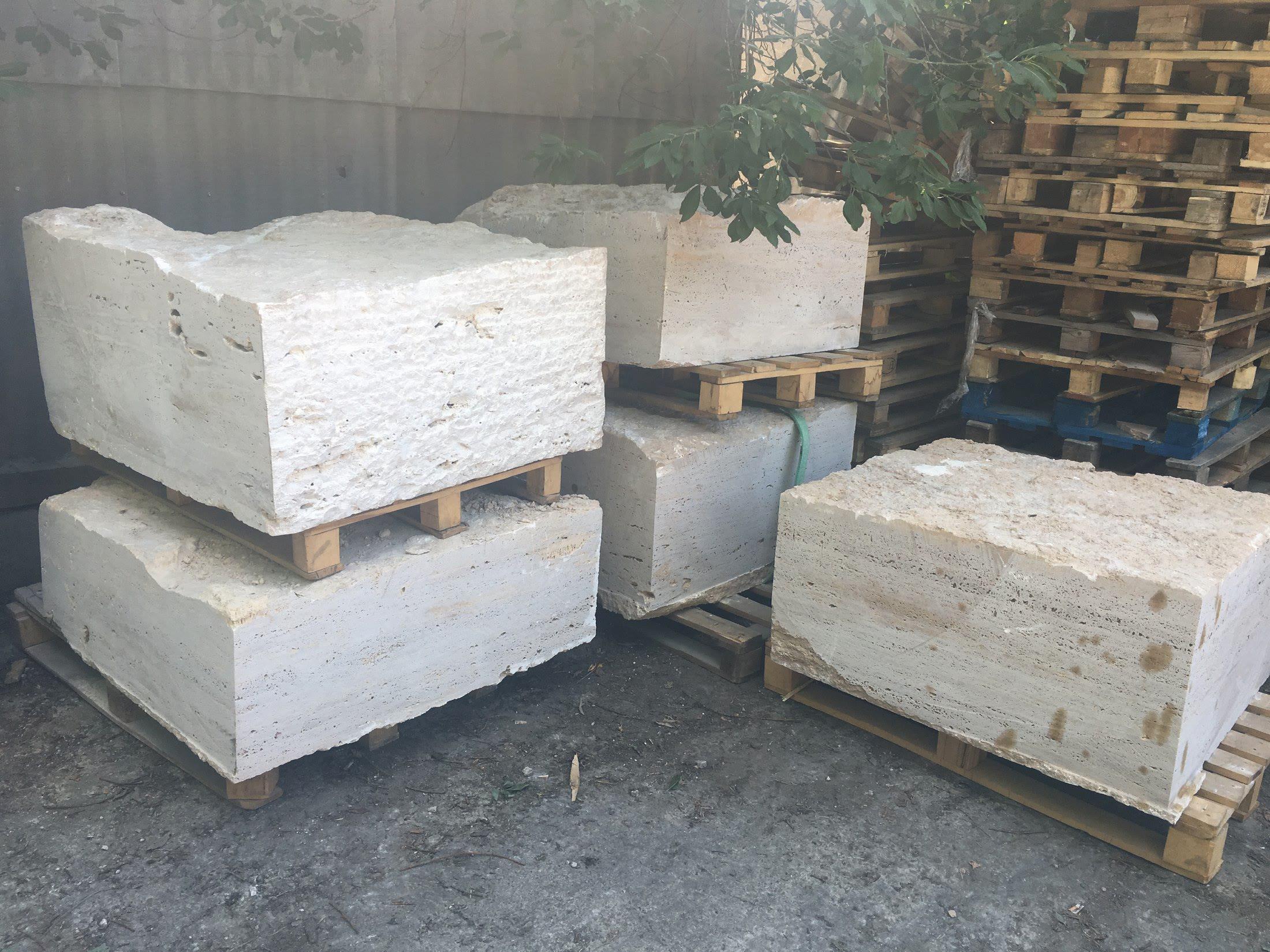
Travertine Squared travertine blocks on pallets in the stock yard 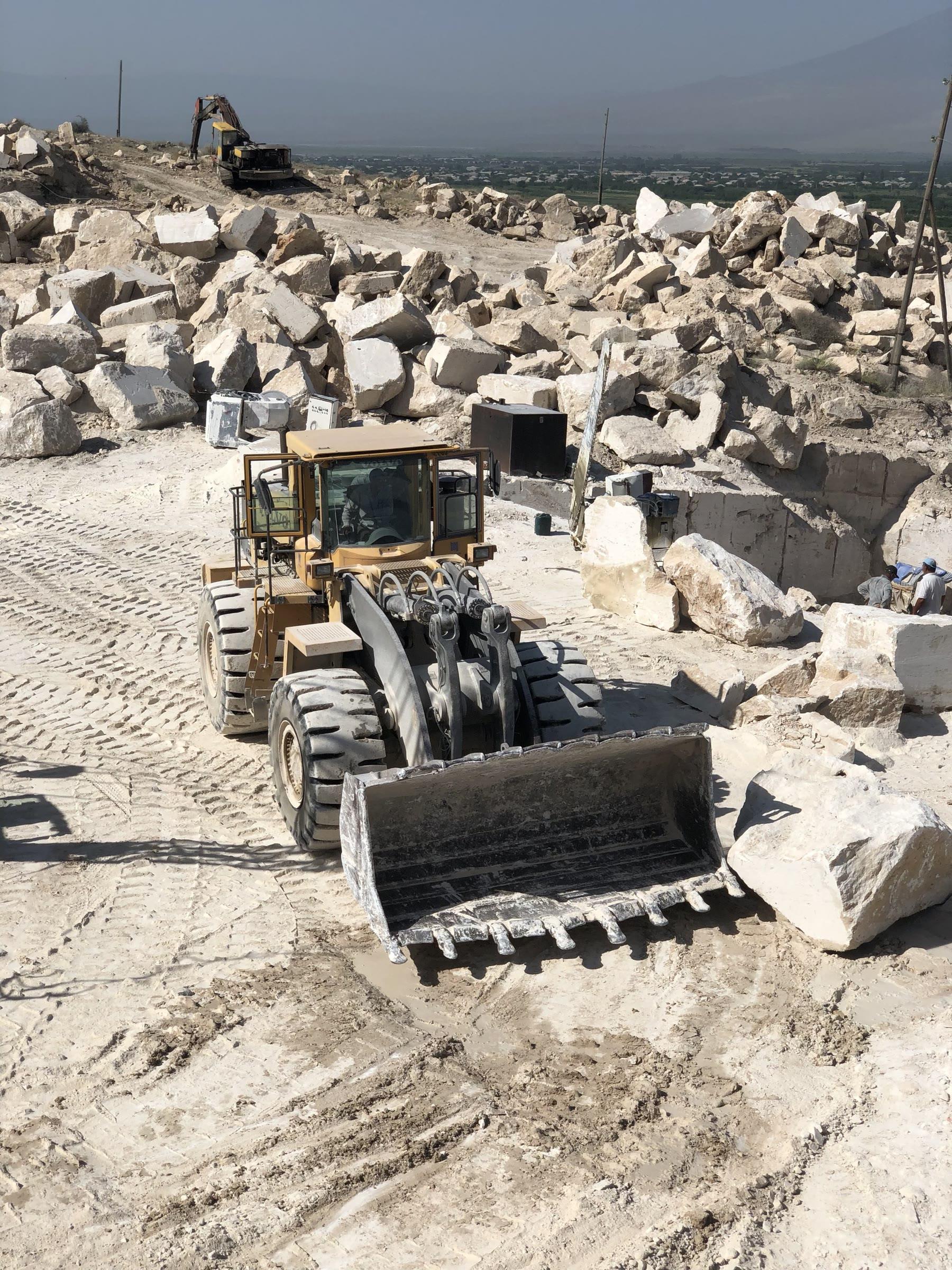
Travertine Wheel loader moving travertine blocks across the quarry yard -
Step 3 of 8
Cutting
Blocks are sawn into slabs and pieces in an open-air yard.
A large disc saw cuts blocks into slabs, and bridge saws cut travertine to size. The direction of the cut relative to the bedding gives vein cut or cross cut. It is set before sawing and cannot be changed afterwards.
In the pictures
- Large disc saw
- Bridge saws with operators
- Vein cut or cross cut, set before sawing
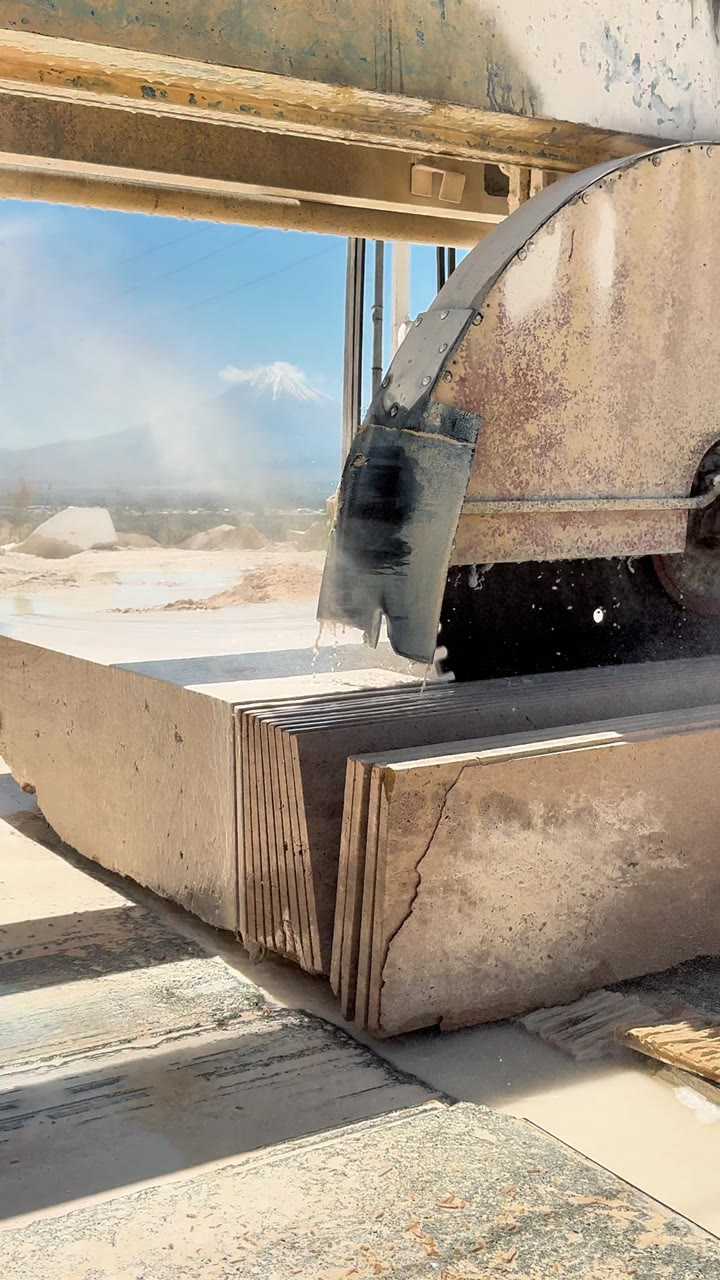
Travertine Bridge saw cutting travertine slabs 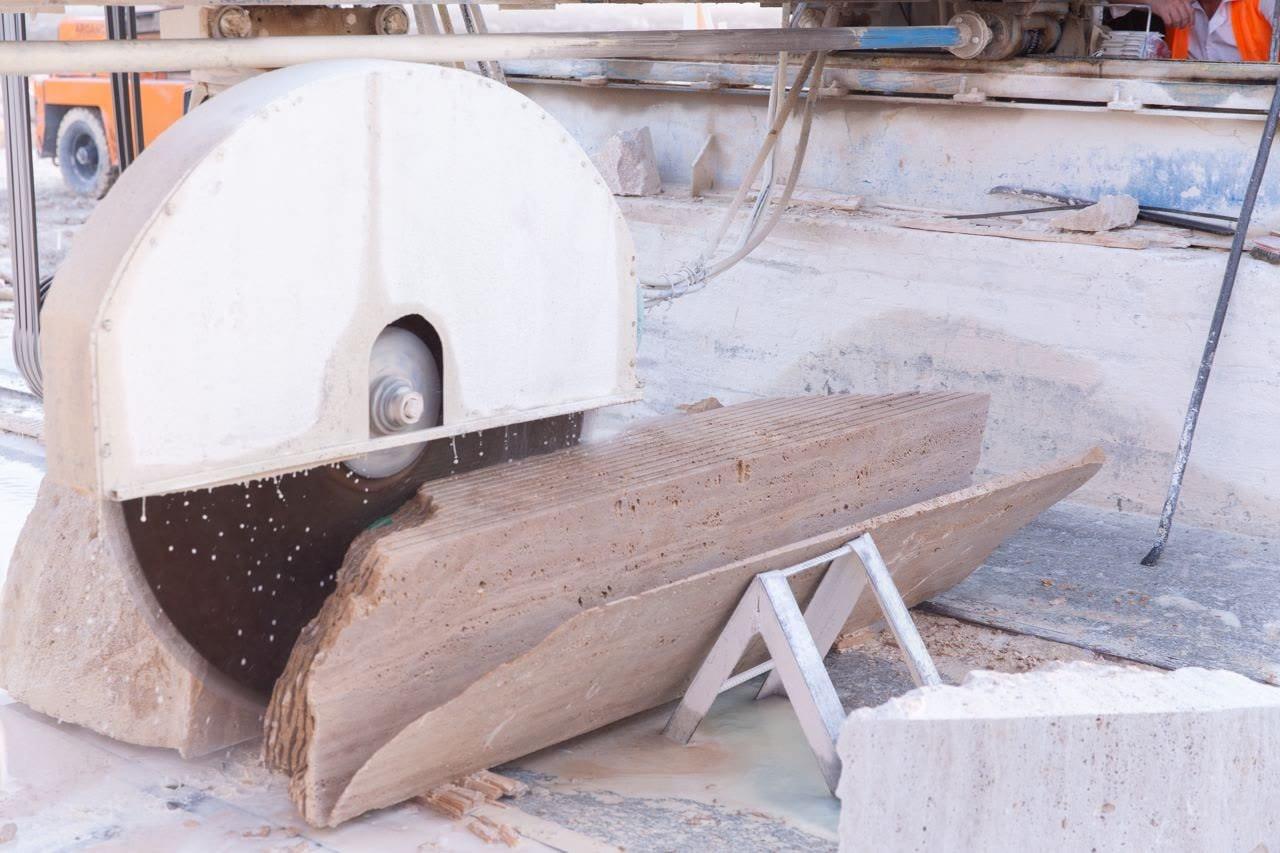
Travertine Large disc saw cutting a travertine block into slabs 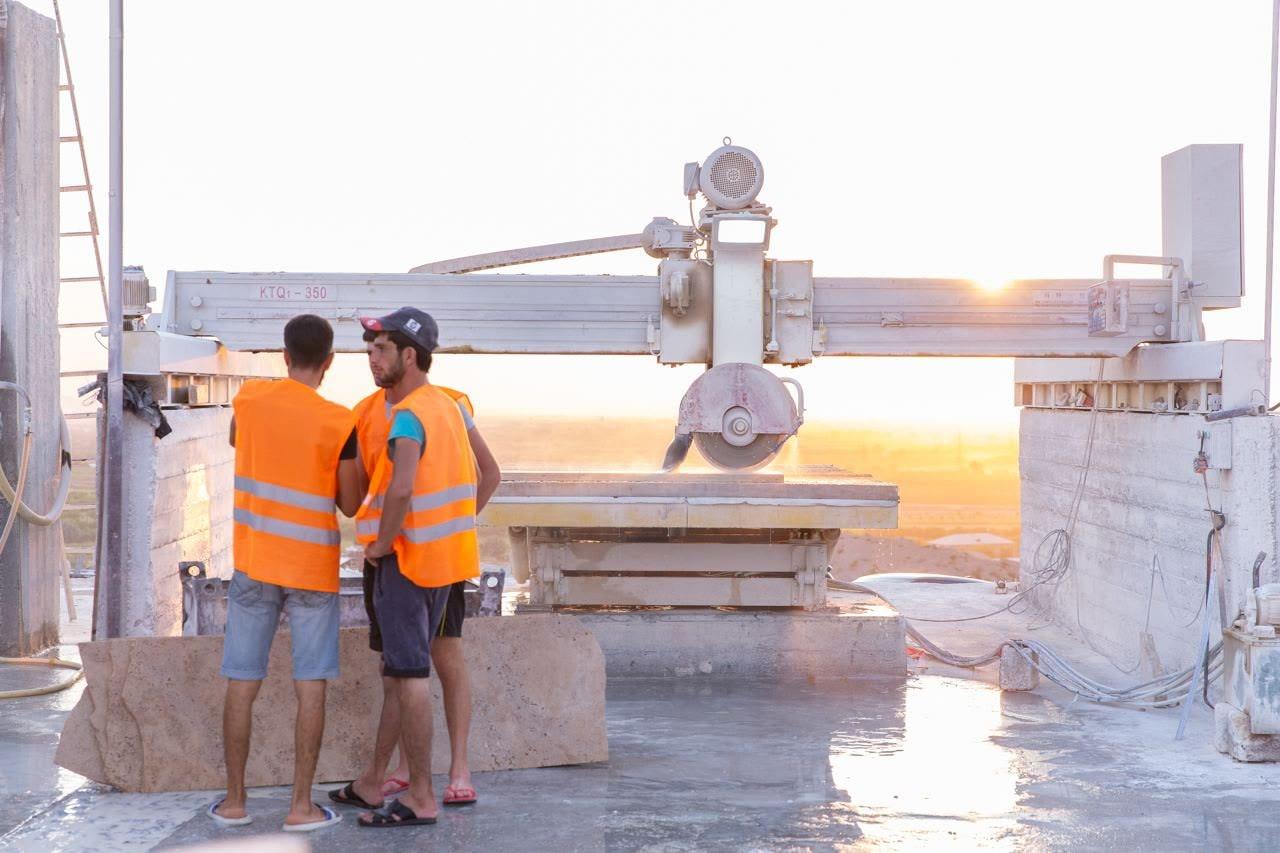
Travertine Two operators at a bridge saw at sunset -
Step 4 of 8
Finishing
Surfaces are worked on a multi-head finishing line.
Slabs and tiles pass along a finishing line to give the surface you specify. Our own finish vocabulary covers polished, honed, matt, antiqued, bush-hammered, sawn and custom surfaces. Which finishes suit which stone is confirmed for each enquiry.
In the pictures
- Multi-head finishing line
- Tiles stacked on pallets beside the line
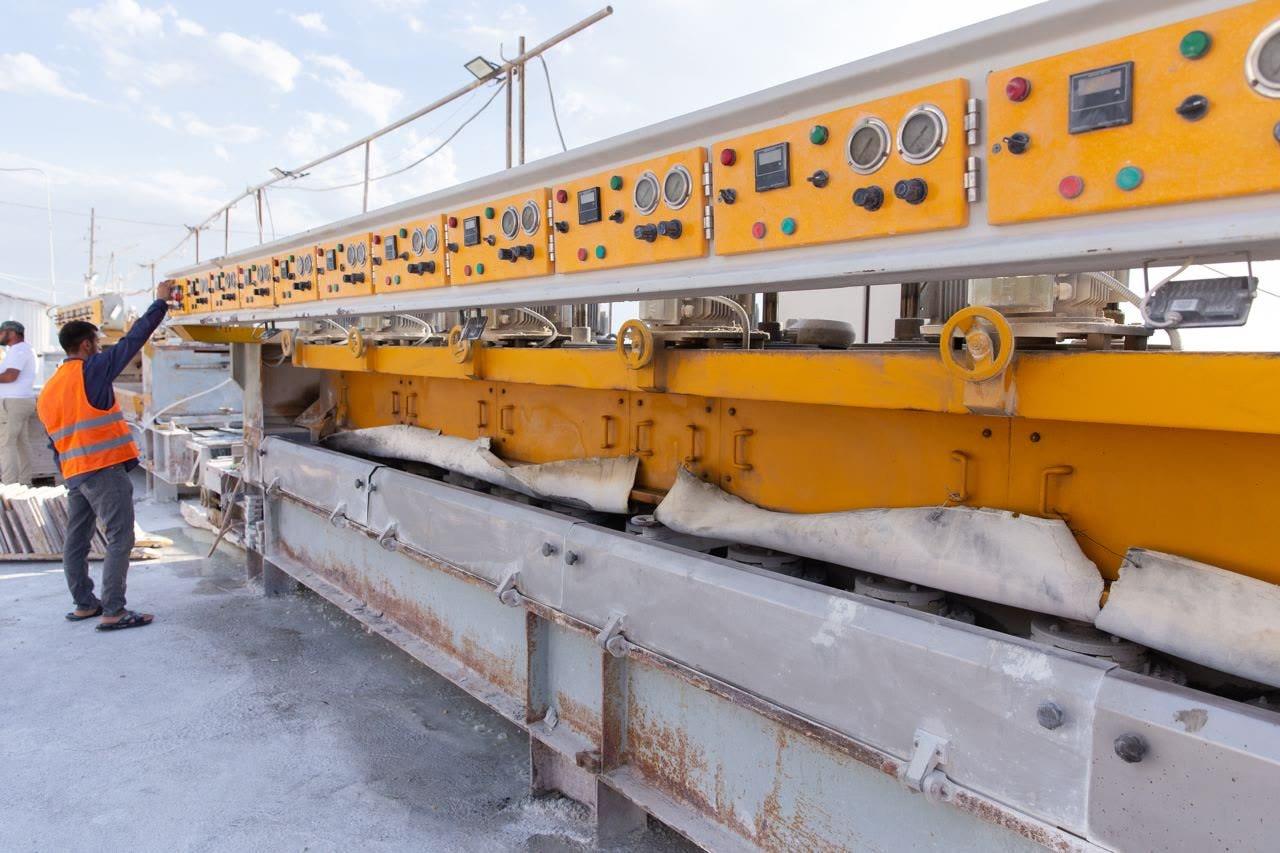
Travertine Operator at a multi-head finishing line processing travertine 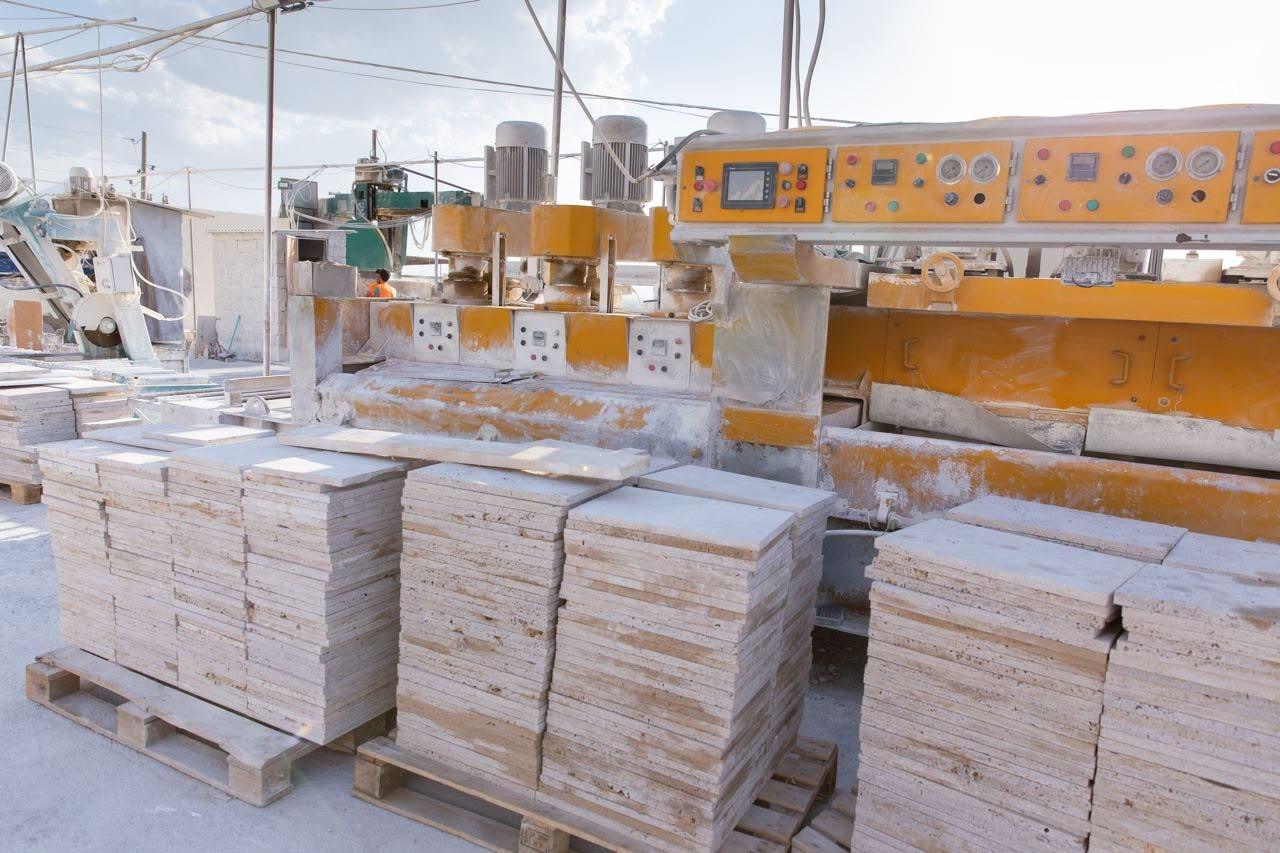
Travertine Travertine tiles stacked on pallets beside the finishing line 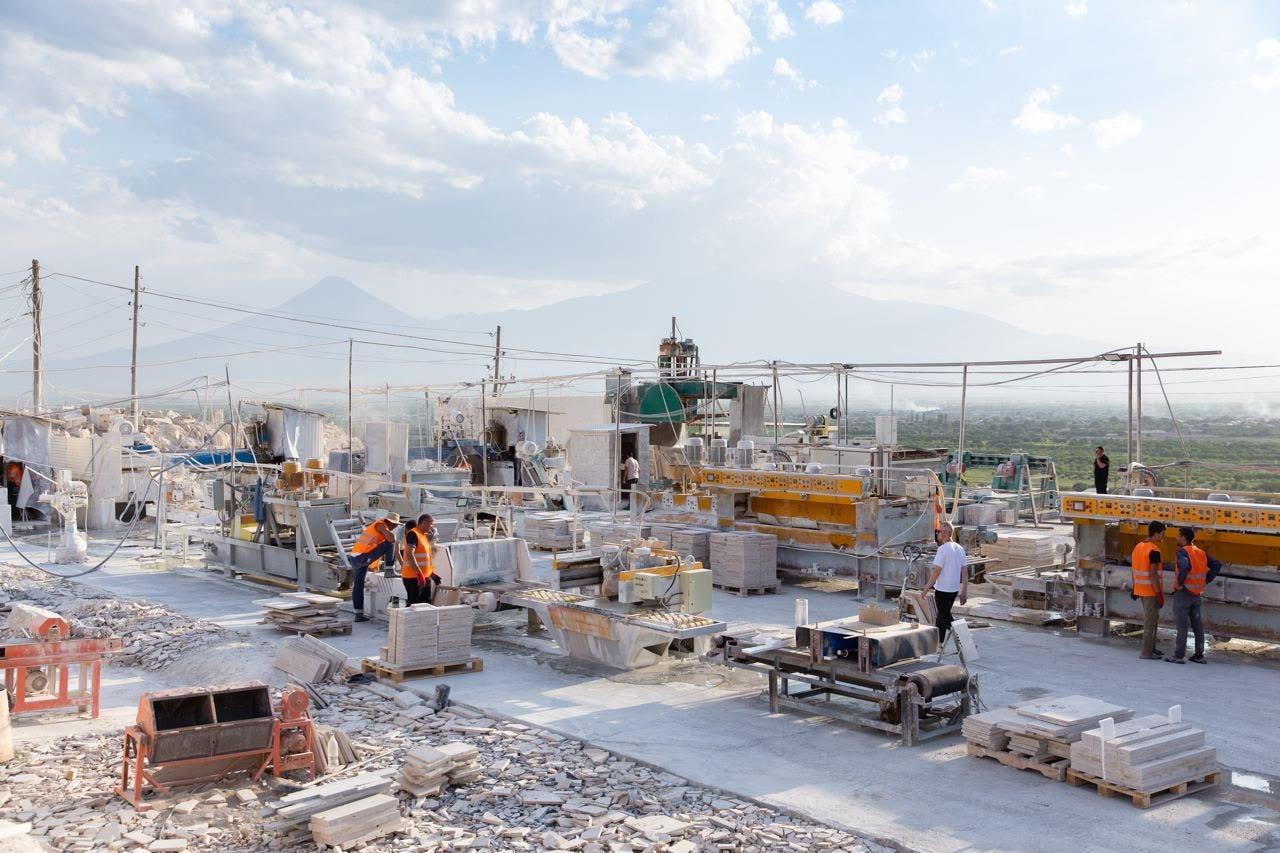
Travertine Open-air processing yard with cutting lines and stacked travertine -
Step 5 of 8
Quality control
Finished pieces are checked against the reference sample you approved.
Colour, structure, dimensions, thickness, finish, edge and packing are compared with the reference sample and with the order. Slabs are marked by hand with their dimensions before they are cut to size.
Tolerances are agreed for each order and written into the quotation. If tone or finish matters, ask for a sample before you order.
What is compared
- Colour
- Structure
- Dimensions
- Thickness
- Finish
- Edge
- Packing
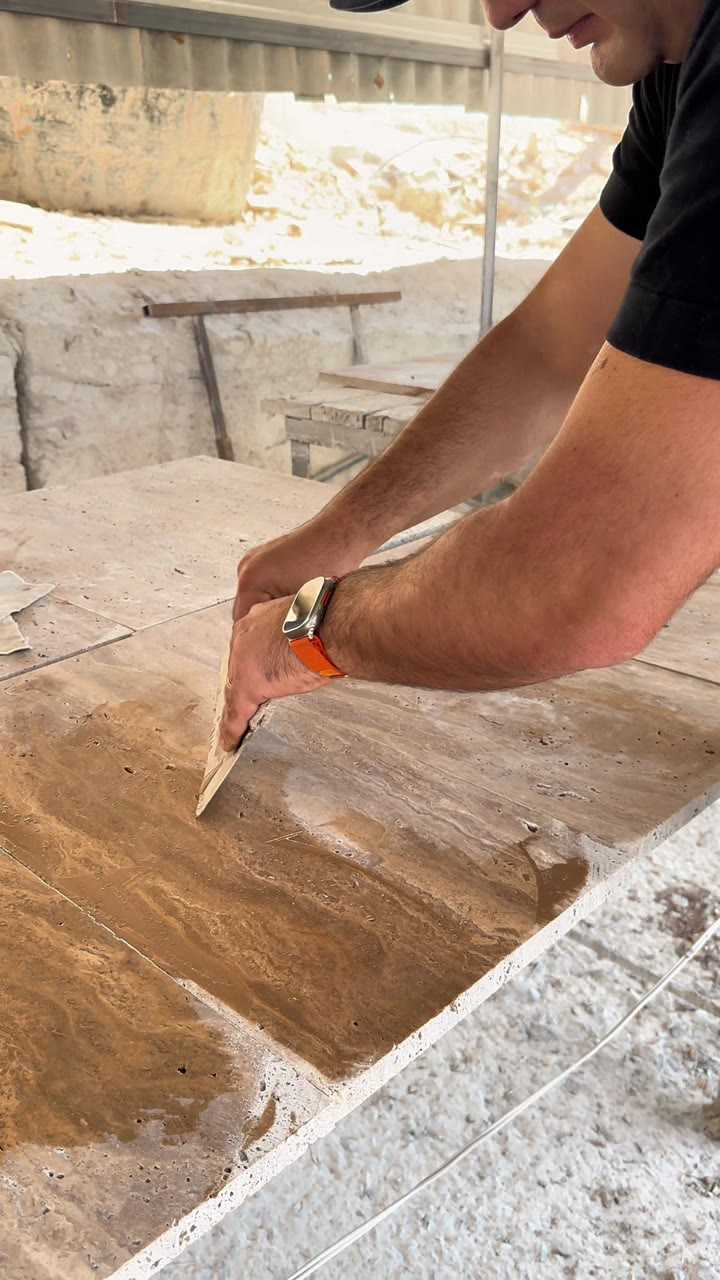
Travertine Marking a travertine slab before cutting to size 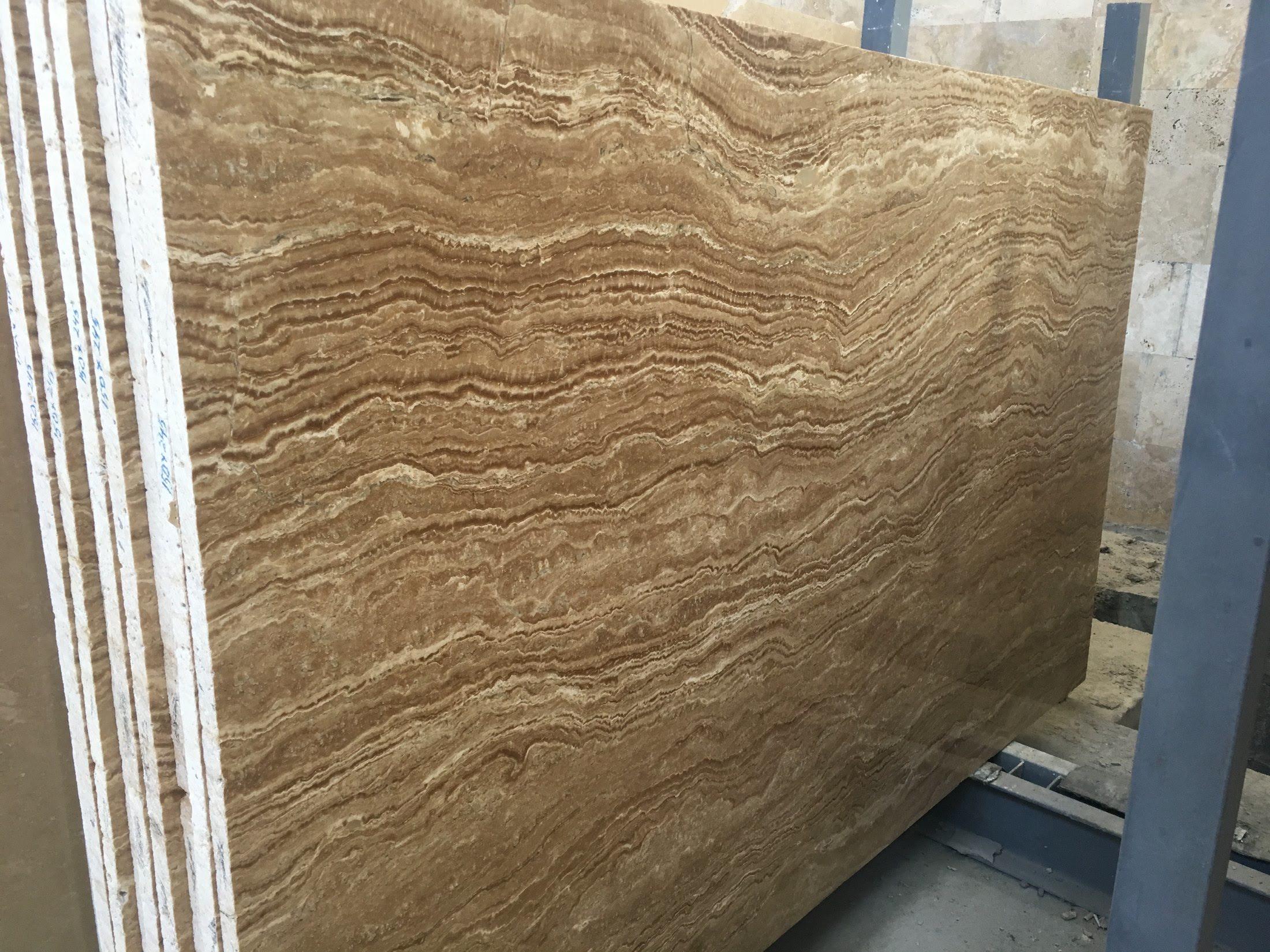
Travertine Dark vein-cut travertine slab on a rack with dimensions marked by hand -
Step 6 of 8
Packing
Packing follows the product. Export packing uses ISPM-15 treated timber where the destination requires it.
Blocks, slabs, tiles, pavers and shaped pieces are secured differently: blocks on bearers, slabs in bundles, tiles on pallets, long and carved pieces in individual crates. This is typical practice for natural stone, and the exact packing is confirmed for each order.
Typical packing
- Crates, A-frames and pallets
- Edge and corner protection
- ISPM-15 treated timber where required
Diagram Diagram of typical export packing. Not a photograph. The exact packing is confirmed for each order. Slabs
Bundles on an A-frame
- Timber A-frame, ISPM-15 treated where required
- Film, paper or foam between slabs
- Straps and bracing
Long and carved pieces
Individual crates
- Crate in timber, marked with the piece mark
- Internal bracing and spacers
- Piece supported along its full length
Tiles and pavers
Pallets
- Pallet in timber, ISPM-15 treated where required
- Corner and edge protection
- Straps and wrap
-
Step 7 of 8
Export
Packed units are loaded onto trucks and into containers and leave for the destination by road and sea.
The load is blocked and braced so that nothing moves in transit. The documents your destination requires are prepared with the shipment and confirmed for each order.
In the pictures
- Blocks on pallets inside a truck trailer
- Crane lifting a block onto a flatbed truck
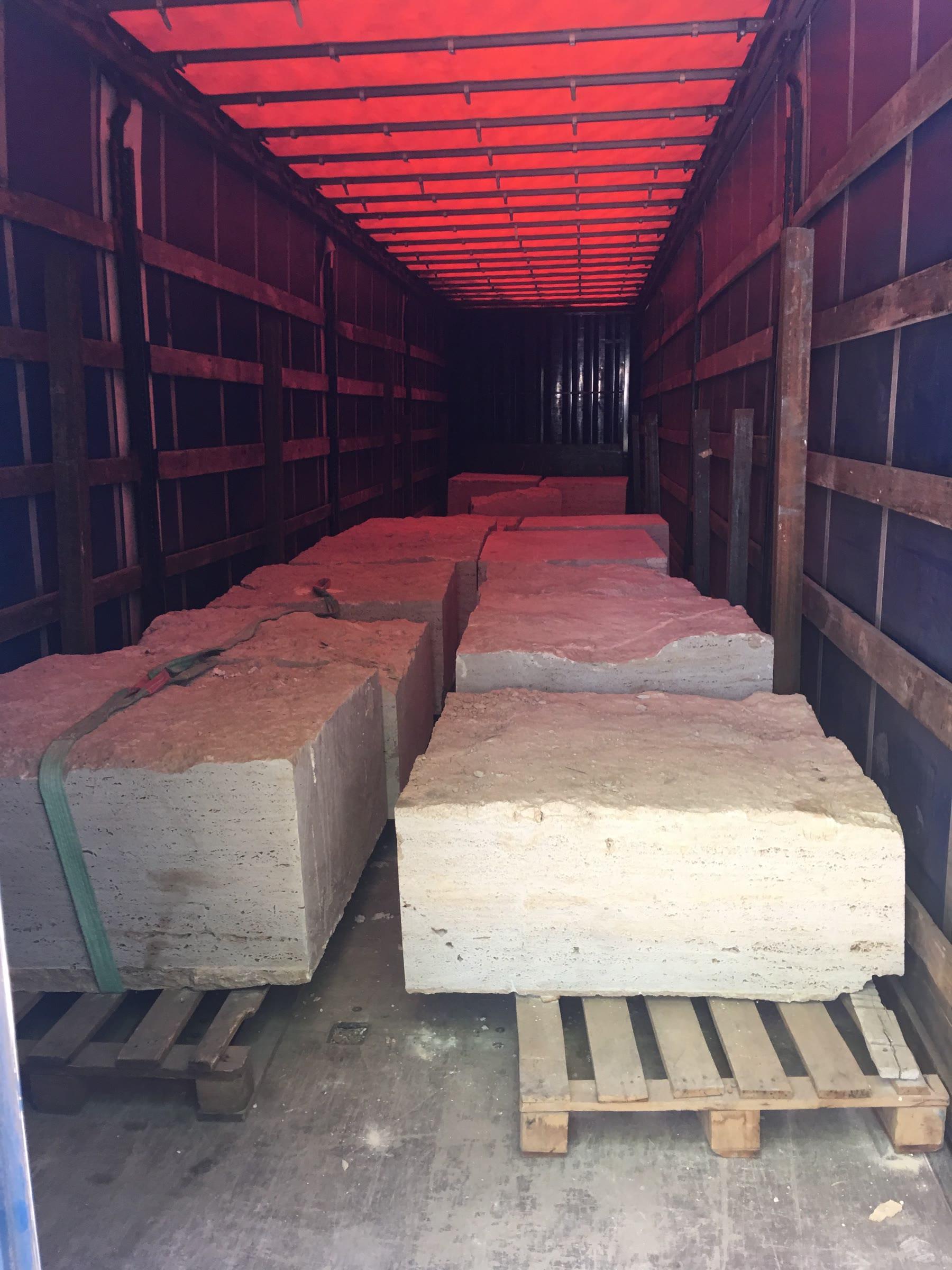
Travertine Travertine blocks on pallets inside a truck trailer, ready for dispatch 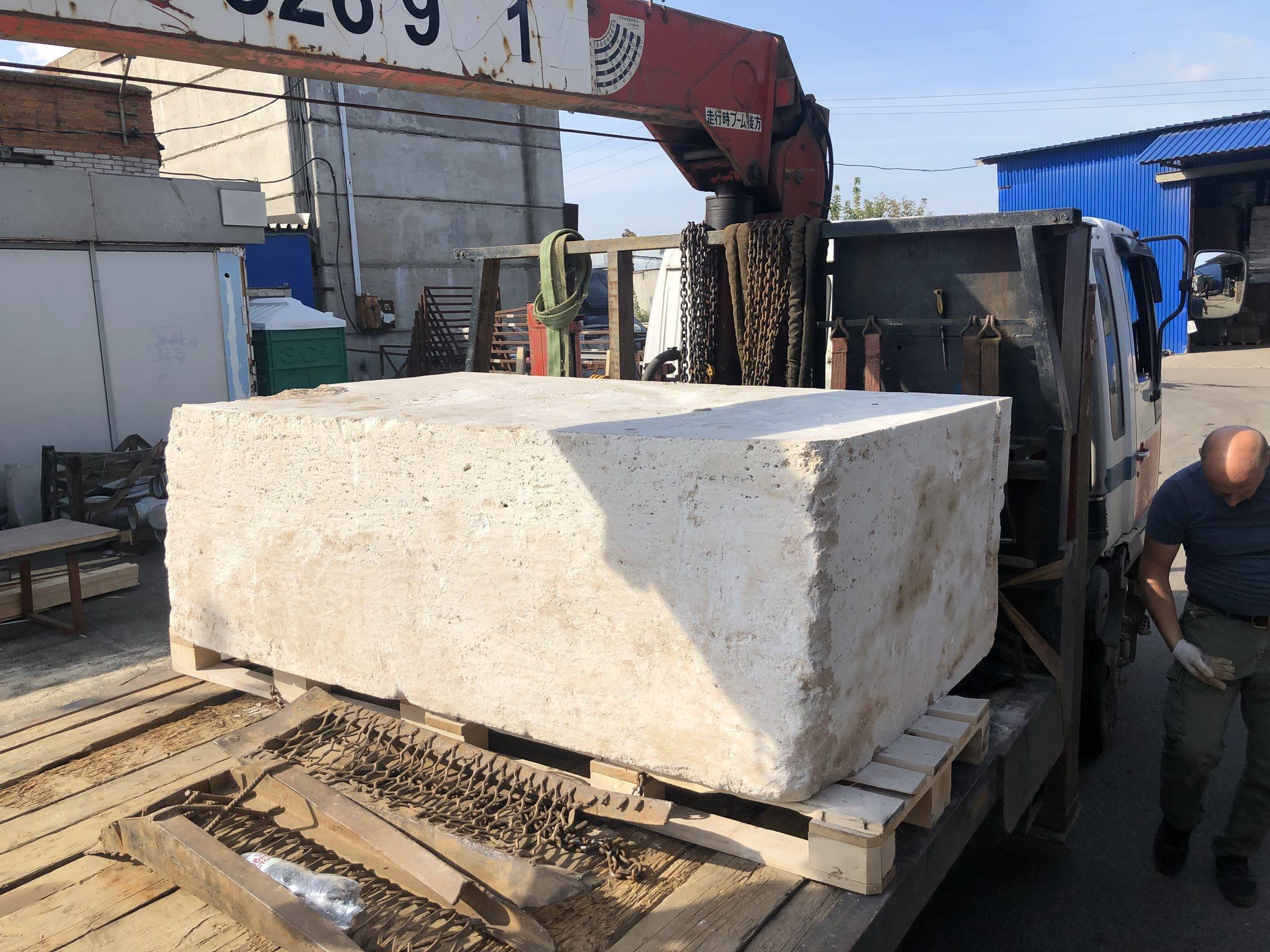
Travertine Crane lifting a travertine block onto a flatbed truck -
Step 8 of 8
Delivery
Delivery is agreed for each order, to a port, a terminal or the site.
The delivery basis in the quotation sets where our responsibility ends and yours begins. For delivery to site, tell us how trucks reach it and what will unload them: forklift, crane or hand.
Check the units when they arrive, note any damage on the delivery documents and photograph it.
What we ask
- 01 Site address and truck access
- 02 Unloading equipment
- 03 The date you need the material
Questions about production? Leave your number and we will call you back.
03 Made to drawings
Elements made to your drawings
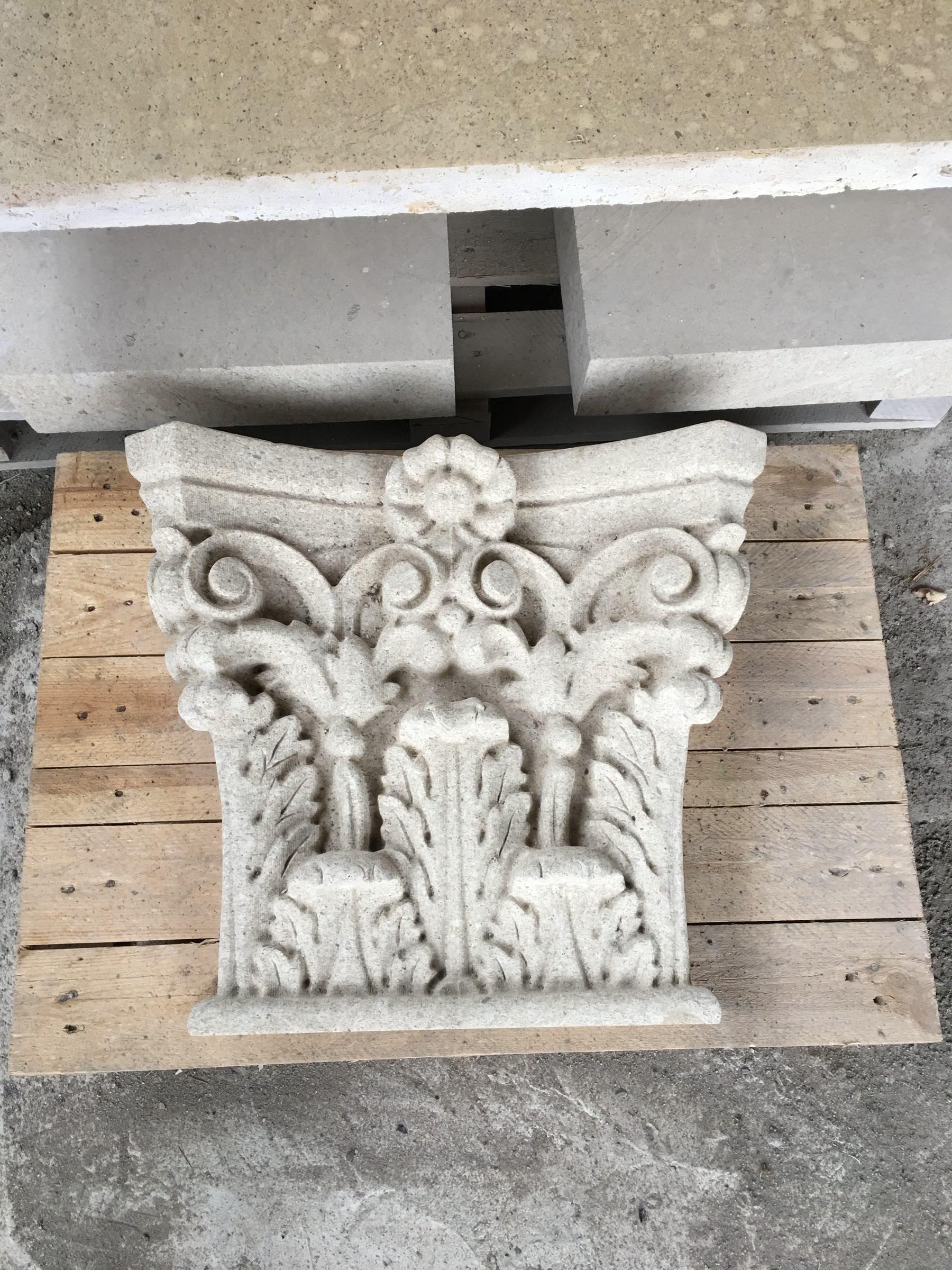
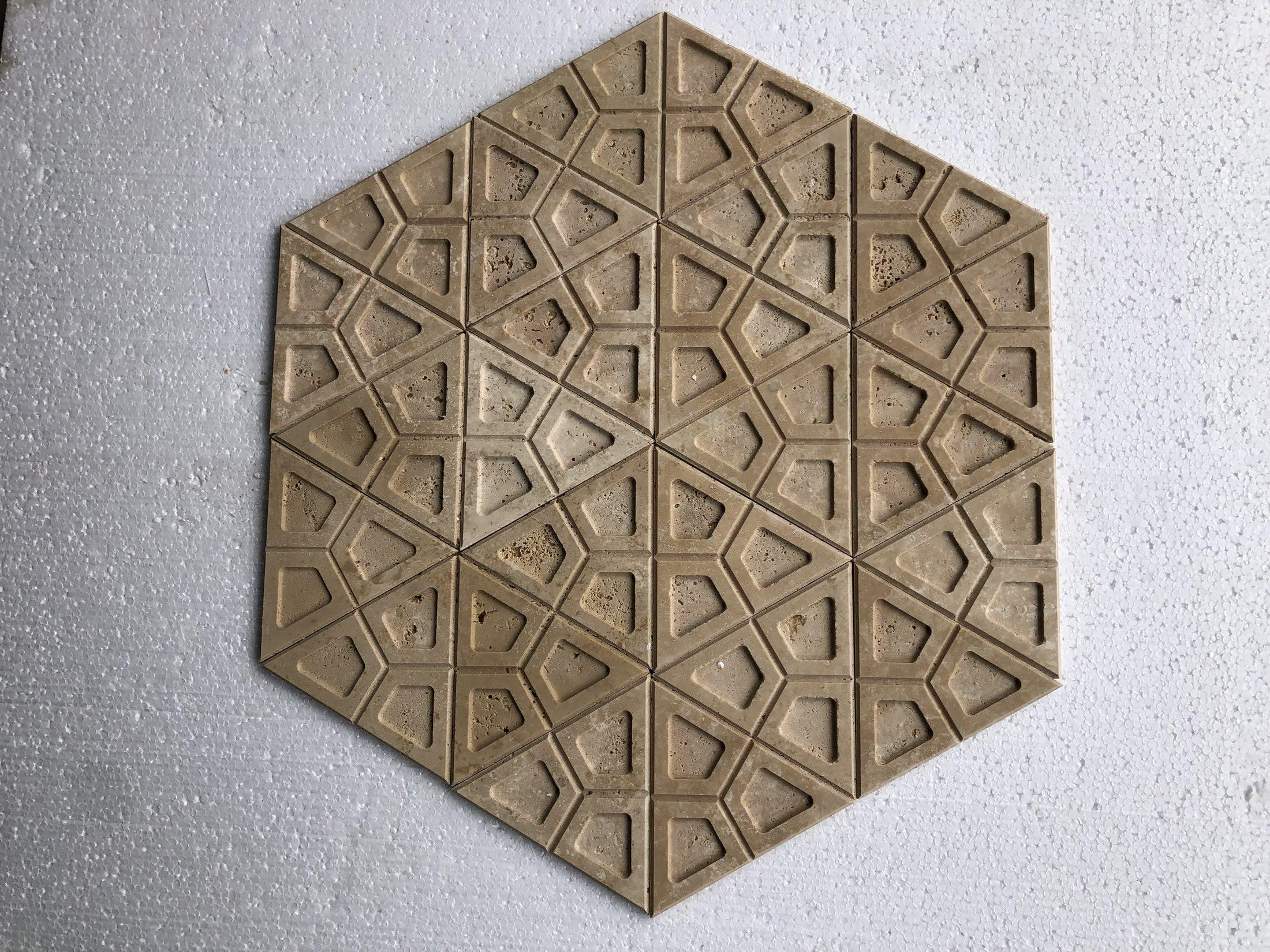
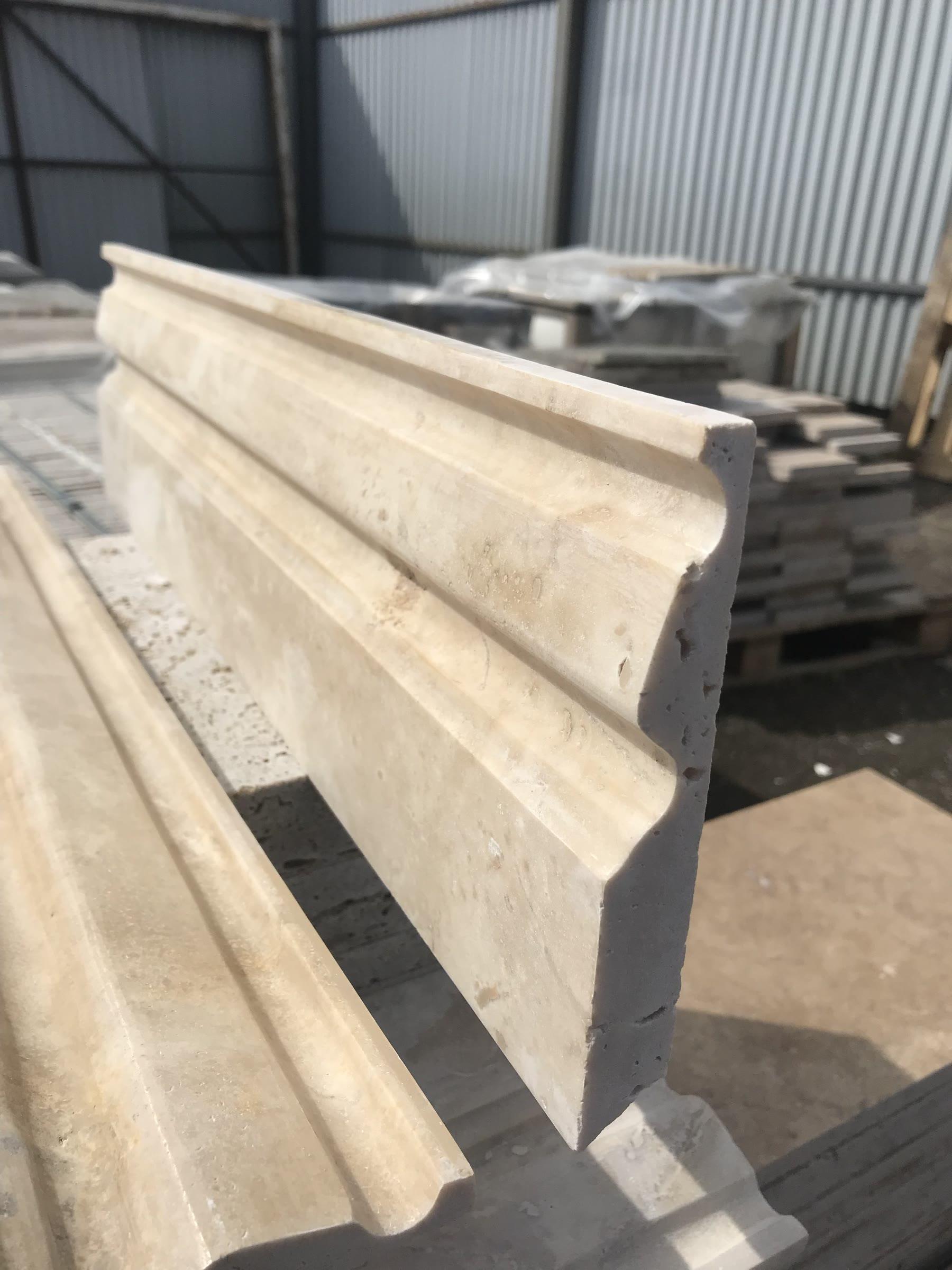
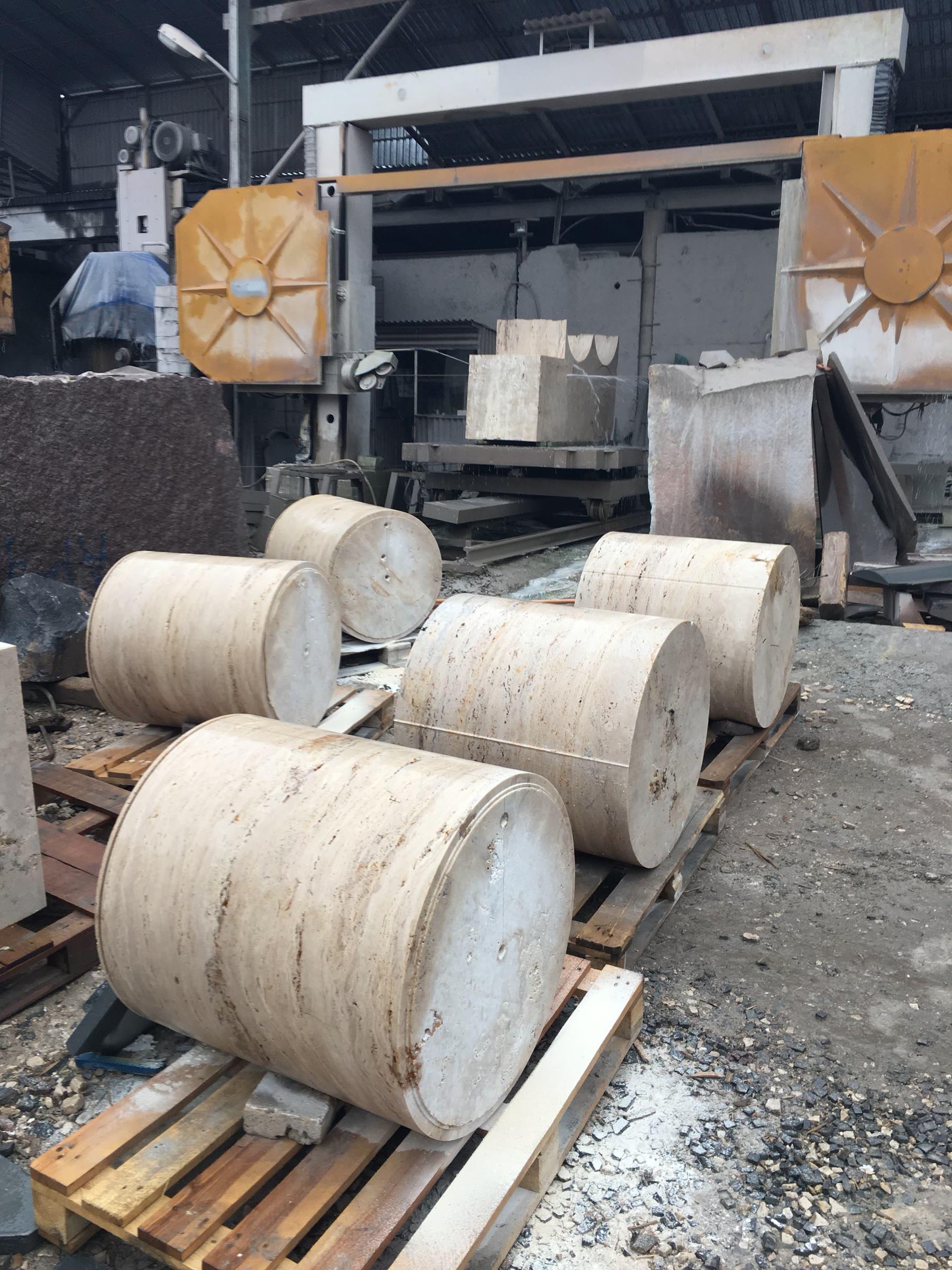
Architectural elements are made to customer drawings: steps, sills, cornices, mouldings, balusters, capitals, columns, carved panels and basins. Send dimensioned drawings and we review the profiles, dimensions and quantities before we quote.
Travertine is a standard format for elements. Tuff and basalt are quoted on request.
Drawing formats PDF · DWG · DXF
Catalogue and contact
Discuss your project.
Download the catalogue or leave your number and we will call you back.
Or write to info@petro-stone.ru