

01 Stones
Armenian travertine
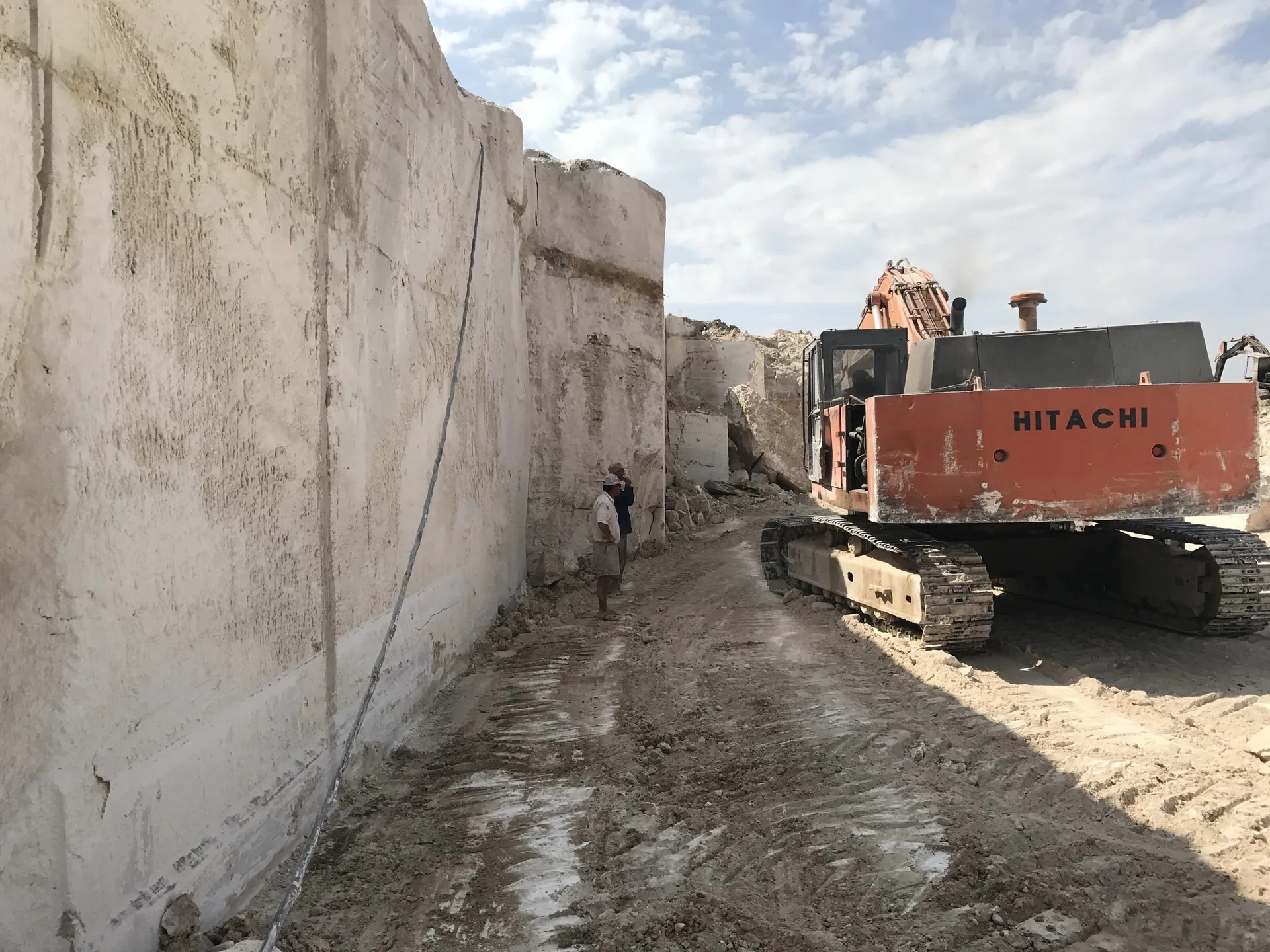
Layered, warm-toned stone from our own quarry in Armenia.
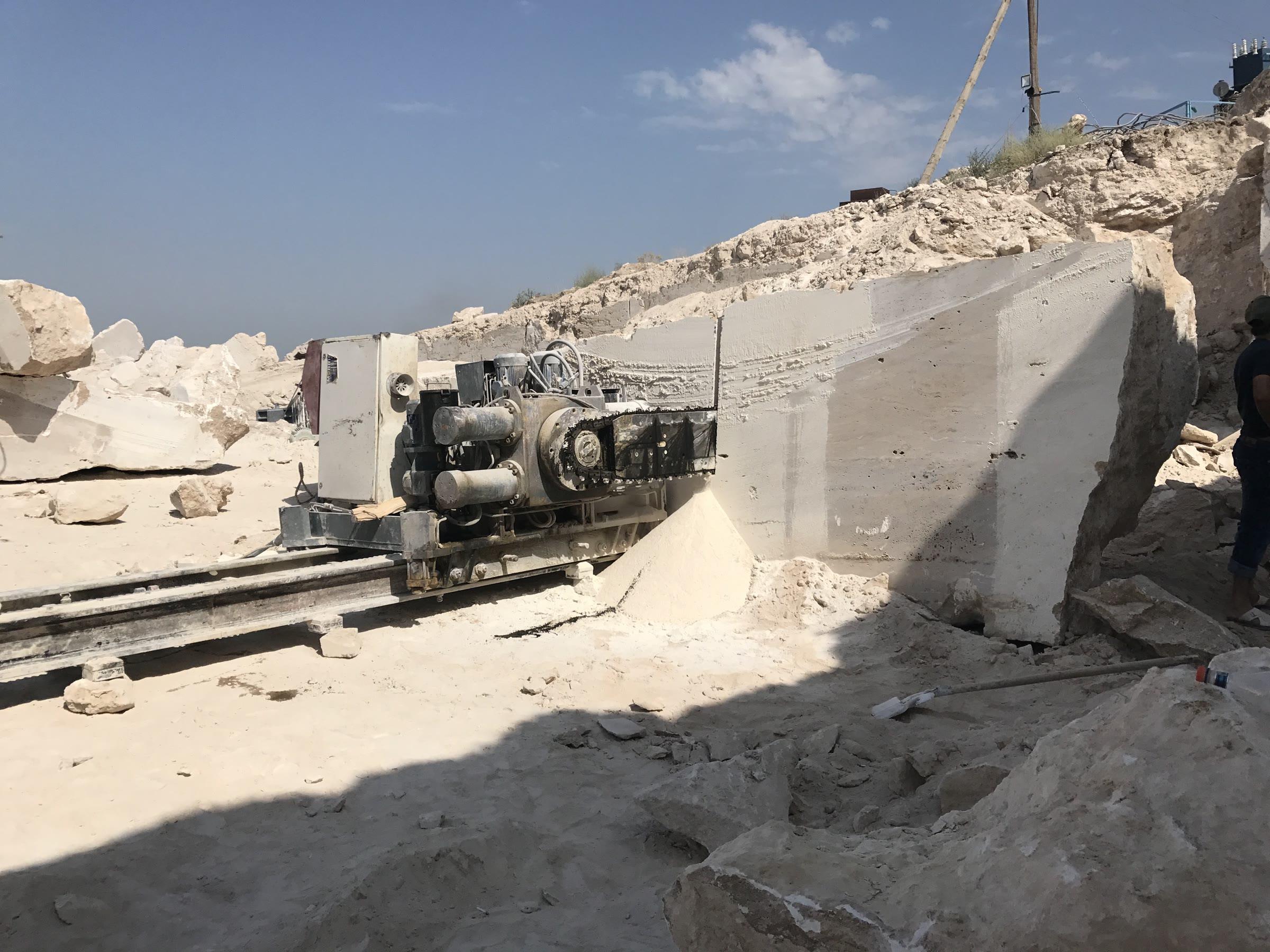
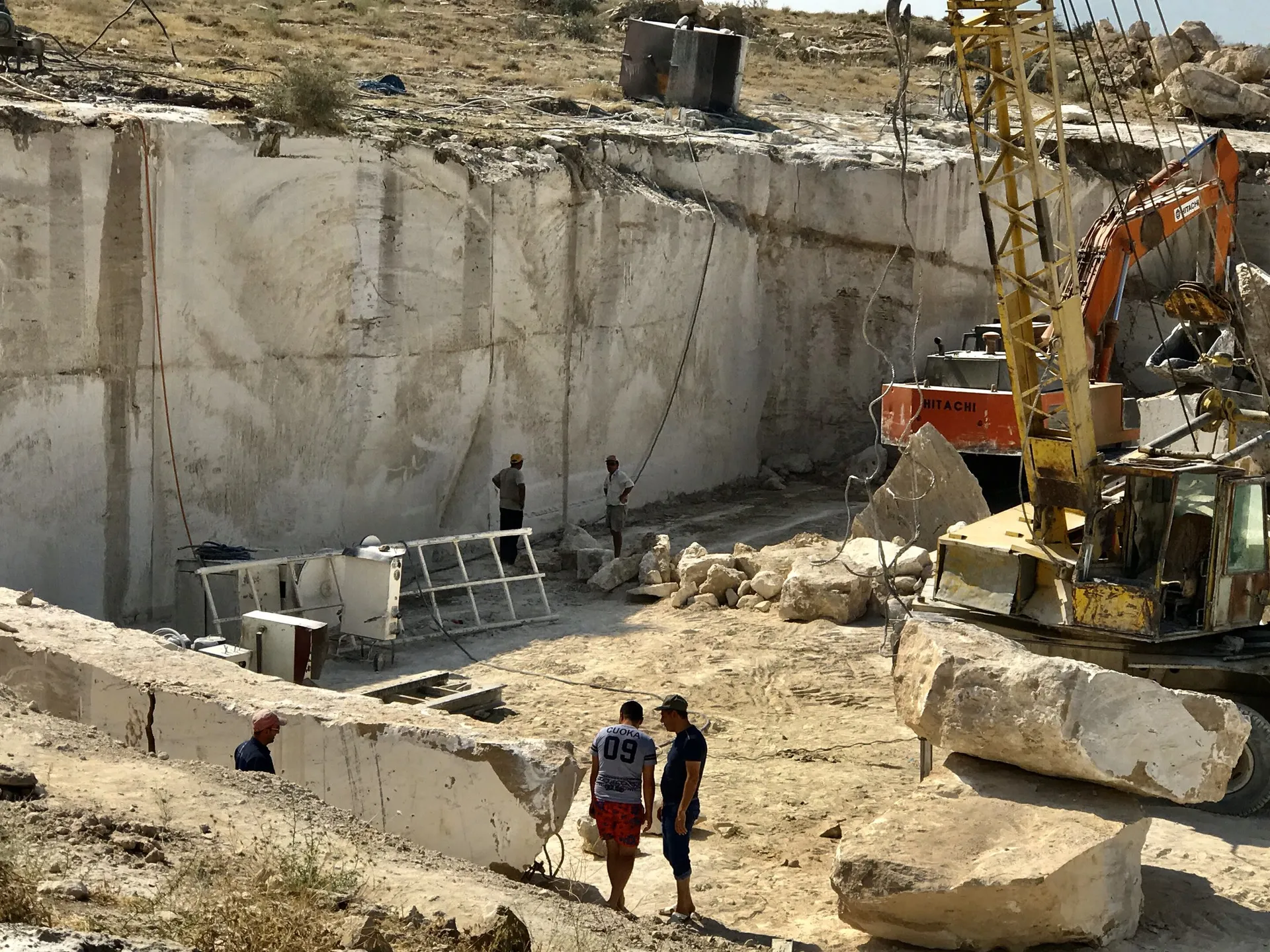
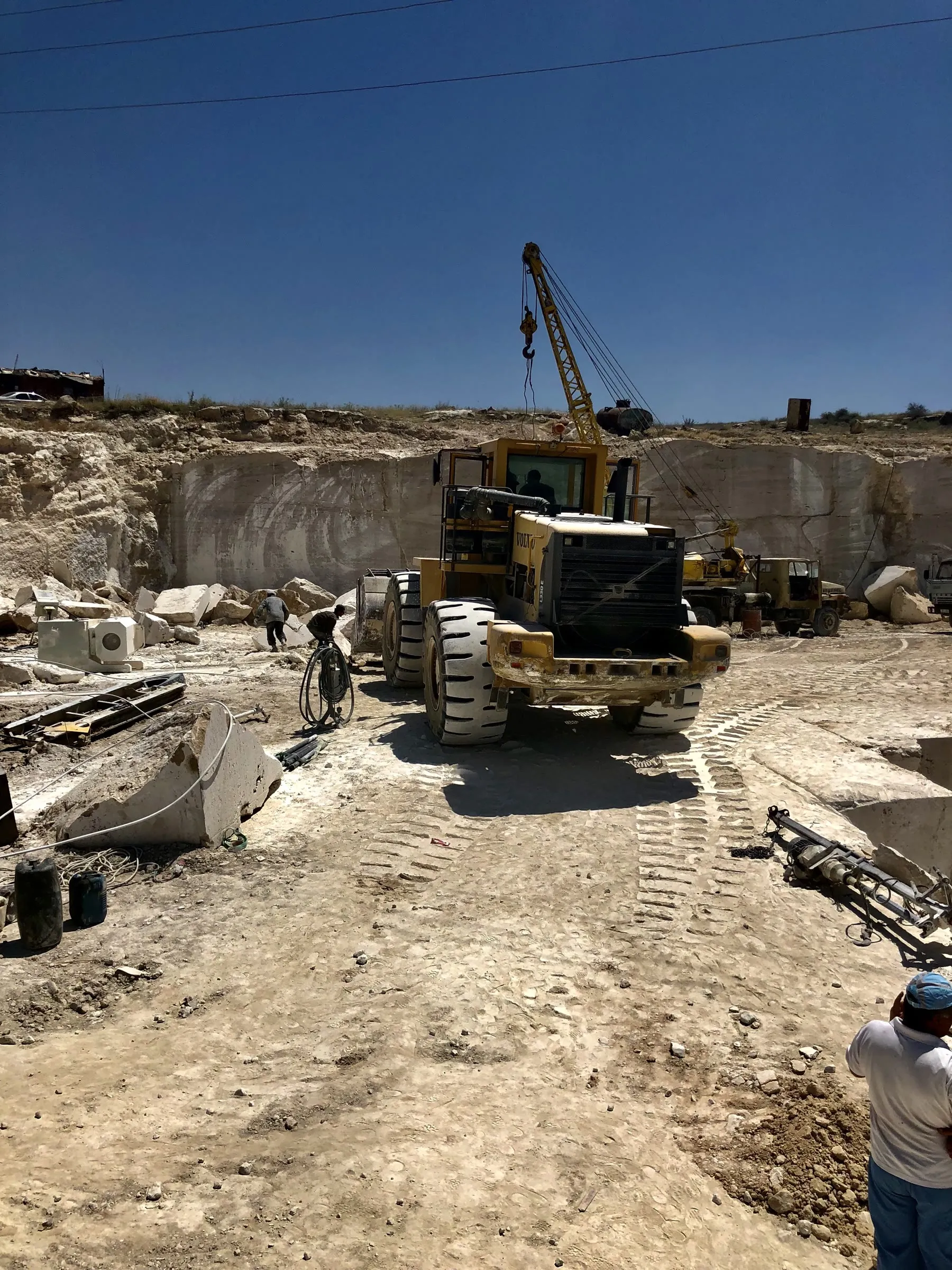
Sourcing Own quarry · Ararat deposit, Armenia
01 Overview
About travertine
Travertine is a sedimentary rock, a variety of limestone, that forms where mineral-rich spring water deposits calcium carbonate. It builds up in layers, which is why the stone shows banding. Voids formed during deposition, from escaping gas and encrusted plant material, give it the open texture it is known for.
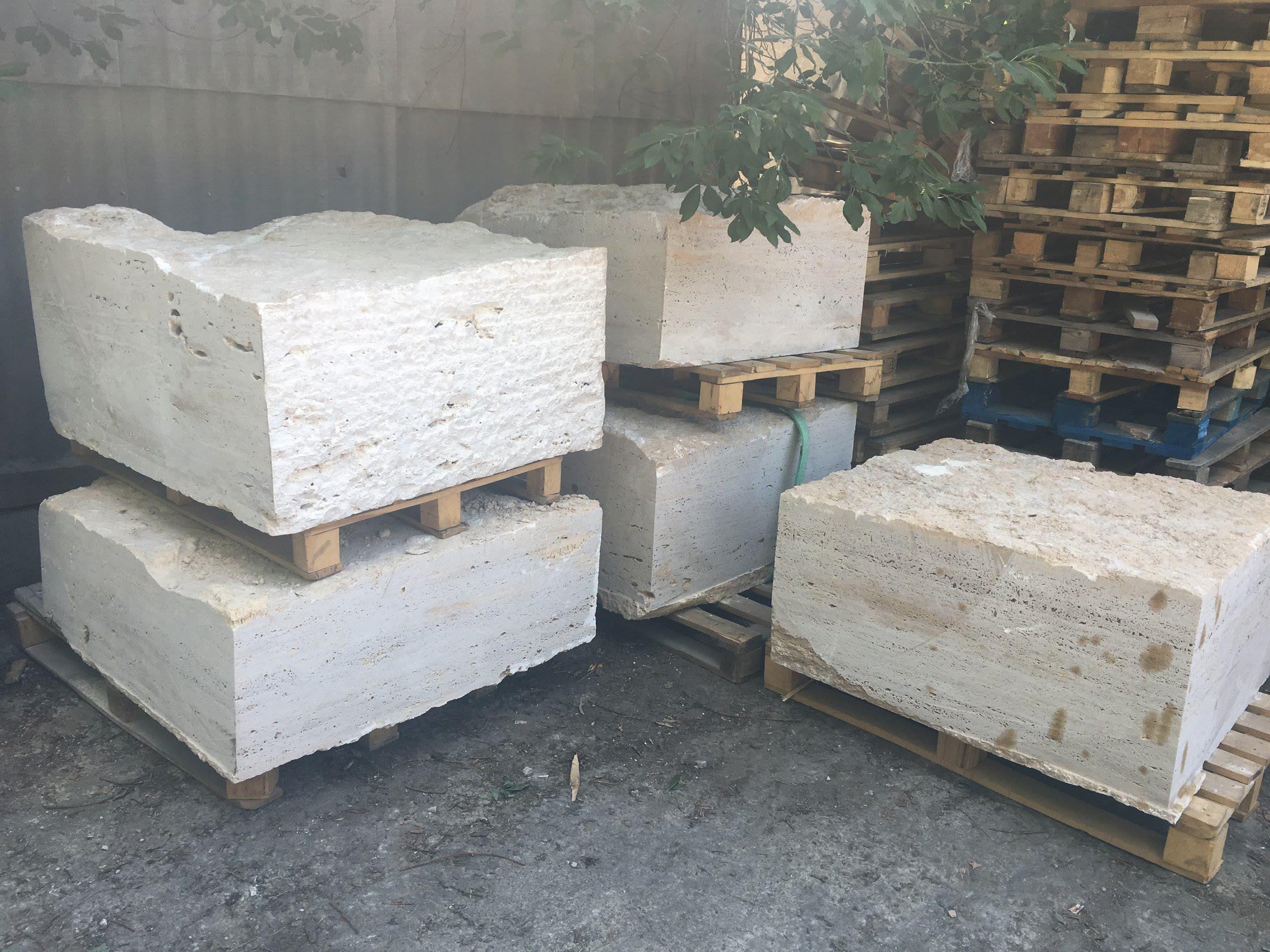
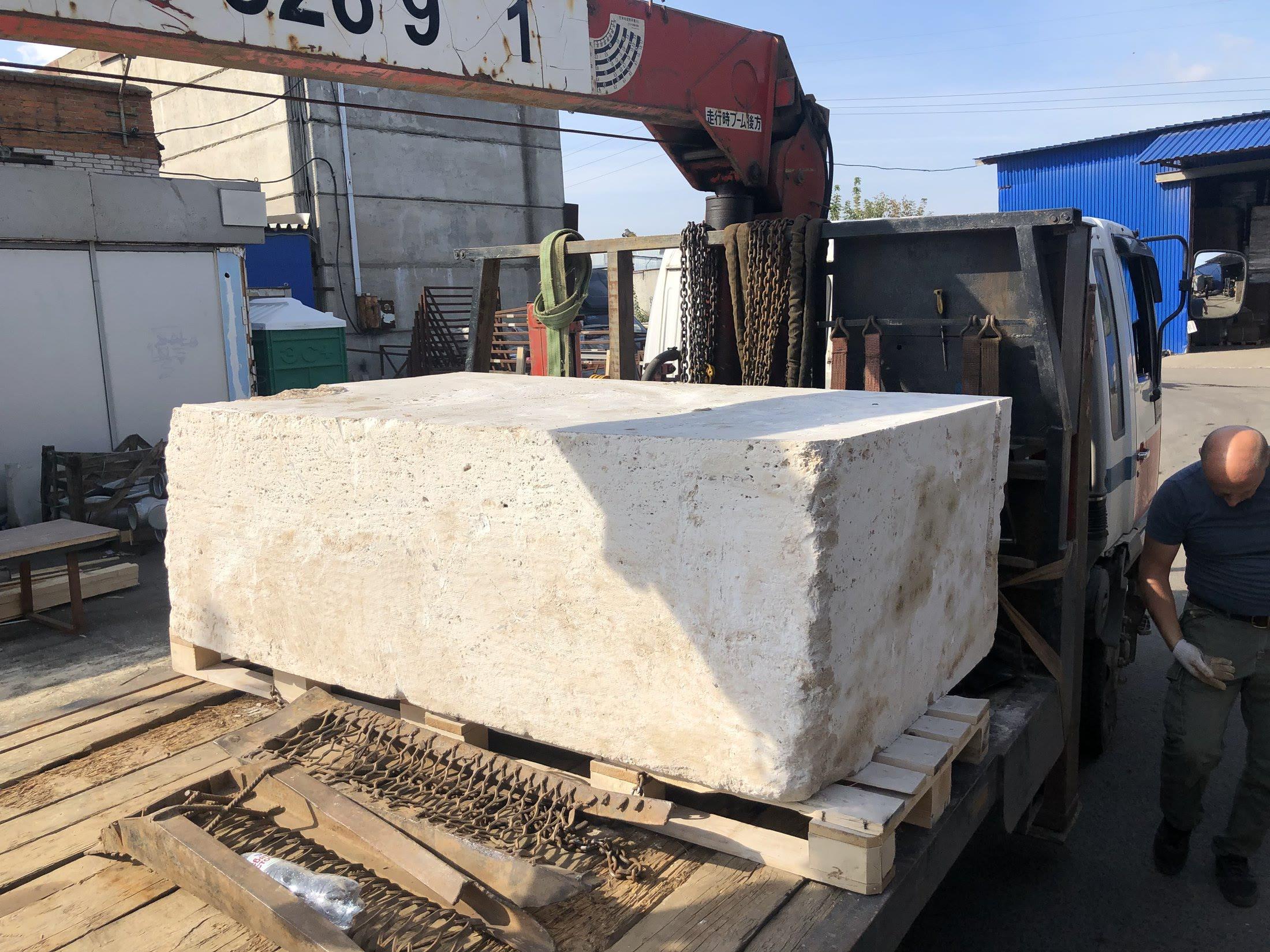
PetroStone quarries travertine at its own quarry on the Ararat deposit in Armenia. The stone is supplied as raw blocks, slabs, tiles and strips, French pattern sets, pavers, steps, cut-to-size pieces and architectural elements made to drawings.
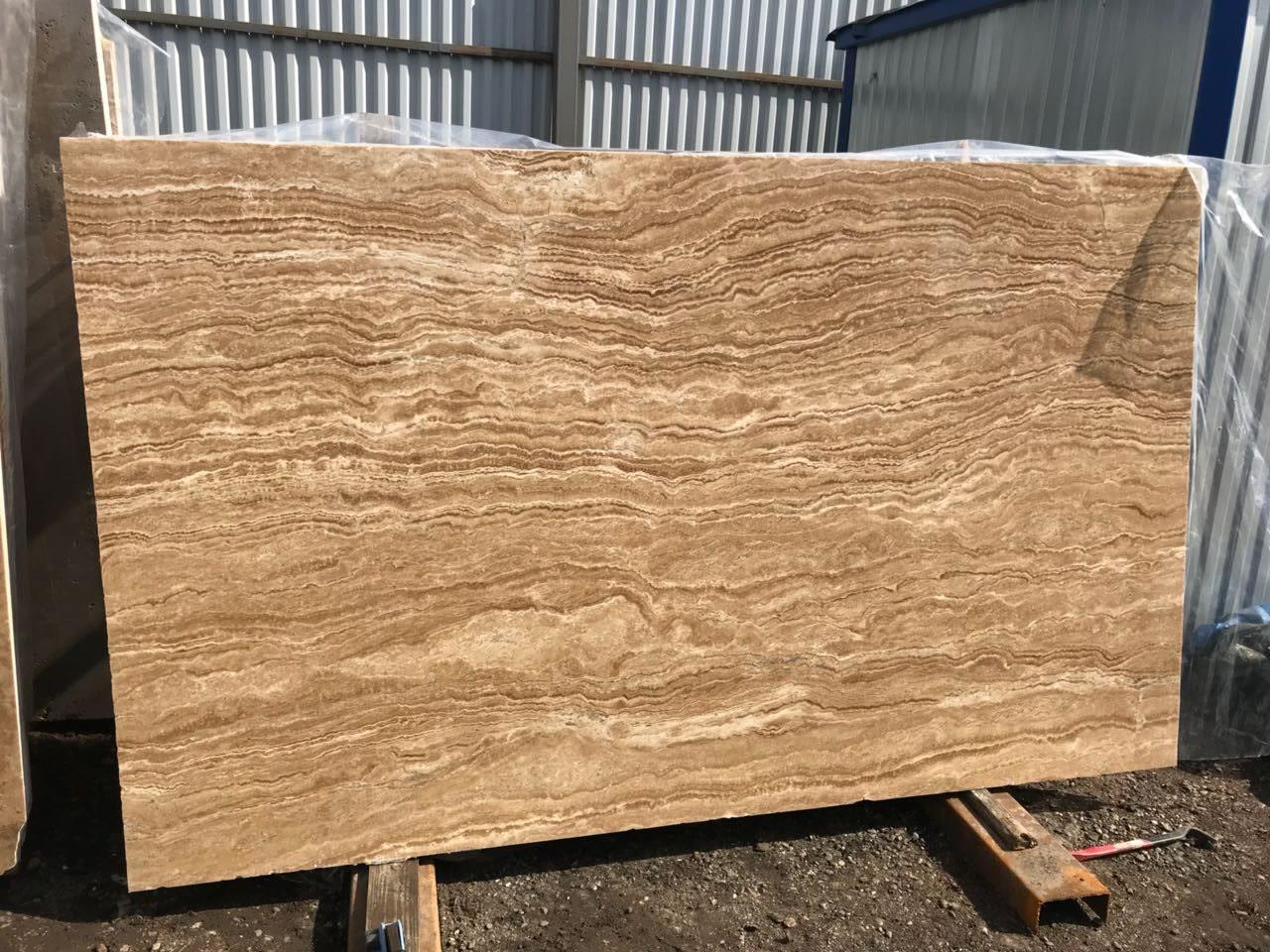
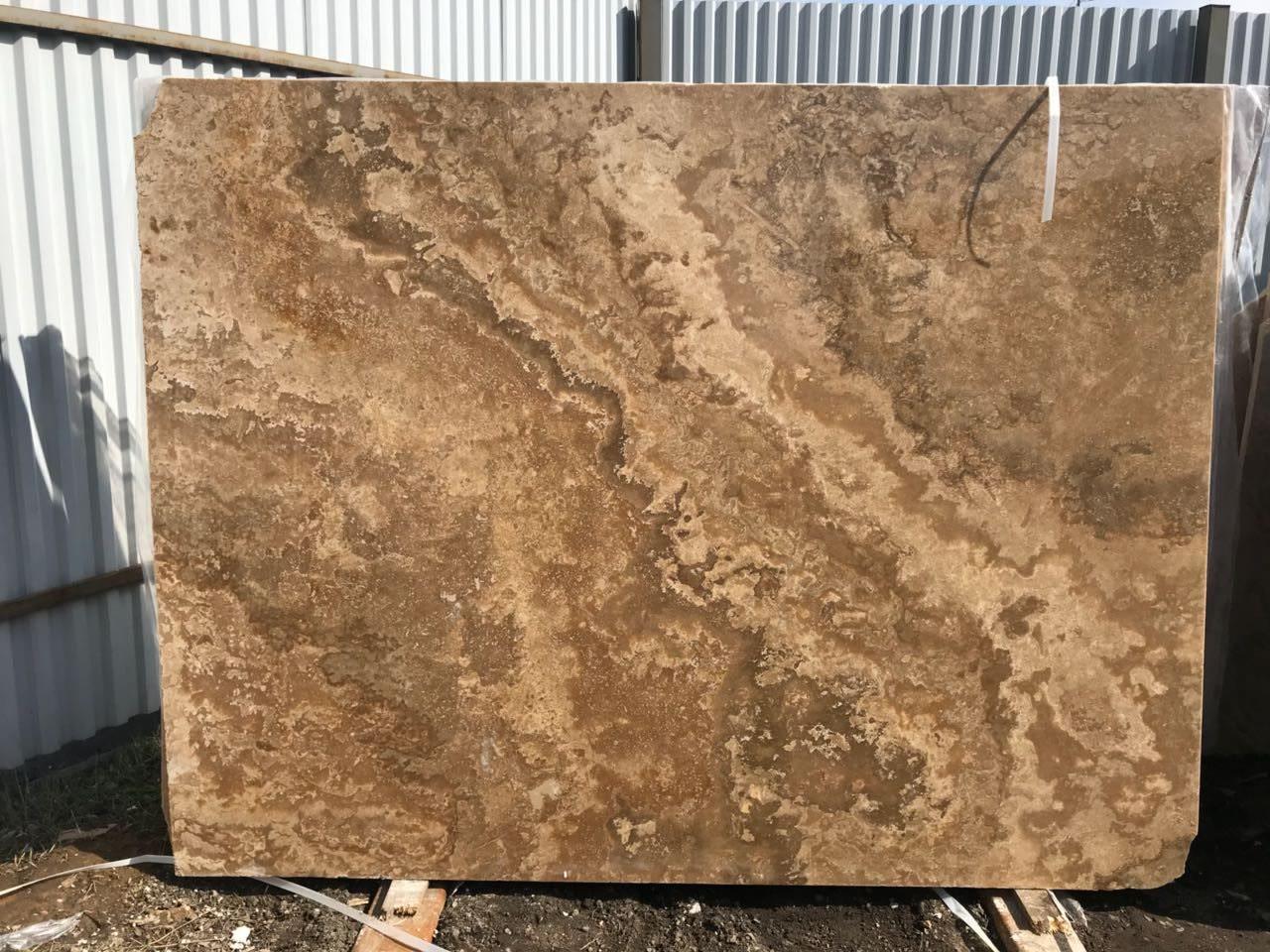
Two choices define the look of the sawn stone. The cut: vein cut shows long, roughly parallel banding, cross cut a cloudy, mottled pattern. The pore treatment: filled pores give a closed, flat surface, unfilled pores keep the natural voids. Both are standard. The finish is a third, separate choice, so state all three in an enquiry.
Tone and pattern vary between blocks and within a block. Frost, salt and slip performance depend on the specific deposit, the pore structure, the finish and the installation. Confirm test data for your climate and use before you specify.
02 Colours
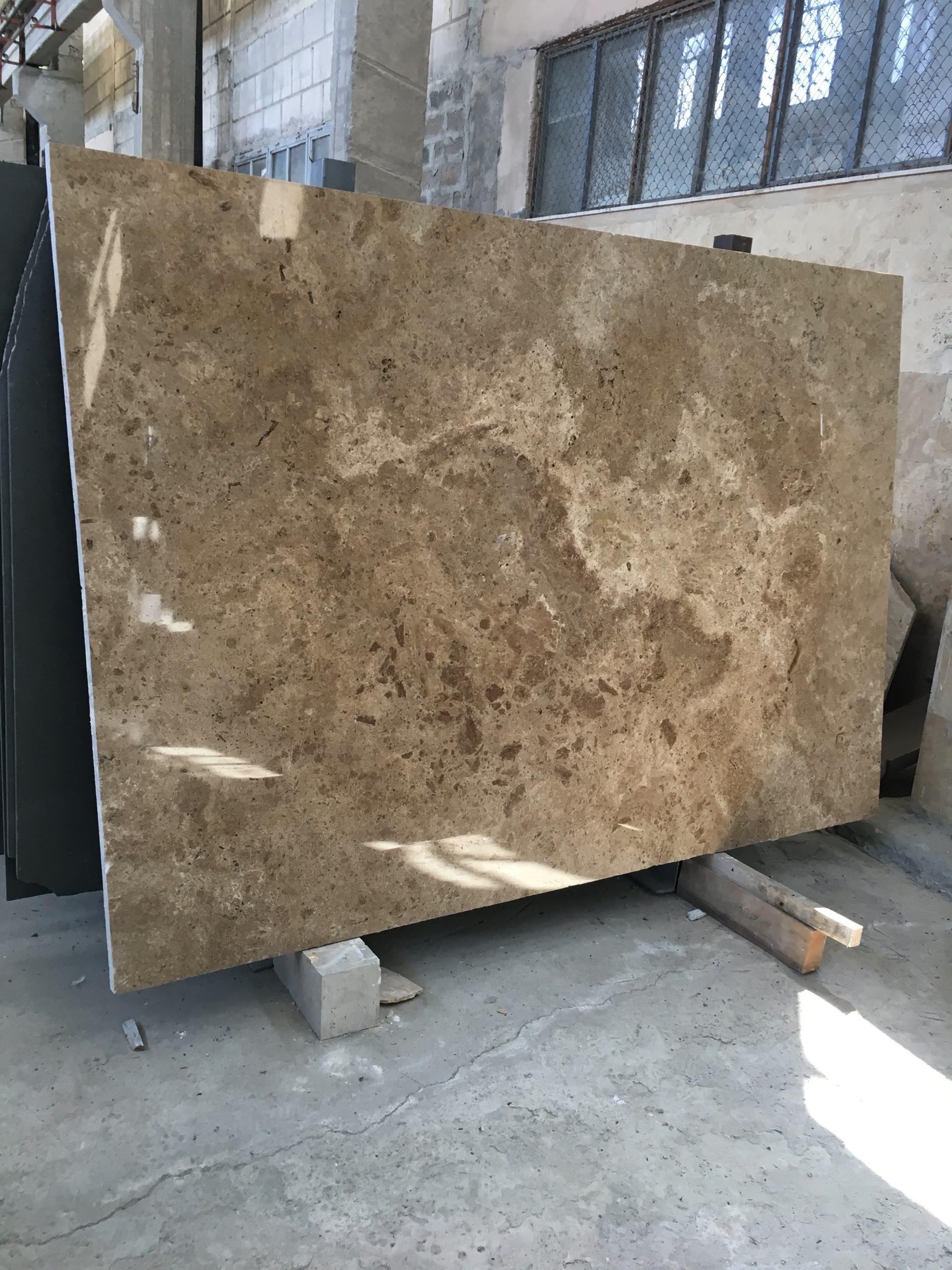
Tones in our library
These tones are what our photograph library shows. Commercial selections are confirmed with each quotation.
01
Ivory
Light ivory to cream travertine.
02
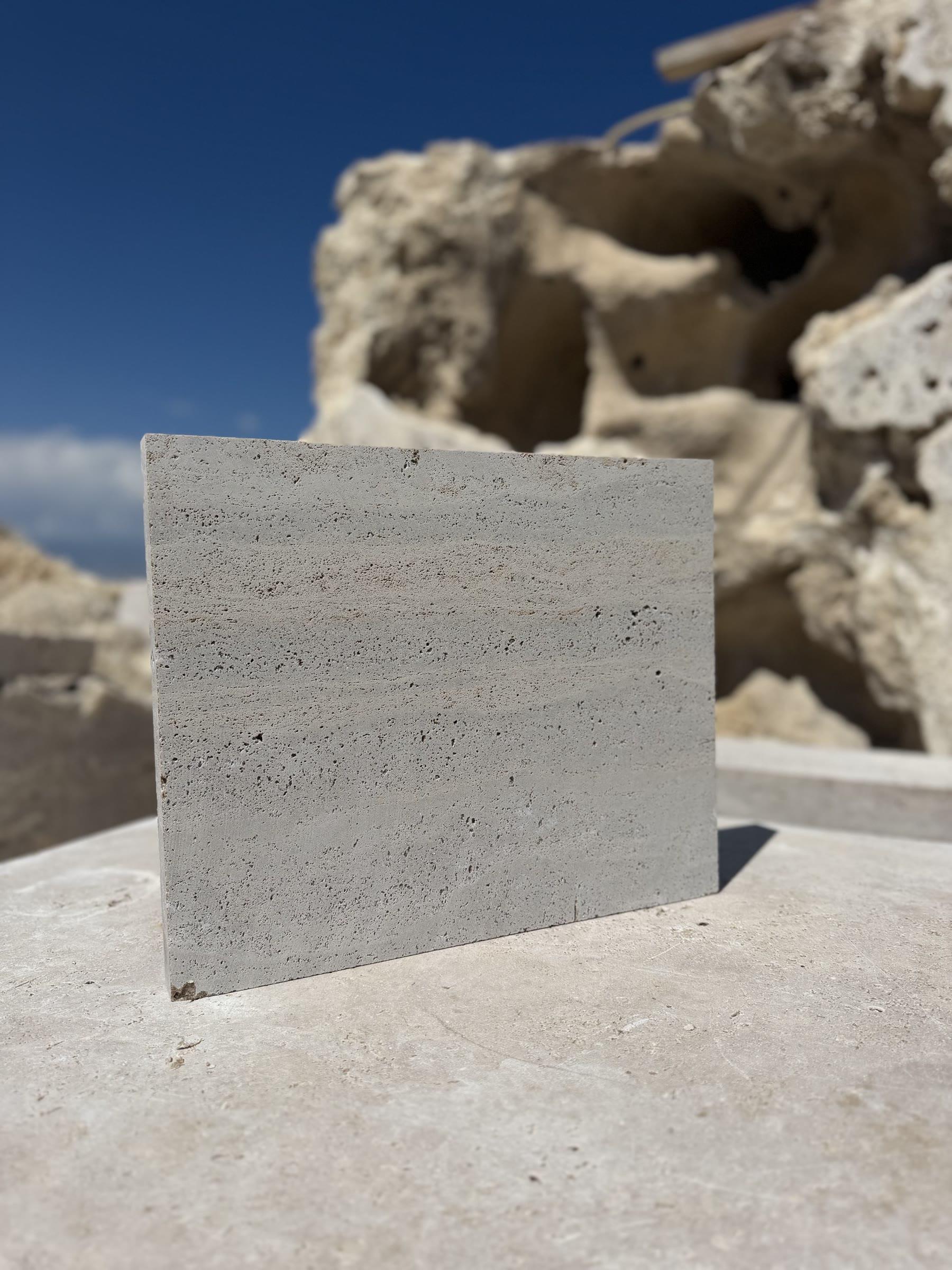
Silver
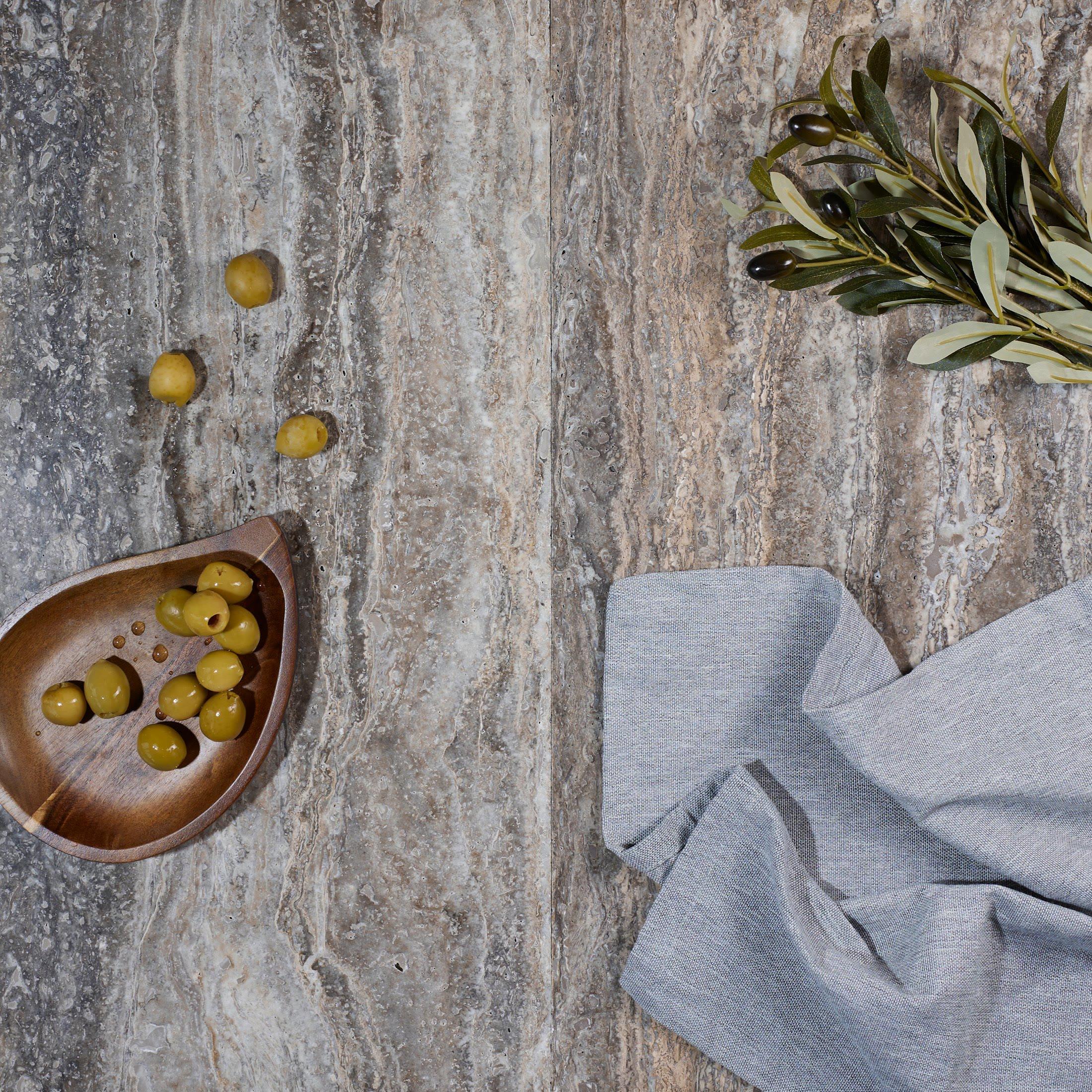
Grey-toned travertine with fine vein banding.
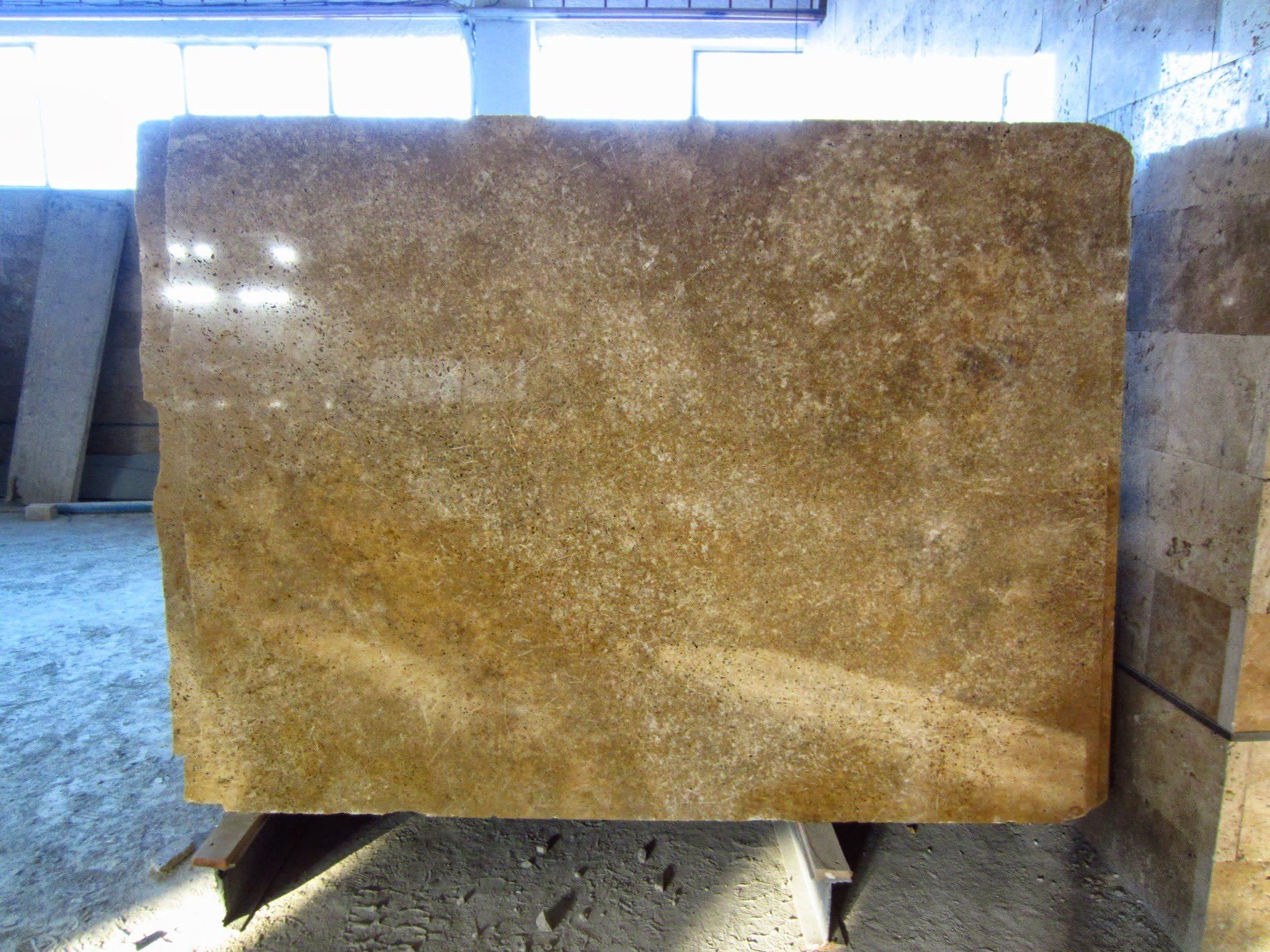
03
Golden
Warm golden-amber travertine.
04
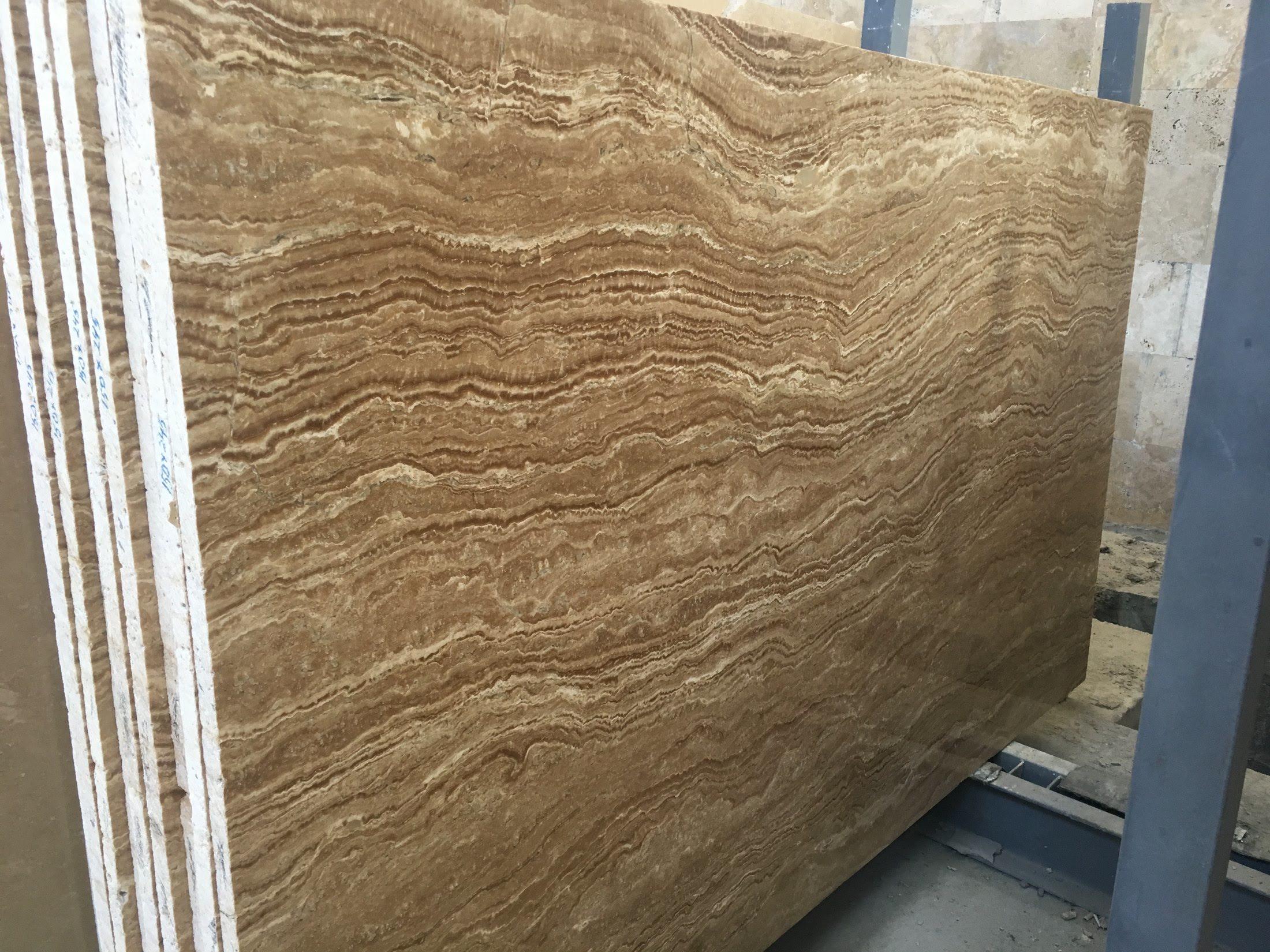
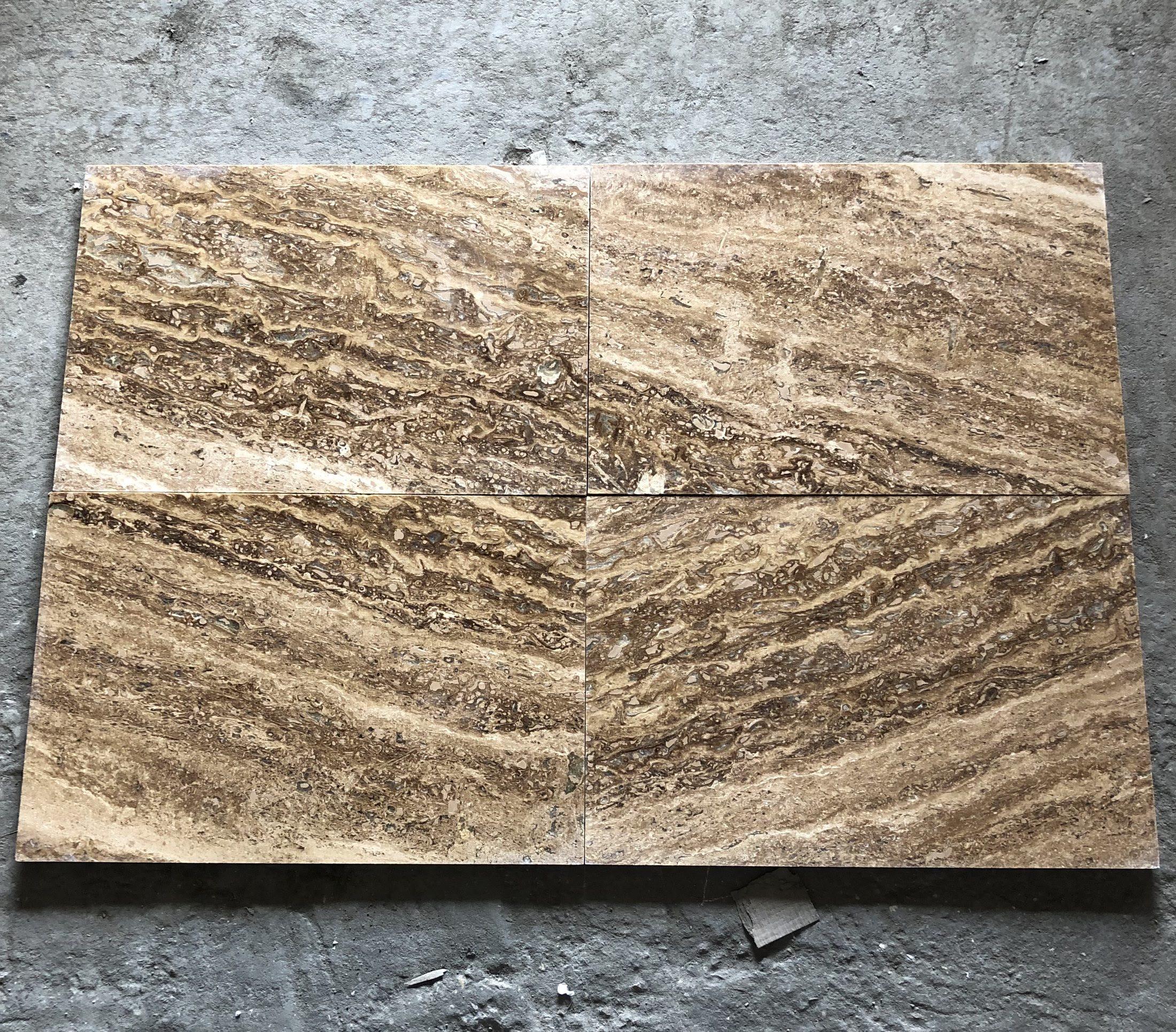
Walnut
Deep brown travertine with strong banding.
03 Cuts and pores
Vein cut and cross cut
Two choices define the look of sawn travertine before any finish is applied: the cut and the pore treatment. Both are standard, and the finish is a third, separate choice.
-
Vein cut
The layers of the stone appear as long, roughly parallel bands, so the pattern has a direction.
Available -
Cross cut
The same layering appears as a cloudy, mottled pattern with no strong direction.
Available
Filled or unfilled pores
The pore treatment is a choice of its own. It is not a finish, and it applies to travertine only.
-
Diagram Filled
The natural voids are filled and the surface is ground flat. The result is a closed, even surface that is easier to clean, and it is the usual pairing for polished and honed finishes.
Available -
Diagram Unfilled
The voids are left open. The surface keeps its natural, textured character and a more rustic look, and it holds more water and dirt than a filled surface.
Available
Both treatments are standard for our travertine. State which one you need in the enquiry, together with the cut and the finish.
04 Finishes
Finishes for travertine
These are the finishes we can supply for travertine, as part of our regular offer or on request. Agree the exact surface on a sample before you order.
Ask us about
These finishes are not confirmed as part of our regular offer for travertine. Ask whether we can supply them for your project.
05 Formats
Product formats
The formats we can quote for travertine. Each one has its own page with what to specify.
-
01
Blocks
Squared quarry blocks for sawing and further processing.
Available -
02
Slabs
Large-format panels sawn from blocks.
Available -
03
Tiles and strips
Modular tiles, cladding strips and French pattern sets.
Available -
04
Cut-to-size
Slab, tile and strip pieces cut to your drawings.
Available -
05
Pavers
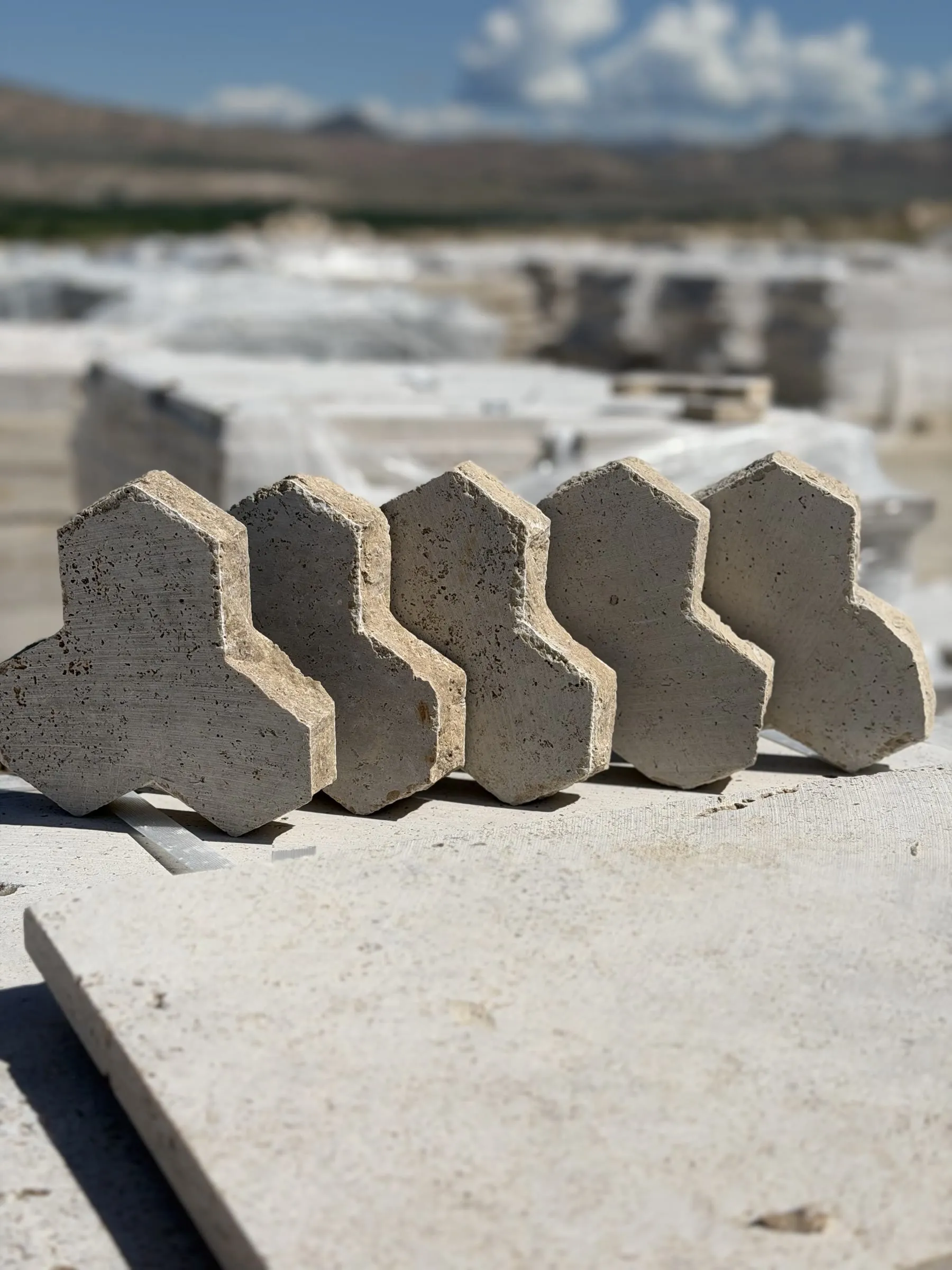
Cobblestone pavers and shaped units for exterior paving.
Available -
06
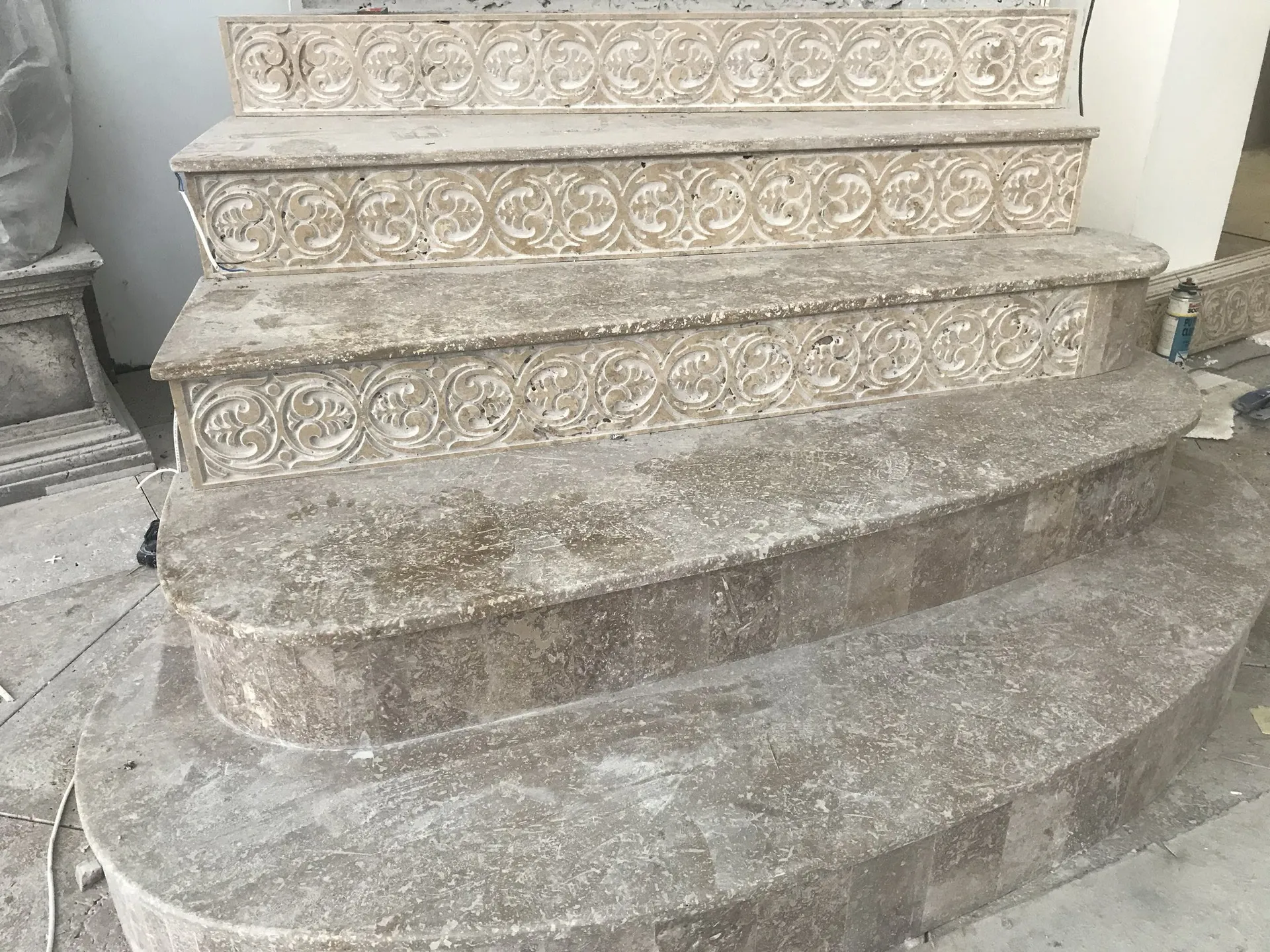
Steps
Treads, risers and landings cut to your stair drawings.
Available -
07
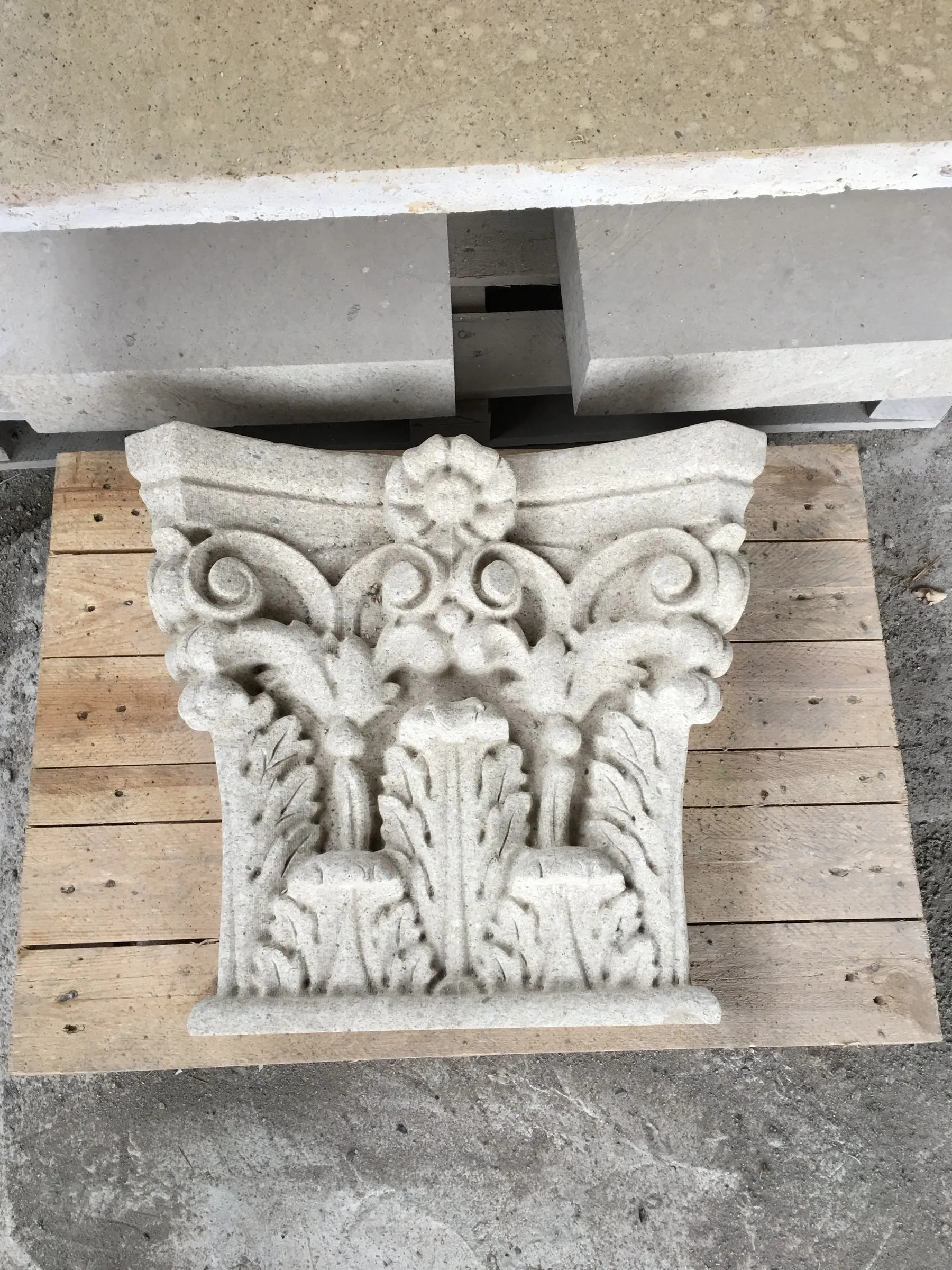
Architectural elements
Profiled, turned and carved pieces made to your drawings.
Available
Ask us about
These formats are not confirmed for travertine. Tell us what you need and we will say whether we can supply it.
06 Applications
Typical applications
General guidance on where travertine is used. The final choice depends on test data for the specific stone, finish and site.
- 01 Facades Cladding, window surrounds and cornices for building exteriors.
- 02 Exterior paving Pavers, tiles and slabs for terraces, paths and plazas.
- 03 Interior flooring Tiles, slabs and French pattern sets for interior floors.
- 04 Landscaping Paving, steps, balustrades and garden elements.
- 05 Stairs Treads, risers, landings and balusters cut to stair drawings.
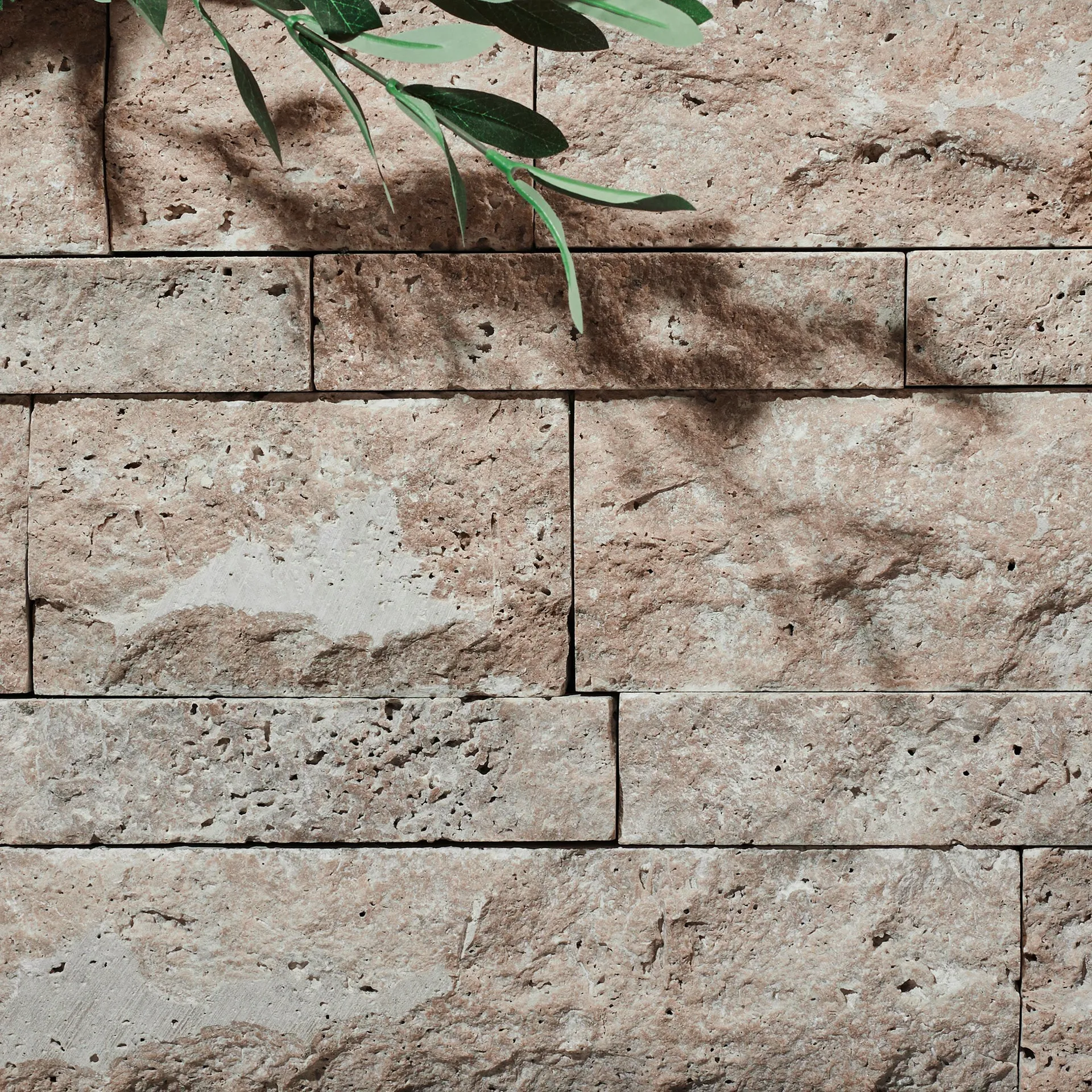
- 06 Wall cladding Tiles, strips, split-face panels and slabs for interior and exterior walls.
- 07 Architectural details Cornices, mouldings, window surrounds, columns, capitals and carved panels.
07 Data and documents
Technical data and documents
Values appear here only when a test report for the stone we supply backs them. The documents we can send are listed with them.
No verified test values yet
Technical documentation is provided with quotations when available for the selected stone. List the tests your project requires in the enquiry, and we will tell you what is available.
What to ask for
Ask for results measured on the stone and finish you are considering. The standard tests, what each one measures and how to read a report are explained on the technical data page.
Documents
- Travertine technical data sheet On request
- Export packing specification On request
- Installation guidance On request
08 Gallery
Photographs of travertine
Select a photograph to see it larger. Use the arrow keys to move between photographs.
09 Export
Packing and export
Packing depends on the product: blocks, slabs, tiles and shaped pieces are protected and secured differently. We confirm the packing for each order.
Export packing uses ISPM-15 treated timber where the destination requires it.
10 FAQ
Questions about travertine
01 Where does your travertine come from?
From our own quarry at the Ararat deposit in Armenia. The stone is supplied as blocks or processed into slabs, tiles, pavers, steps and elements made to drawings.
02 What is the difference between vein cut and cross cut travertine?
Travertine forms in layers. Vein cut is sawn so that the layers appear as long, roughly parallel bands. Cross cut is sawn in the other orientation, which shows the layers as a cloudier, mottled pattern. Both are standard for our travertine. Approve a sample or photograph of the cut you want.
03 Should travertine pores be filled or unfilled?
It depends on the look and the use. Filled pores give a flat, closed surface that is easier to clean and is usual for polished and honed finishes. Unfilled pores keep the natural voids and a more textured look, often chosen where an open, rustic surface is wanted. Both are standard for our travertine; say which you need in the enquiry.
04 Will my order match the approved sample exactly?
Natural stone varies in tone and pattern, between blocks and within a block, so a sample is a reference rather than an exact match. Agree how much variation is acceptable. For large areas, ask for material from the same lot and blend packs during installation. We confirm in the quotation how supply is prepared for your project.
05 What should I check before specifying stone outdoors?
Check the slip resistance of the finished surface, frost and de-icing salt exposure, water absorption, the thickness your fixing or bedding system needs, and tone consistency across the area. Performance depends on the specific deposit, the finish and the installation, so confirm test data for your climate and use.
06 Can you make pieces to our drawings?
Yes. Cut-to-size pieces and architectural elements are made to drawings: steps, sills, cornices, mouldings, balusters, capitals, columns, carved panels and basins. Travertine is a standard format; tuff and basalt are quoted on request. Send dimensioned drawings in PDF, DWG or DXF.
Request for quotation
Tell us what you need.
Stone. Dimensions. Quantity. Destination.
Your request opens with travertine already selected. Add the format, finish, quantity and destination.
Or write to sales@petro-stone.am