02 Surface finishes

Stone finishes

How a surface is finished changes how a stone looks, wears and weathers. Compare the finishes and see which are confirmed for travertine, tuff and basalt.

01 The library

Choose the surface as well as the stone

Each finish is drawn as a diagram of the surface, with the plan view above and the profile below. The diagrams are schematic and do not depict a particular stone. A photograph appears only where a real photograph shows the finish.

Diagram
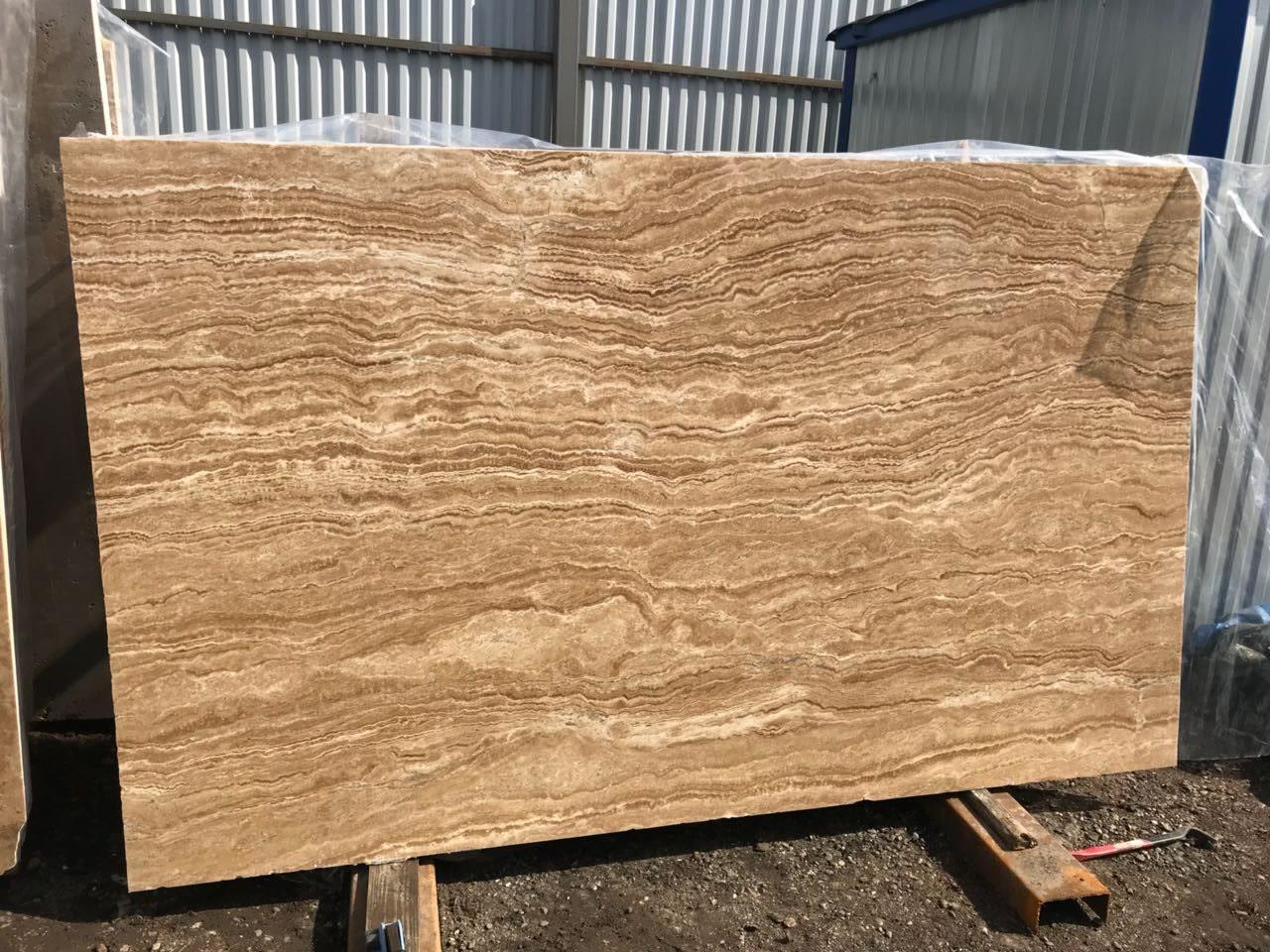
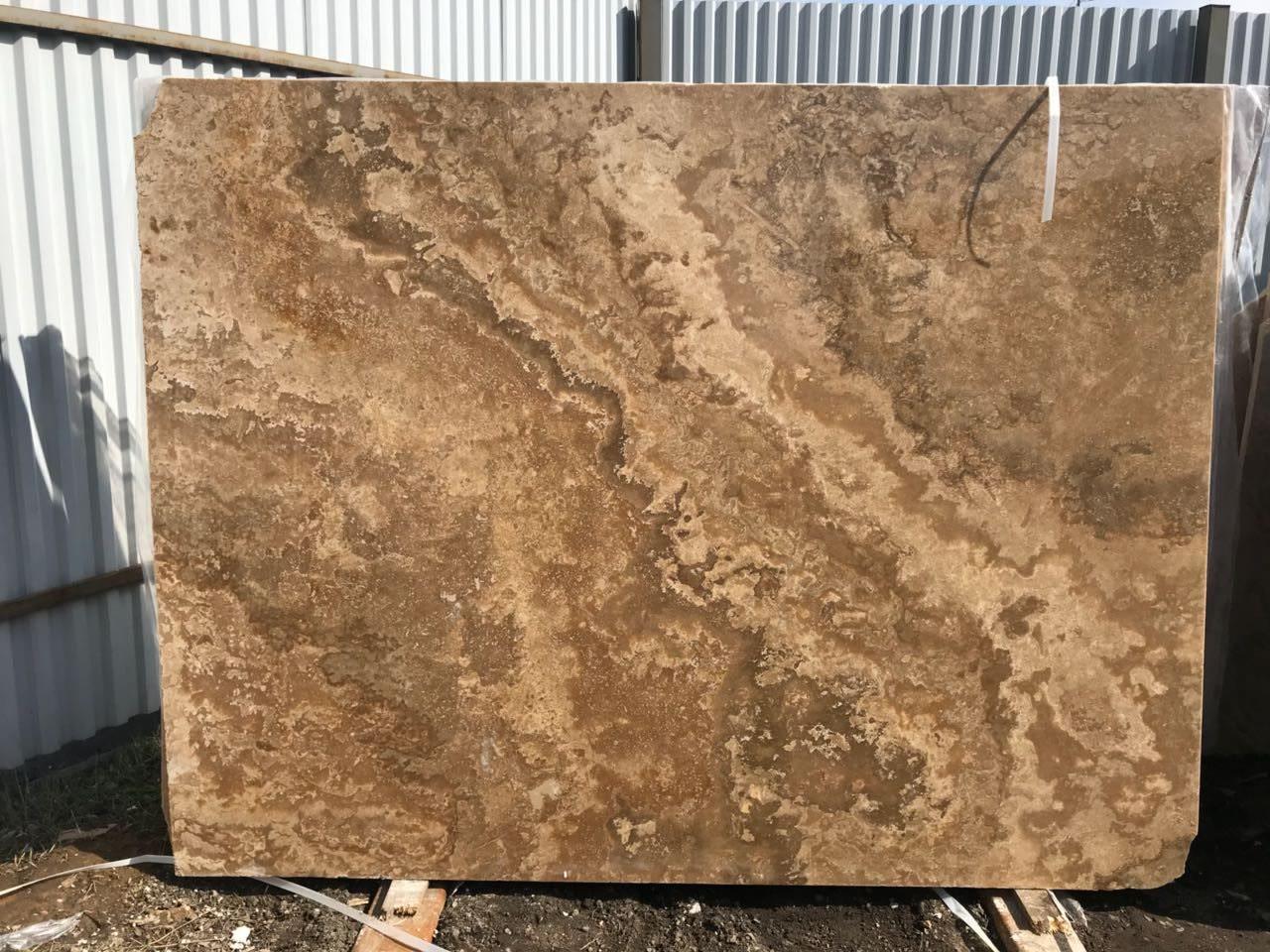
  • Polished golden travertine slab
    Photograph: Travertine
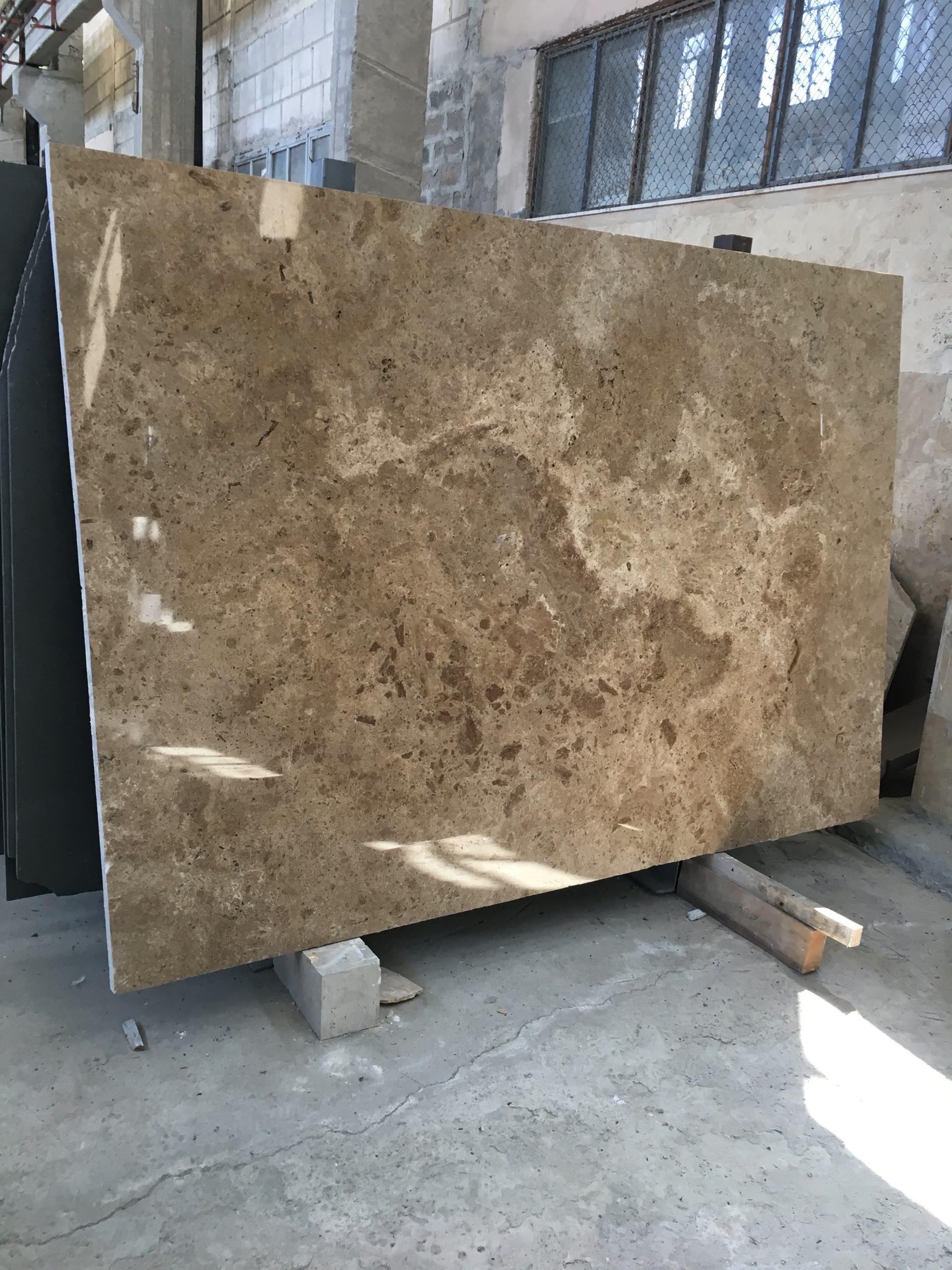
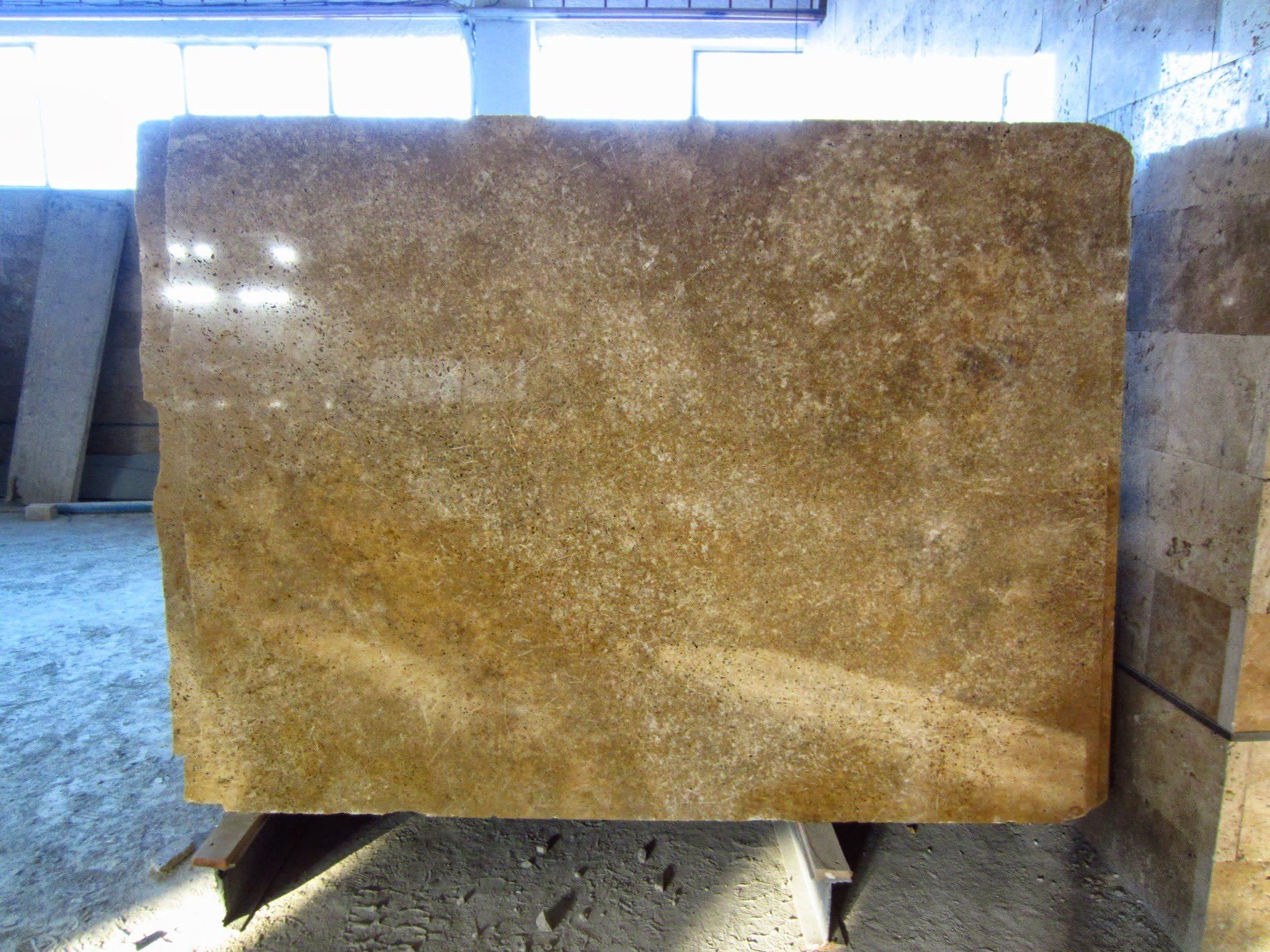
  • Polished cross-cut travertine slab standing in the workshop
    Photograph: Travertine

01

Polished

Mirror-like gloss that deepens colour and sharpens the pattern.

A polished surface is ground with progressively finer abrasives until it reflects light. Colour looks deeper and the banding and structure of the stone read more clearly. It is a finish for interiors and sheltered areas where a formal, smooth surface is wanted.

Good for

  • Interior floors with light to moderate traffic
  • Wall cladding and feature walls
  • Worktops, vanity tops and furniture tops
  • Surfaces where the pattern of the stone should be the focus

Consider

  • Low friction when wet, so it is not usually specified for exterior or wet-area floors
  • Shows scratches and acid etching more readily than a honed surface
  • On travertine, a polished surface is usually specified with filled pores; confirm the combination
  • Gloss level depends on the stone; approve it against a sample

Availability by stone

  • Travertine Available
  • Tuff Not listed
  • Basalt Ask us
Diagram

02

Honed

Smooth, flat surface with a low sheen.

A honed surface is ground smooth but not taken to a gloss. It has a soft, low-reflectance sheen and an even feel underfoot. Honed finishes are commonly specified for travertine floors and walls.

Good for

  • Interior floors and walls
  • Bathrooms and kitchens, with a sealing and maintenance plan
  • Spaces where glare should be kept low
  • Stairs and thresholds, once slip resistance is confirmed for the product

Consider

  • Slip resistance varies with the stone and the grit used; ask for test data for wet areas
  • Less reflective than polished, so colour looks lighter and flatter
  • Acidic cleaners can still etch calcareous stone such as travertine
  • Filled or unfilled pores remain a separate choice on travertine

Availability by stone

  • Travertine Available
  • Tuff Ask us
  • Basalt Ask us
Diagram

03

Matt

Non-glossy, even surface with minimal reflection.

A matt surface has little or no gloss and an even, velvety appearance. PetroStone lists matt as a finish of its own, alongside honed. Suppliers use the two terms differently, so agree the sheen you expect on a sample.

Good for

  • Interior floors and walls where glare is unwelcome
  • Large, uninterrupted surfaces
  • Interiors that call for a calm, uniform surface

Consider

  • Sheen is judged by eye; agree the level on a physical sample
  • Matt and honed overlap, so describe the sheen you expect in the RFQ
  • Slip resistance still depends on the stone and the surface; check test data
  • Acidic cleaners can etch calcareous stone such as travertine

Availability by stone

  • Travertine Available
  • Tuff Not listed
  • Basalt Not listed
Diagram

04

Antiqued

Aged surface with softened edges, as if worn by use.

An antiqued finish gives stone a worn, aged look. Edges and corners are softened and the surface is lightly textured, typically by tumbling or brushing. It suits projects where the stone should look established rather than new. PetroStone lists this finish as Antique.

Good for

  • Exterior paving, terraces and garden paths
  • Wall cladding with a weathered character
  • Restoration and heritage-style projects
  • Stairs where a softened edge is wanted

Consider

  • Softened edges make joints between units more visible than on a crisp sawn edge
  • Texture varies from piece to piece; approve a range of samples, not a single tile
  • On travertine, antiqued surfaces are often left with unfilled pores; agree the pore treatment separately
  • Textured surfaces hold dust and dirt more readily than smooth ones

Availability by stone

  • Travertine Available
  • Tuff Not listed
  • Basalt Not listed
Diagram

05

Tumbled

Rounded edges and a softly worn surface from drum tumbling.

Tumbled stone is processed in a drum with abrasives, which rounds the edges and corners and leaves a softly textured, slightly uneven surface. It resembles an antiqued finish but is often more pronounced, with a more irregular edge.

Good for

  • Rustic and traditional paving
  • Courtyards, terraces and garden floors
  • Walls and splashbacks that should look aged

Consider

  • Edge and surface irregularity depends on the degree of tumbling; agree it on a sample
  • Wider joints may be needed to absorb variation in size
  • Thickness varies more than on a sawn or ground surface; check what the fixing method allows
  • Availability is confirmed per enquiry

Availability by stone

  • Travertine Ask us
  • Tuff Not listed
  • Basalt Not listed
Diagram

06

Brushed

Brushed surface with a textured, weathered feel.

Brushing uses rotating wire or abrasive brushes to wear away the softer parts of the surface, so the harder structure stands slightly proud. The result is a tactile, weathered face with muted colour.

Good for

  • Floors and walls that should feel aged to the touch
  • Interior and sheltered exterior surfaces
  • Stone whose banding or porosity the brushing brings out

Consider

  • Depth of texture depends on the stone and the brush; approve it on a sample
  • Brushing can open pores in travertine; agree the pore treatment
  • Texture holds dust and dirt; plan for maintenance
  • Availability is confirmed per enquiry

Availability by stone

  • Travertine Ask us
  • Tuff Not listed
  • Basalt Not listed
Diagram

07

Sandblasted

Even, fine-grained roughness from abrasive blasting.

Sandblasting projects abrasive grit at the surface under pressure. It removes the sheen, usually lightens the tone, and leaves a uniform, fine-grained roughness. It is often used on dense stone where a non-slip surface is needed.

Good for

  • Exterior stairs, ramps and paving where grip matters
  • Dense, dark stone such as basalt
  • Wall cladding with a uniform matt appearance

Consider

  • Depth of texture depends on grit and pressure; specify the level on a sample
  • Colour appears lighter and less saturated than on a polished or honed face
  • Slip resistance still has to be confirmed with test data for the product
  • Availability is confirmed per enquiry

Availability by stone

  • Travertine Ask us
  • Tuff Not listed
  • Basalt Ask us
Diagram

08

Bush-hammered

Dimpled, textured surface for grip and character.

A bush hammer, a tool with a many-pointed head, strikes the surface repeatedly to leave a pattern of small dimples. The result is a coarse, tactile face with a lighter, more matt look than sawn stone. It is a finish for exterior paving and stairs.

Good for

  • Exterior paving, terraces and ramps
  • Stairs and thresholds exposed to rain
  • Plinths, retaining walls and facade bases
  • Surfaces where slip resistance is a priority

Consider

  • Texture depth and regularity depend on the stone and the tool
  • Edges are usually left sawn or lightly chamfered; state the edge treatment
  • Strong texture is harder to clean and rough on bare feet
  • Slip resistance still has to be confirmed with test data for the product

Availability by stone

  • Travertine Available
  • Tuff Ask us
  • Basalt Ask us
Diagram

09

Natural

Surface left as formed, with no decorative finishing step.

A natural finish keeps the surface the stone has when it leaves the quarry or the splitting process, without grinding or tooling. The term is used differently between suppliers, so a reference sample is the safest way to define it.

Good for

  • Walling and rustic cladding
  • Landscape features and retaining walls
  • Projects that want the raw character of the stone

Consider

  • Thickness and flatness vary more than on sawn or ground surfaces
  • Because suppliers use the term differently, agree it on a sample
  • Not suited to floors or other surfaces that must be flat
  • Availability is confirmed per enquiry

Availability by stone

  • Travertine Ask us
  • Tuff Ask us
  • Basalt Not listed
Diagram
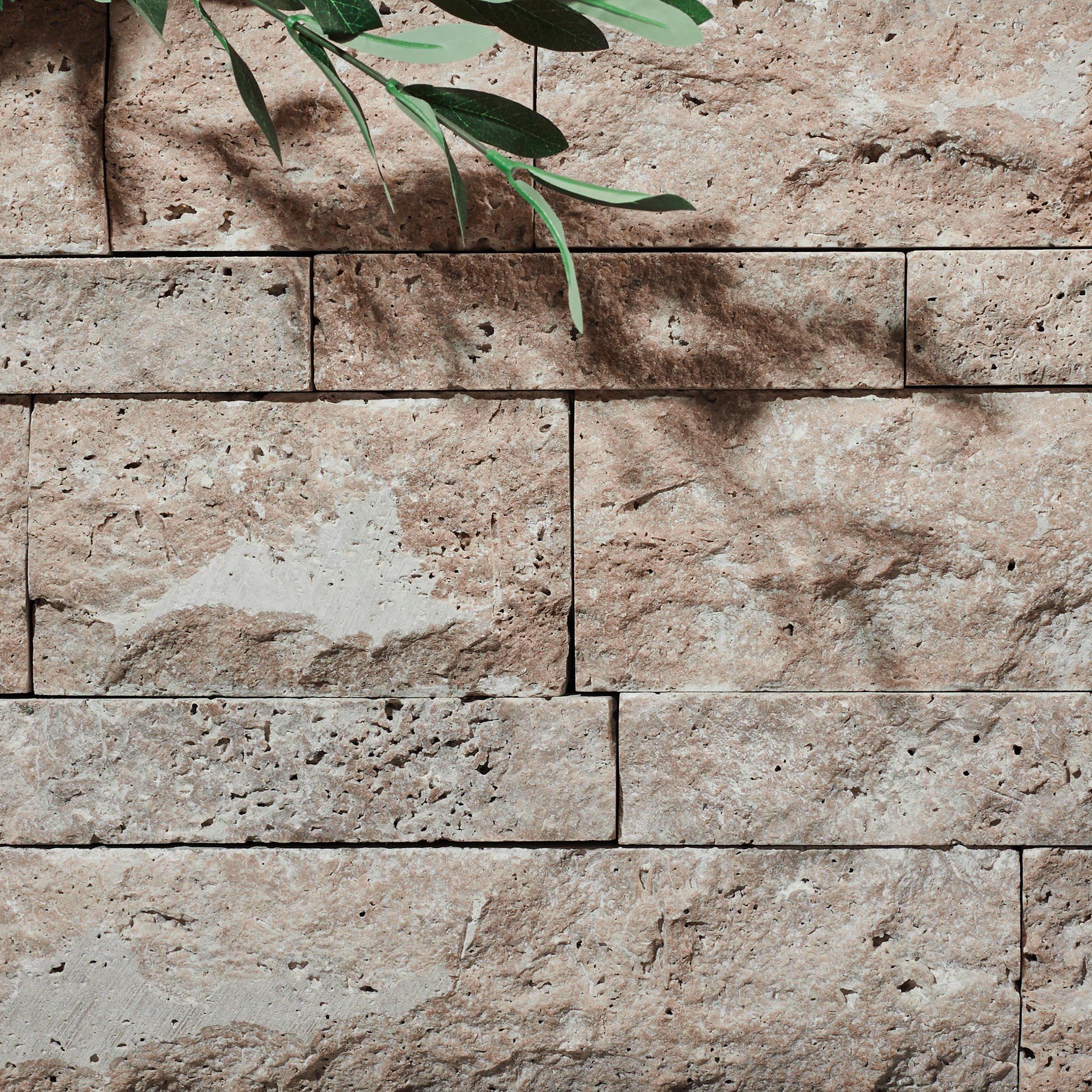
  • Split-face travertine strips on a wall
    Photograph: Travertine
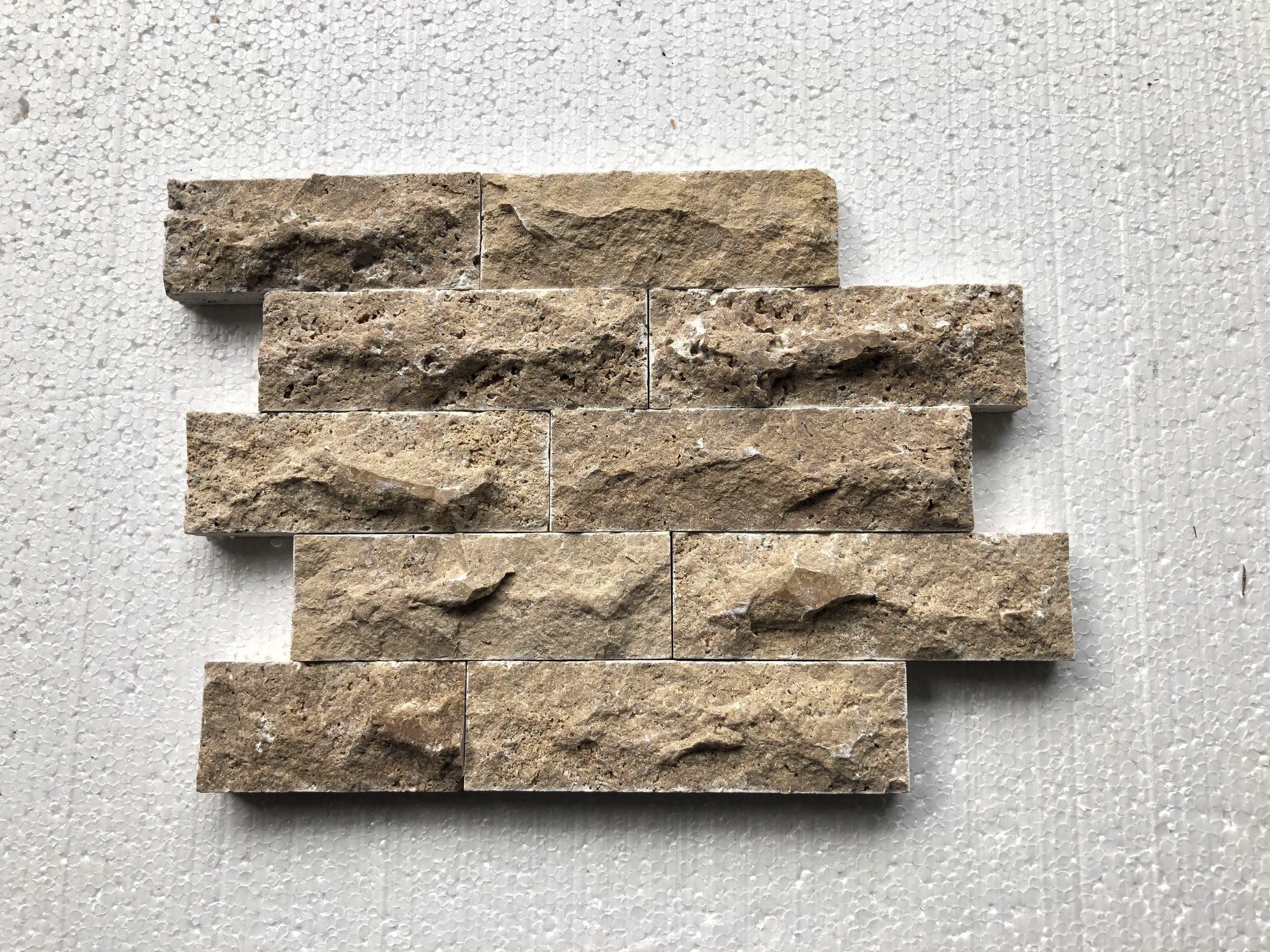
  • Split-face travertine ledger panel
    Photograph: Travertine

10

Split-face

Rough, riven face with strong relief and sawn beds.

A split-face surface is made by splitting the stone along a plane, which leaves a rough, irregular face with natural relief. The top and bottom edges, the beds, are usually sawn so that units stack neatly. It is widely used for cladding strips, ledger panels and walling.

Good for

  • Wall cladding and ledger panels
  • Feature walls inside and outside
  • Garden walls and planters
  • Facade areas that need depth and shadow

Consider

  • Relief varies from piece to piece and changes how deep the cladding sits; state the range you accept
  • Fixing and pointing details differ from flat cladding; confirm the system
  • Texture collects dust and water; check how it will weather
  • Not for floors or walking surfaces

Availability by stone

  • Travertine Available
  • Tuff Ask us
  • Basalt Ask us
Diagram

11

Sawn

The surface left by the saw: flat, with fine cut marks.

A sawn surface is left as it comes from the saw, without further finishing. It is flat, with fine cut marks, and has a muted appearance. It is the starting point for other finishes and is also used in its own right where a plain, unpolished surface is acceptable.

Good for

  • Facade cladding and walls with a plain, matt surface
  • Flat top faces on pavers and kerbs
  • Stock that will be finished further

Consider

  • Saw marks can be directional and show in raking light; agree what is acceptable on a sample
  • Slip resistance depends on the stone and the cut; check test data before specifying it for floors
  • Colour looks flatter than on a honed or polished face
  • Different saws leave different marks; say so if the look matters

Availability by stone

  • Travertine Available
  • Tuff Ask us
  • Basalt Ask us

02 Travertine

Filled or unfilled pores

The pore treatment is a choice of its own. It is not a finish, and it applies to travertine only.

  • Diagram

    Filled

    The natural voids are filled and the surface is ground flat. The result is a closed, even surface that is easier to clean, and it is the usual pairing for polished and honed finishes.

  • Diagram

    Unfilled

    The voids are left open. The surface keeps its natural, textured character and a more rustic look, and it holds more water and dirt than a filled surface.

Both treatments are standard for our travertine. State which one you need in the enquiry, together with the cut and the finish.

03 Travertine

Vein cut and cross cut

The cut sets the pattern of the sawn stone before any finish is applied. It is decided in production and cannot be changed afterwards.

  • Vein-cut travertine slab with fine parallel banding

    Vein cut

    The layers of the stone appear as long, roughly parallel bands, so the pattern has a direction.

  • Cross-cut travertine slab showing its cloudy pattern

    Cross cut

    The same layering appears as a cloudy, mottled pattern with no strong direction.

Request for quotation

Tell us what you need.

Stone. Dimensions. Quantity. Destination.

We will prepare the quotation for your project.

Or write to sales@petro-stone.am