

03 Applications
Natural stone stairs
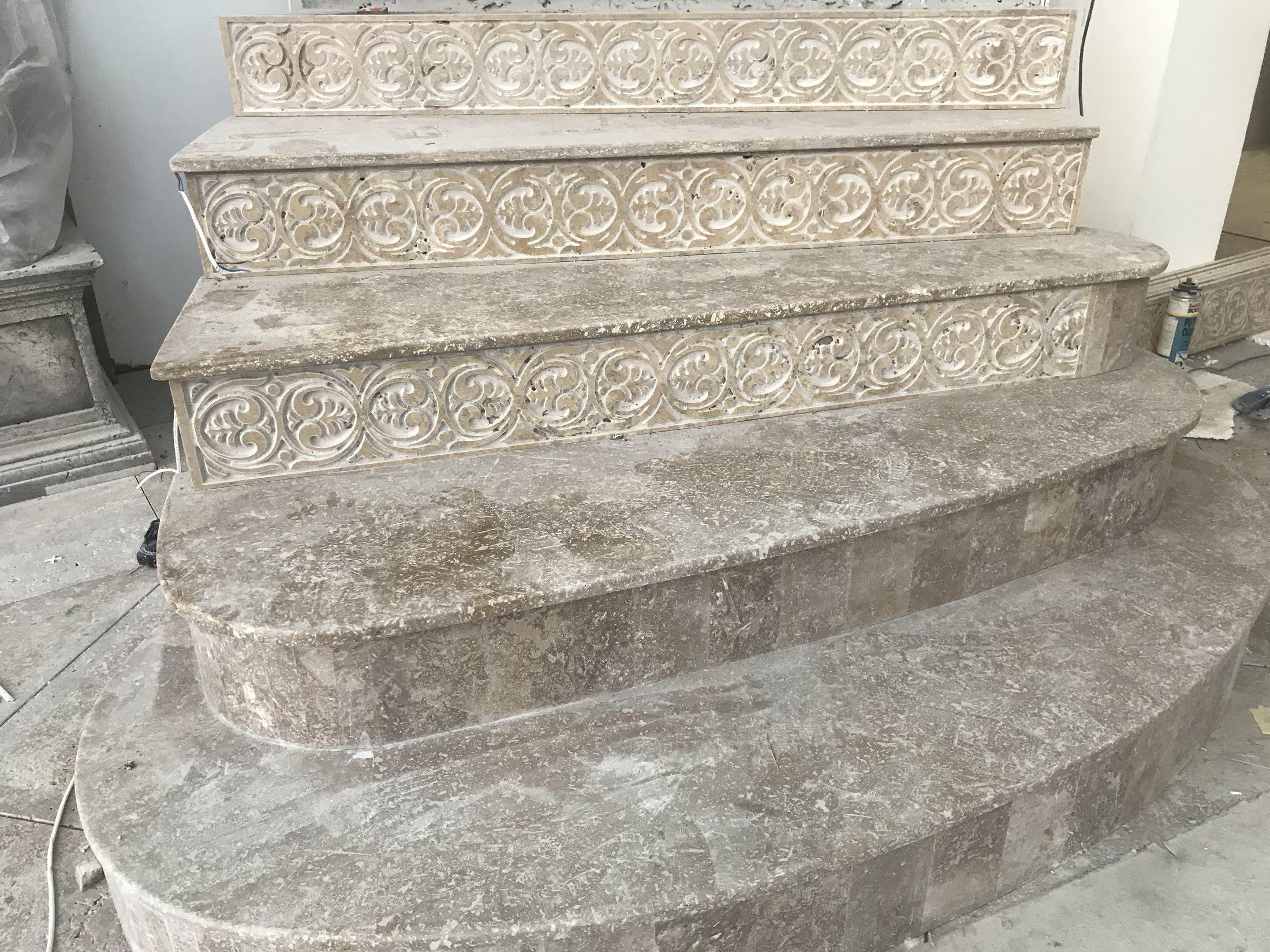
Treads, risers, landings and balusters cut to stair drawings.
01 Overview
About this application
A stone stair is structure and surface at once. Treads, risers, landings and balusters are cut to a stair drawing, and the nosing and the tread surface decide how it wears.
Travertine steps are a standard format, from straight treads to curved flights and carved risers, with newel posts and balusters made to drawings. For basalt, which is dense and hard-wearing, ask us: stair pieces are discussed as cut-to-size or architectural elements, which are quoted on request.
Specify the tread surface for the exposure. Exterior stairs usually take a textured finish such as bush-hammered or antiqued; interior stairs may be honed. Nosings are the most exposed edge, so tread thickness and edge profile deserve as much attention as the stone.
Send a stair schedule with the number of steps, the going, the rise, the width and the thickness you propose, plus the support condition and the nosing profile. Check the slip resistance and the rise and going rules that apply where the stair is built.
02 Checklist
What to check
Points to settle before you specify stone for this use. Ask for test data on every point that matters to your project.
- 01 Slip resistance of treads and nosings, wet and dry
- 02 Tread thickness and the way it is supported: wall to wall, stringer or cantilever
- 03 Nosing profile and the durability of the edge
- 04 Local rules for rise, going and anti-slip requirements
- 05 Frost and de-icing salts on exterior stairs, and the drainage fall of each tread
- 06 Colour continuity from tread to riser to landing
- 07 Handling and packing of long, thin pieces
- 08 Replacement pieces if a tread is damaged later
03 Recommended
Stones, formats and finishes
General guidance drawn from what we supply, with availability as we have confirmed it. The final selection depends on test data for the stone, the finish and the project.
Stones
- 01
Travertine
Own quarry at the Ararat deposit, Armenia
Layered, warm-toned stone from our own quarry in Armenia.
- 02
Basalt
Supplied through partner quarries in Armenia
Dense, dark volcanic stone for restrained, hard-wearing surfaces.
How to read the marks
- Available
- A regular offer, confirmed by PetroStone.
- On request
- Possible for specific orders, confirmed for each enquiry.
- Ask us
- Not confirmed yet. Tell us what you need and we will say whether we can supply it.
Formats
| Format | Travertine Own quarry | Basalt Supplied |
|---|---|---|
| Steps Treads, risers and landings cut to your stair drawings. | Available | Ask us |
| Cut-to-size Slab, tile and strip pieces cut to your drawings. | Available | On request |
| Architectural elements Profiled, turned and carved pieces made to your drawings. | Available | On request |
Finishes
| Finish | Travertine Own quarry | Basalt Supplied |
|---|---|---|
| Bush-hammered Dimpled, textured surface for grip and character. | Available | Ask us |
| Antiqued Aged surface with softened edges, as if worn by use. | Available | Not listed |
| Honed Smooth, flat surface with a low sheen. | Available | Ask us |
04 Photographs
In the photographs
Pictures from the PetroStone library. Each caption names the stone shown.
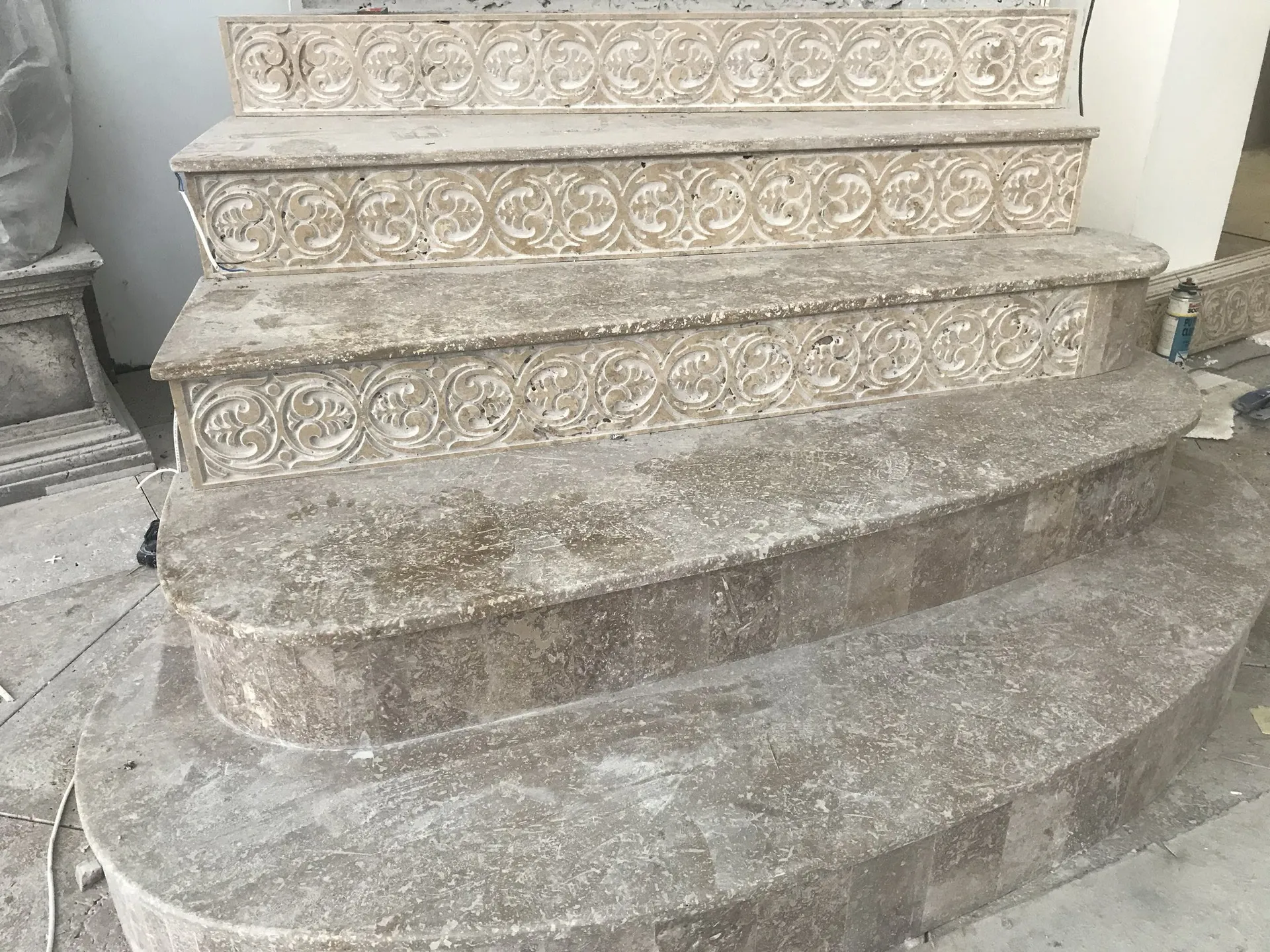
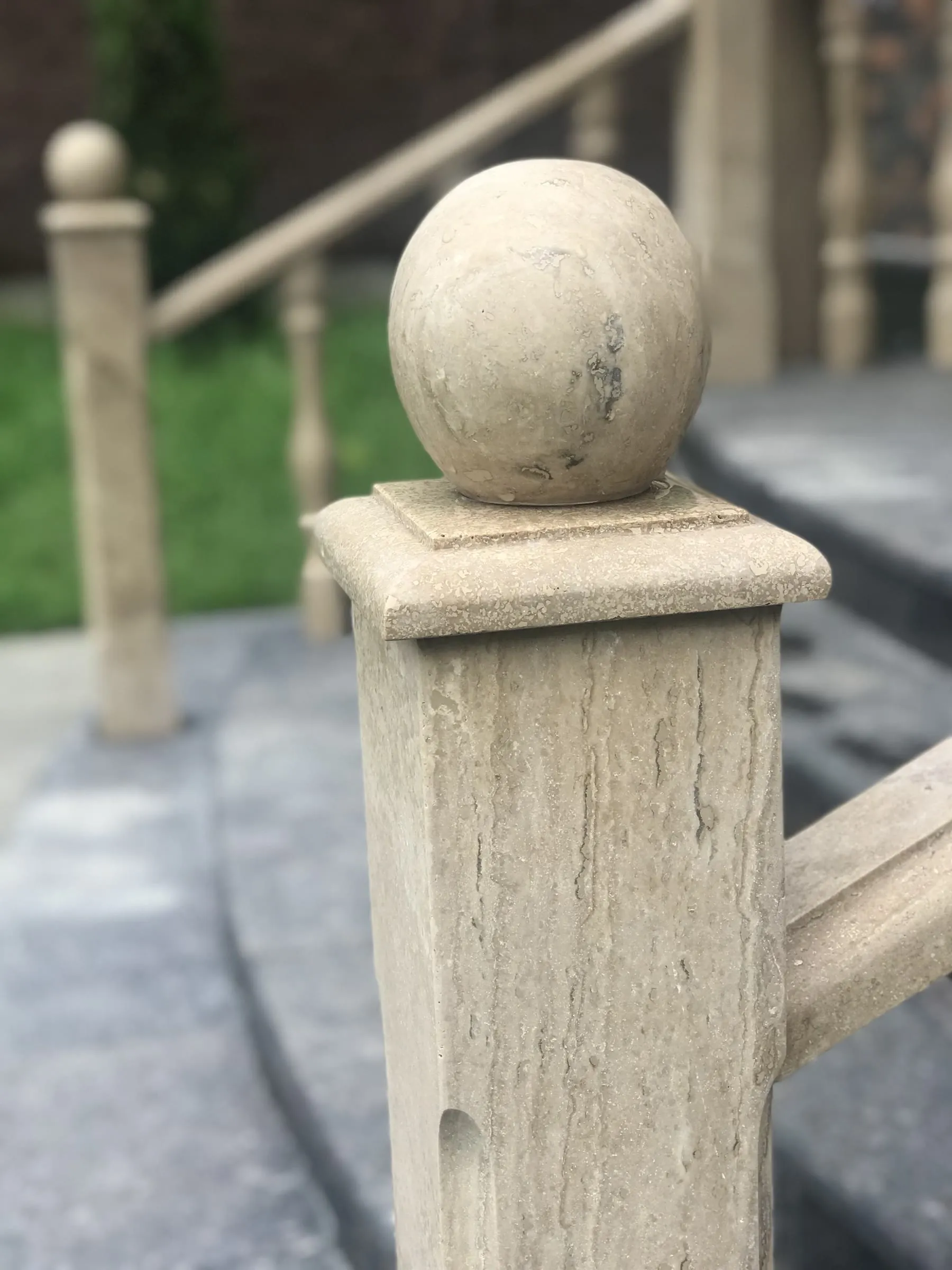
Pictures marked “Installed use” show finished work. The projects are not named.
05 Guides
Related guides
Longer reading on the choices behind this application.
- 01 Natural stone finishes explained Polished, honed, matt, antiqued, bush-hammered, sawn and split-face finishes in plain terms, with guidance on where each is used and how to approve one.
- 02 Vein cut vs cross cut travertine, filled vs unfilled pores How vein cut and cross cut change the look of travertine, what filled and unfilled pores mean, and how to specify both in a request for quotation.
- 03 How to prepare a natural stone RFQ A practical checklist for importers and architects: what to specify, which drawings to send, and how to state units, destination and delivery basis.
Request for quotation
Tell us what you need.
Stone. Dimensions. Quantity. Destination.
Application: Stairs
Quote by format
Or write to sales@petro-stone.am