

03 Applications
Stone for exterior paving
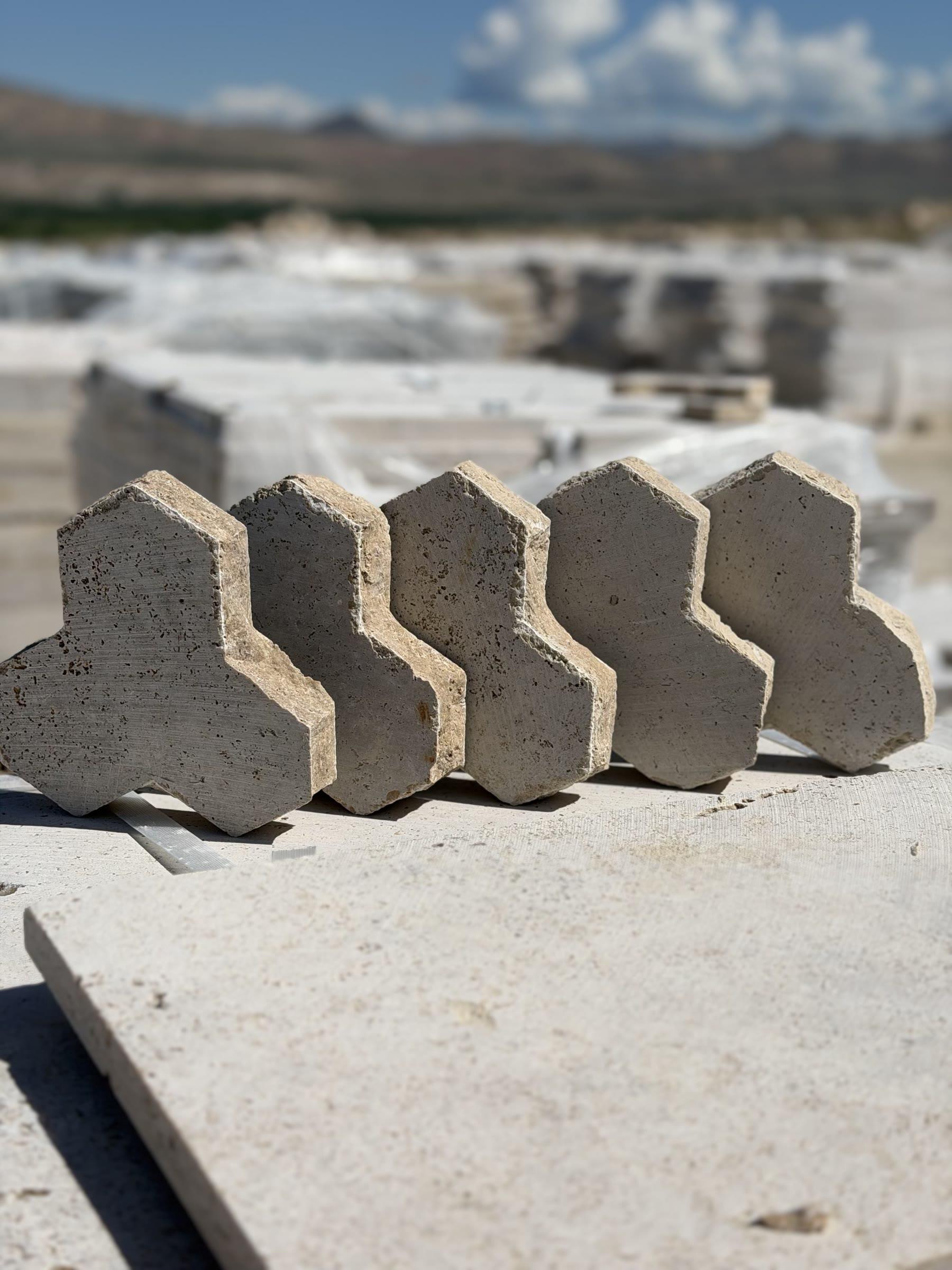
Pavers, tiles and slabs for terraces, paths and plazas.
01 Overview
About this application
Paving takes foot traffic, rain and sun, and in some climates frost and de-icing salt. The stone, the finish and the thickness have to be chosen together.
Travertine pavers come in cobblestone and shaped forms, and travertine tiles and slabs cover larger paved areas. Basalt is a dense stone often considered for hard-wearing paving. Tuff is generally chosen for walls and details rather than for paving that carries traffic, because of its porosity.
Finish decides grip. Textured finishes such as bush-hammered and antiqued give more traction than smooth ones. On travertine, unfilled pores keep a natural look but hold more water and dirt than filled pores, so match the pore treatment to the exposure and the maintenance plan.
Paving units are laid on a prepared base in sand or mortar, so their thickness follows the bedding method and the load. State whether the surface is pedestrian only or sees occasional vehicles, and ask for test data for slip resistance and frost behaviour in your climate.
02 Checklist
What to check
Points to settle before you specify stone for this use. Ask for test data on every point that matters to your project.
- 01 Slip resistance of the finished surface when wet
- 02 Frost, thaw and de-icing salt exposure
- 03 Water absorption and how quickly the surface dries
- 04 Traffic type: pedestrian only or occasional vehicles
- 05 Unit thickness against the bedding and the sub-base
- 06 Joint width, laying pattern and the size tolerance between units
- 07 Tone variation across large areas: blend units from several packs while laying
- 08 Cleaning, sealing and ice removal without damaging the surface
03 Recommended
Stones, formats and finishes
General guidance drawn from what we supply, with availability as we have confirmed it. The final selection depends on test data for the stone, the finish and the project.
Stones
- 01
Travertine
Own quarry at the Ararat deposit, Armenia
Layered, warm-toned stone from our own quarry in Armenia.
- 02
Basalt
Supplied through partner quarries in Armenia
Dense, dark volcanic stone for restrained, hard-wearing surfaces.
How to read the marks
- Available
- A regular offer, confirmed by PetroStone.
- On request
- Possible for specific orders, confirmed for each enquiry.
- Ask us
- Not confirmed yet. Tell us what you need and we will say whether we can supply it.
Formats
| Format | Travertine Own quarry | Basalt Supplied |
|---|---|---|
| Pavers Cobblestone pavers and shaped units for exterior paving. | Available | Ask us |
| Tiles and strips Modular tiles, cladding strips and French pattern sets. | Available | On request |
| Slabs Large-format panels sawn from blocks. | Available | On request |
Finishes
| Finish | Travertine Own quarry | Basalt Supplied |
|---|---|---|
| Bush-hammered Dimpled, textured surface for grip and character. | Available | Ask us |
| Antiqued Aged surface with softened edges, as if worn by use. | Available | Not listed |
| Sawn The surface left by the saw: flat, with fine cut marks. | Available | Ask us |
04 Photographs
In the photographs
Pictures from the PetroStone library. Each caption names the stone shown.
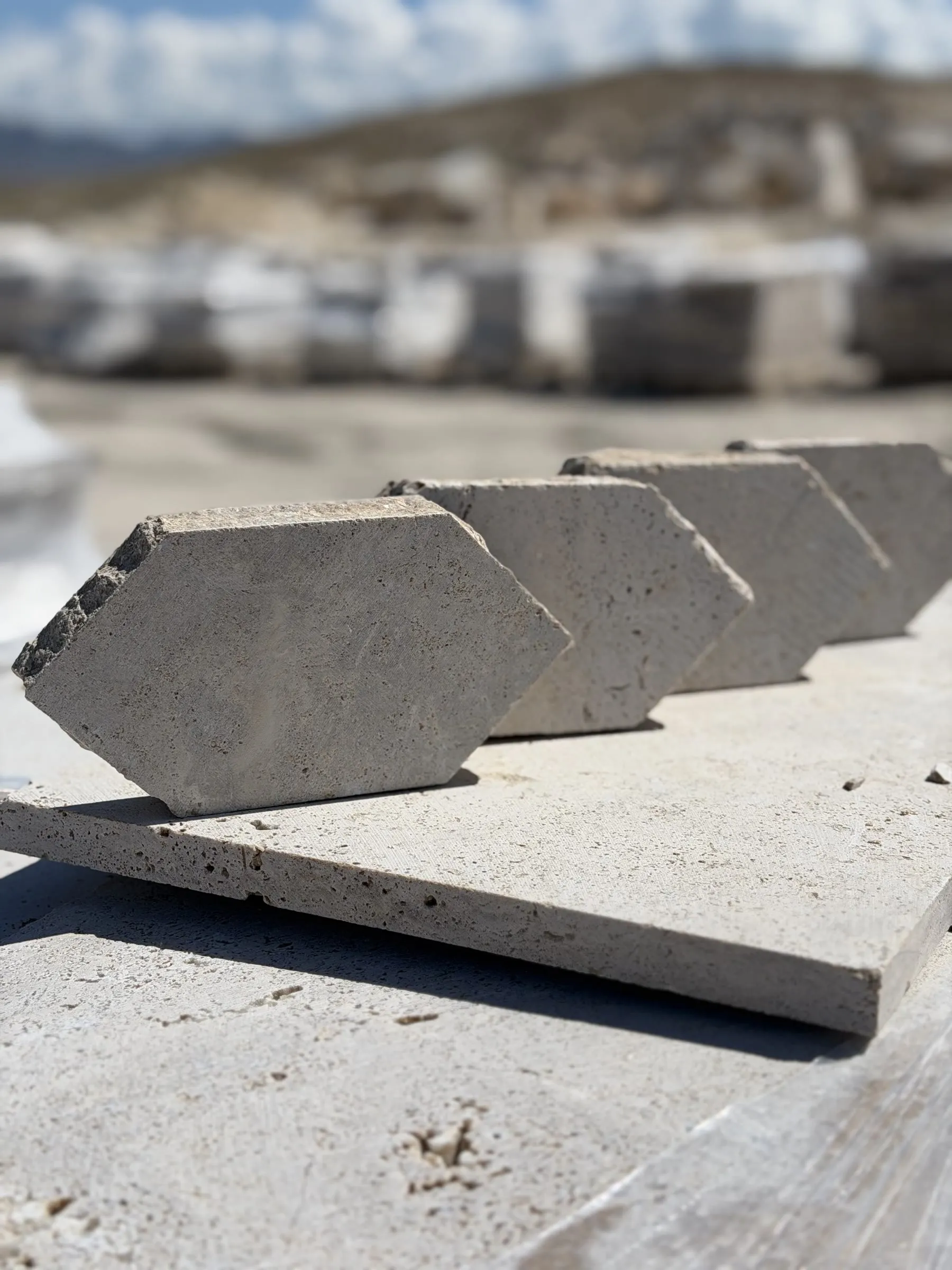
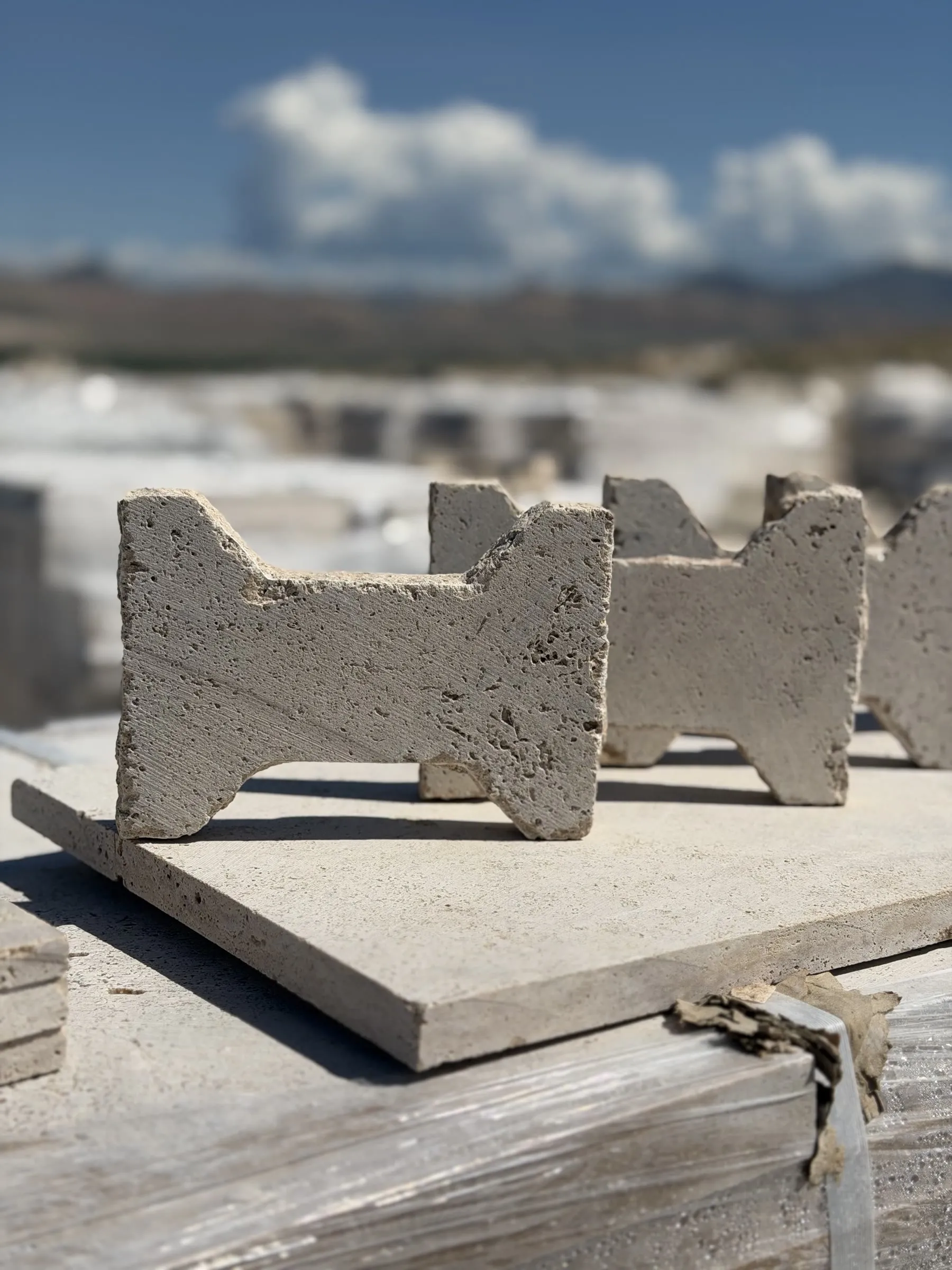
These pictures show the stone and its formats, not finished installations.
05 Guides
Related guides
Longer reading on the choices behind this application.
- 01 Natural stone finishes explained Polished, honed, matt, antiqued, bush-hammered, sawn and split-face finishes in plain terms, with guidance on where each is used and how to approve one.
- 02 Vein cut vs cross cut travertine, filled vs unfilled pores How vein cut and cross cut change the look of travertine, what filled and unfilled pores mean, and how to specify both in a request for quotation.
- 03 How to prepare a natural stone RFQ A practical checklist for importers and architects: what to specify, which drawings to send, and how to state units, destination and delivery basis.
Request for quotation
Tell us what you need.
Stone. Dimensions. Quantity. Destination.
Application: Exterior paving
Quote by format
Or write to sales@petro-stone.am