

A finish is the last treatment a stone surface receives. It changes how the stone looks, how it feels underfoot, how it wears and how much care it needs. This guide explains the common finishes in plain terms and shows where each is usually used. It describes natural stone in general. Which finishes are available in which stone is confirmed per enquiry, and the last section sets out what we offer.
Finish, cut and pore treatment are separate choices
For travertine, three decisions shape the surface. The cut, vein cut or cross cut, sets the pattern. The pore treatment, filled or unfilled, sets how the natural voids are handled. The finish sets how the face is worked.
Keep them apart in your specification. Unfilled is not a finish, and vein cut is not a finish. The guide to vein cut and cross cut travertine covers the first two.
Smooth finishes: polished, honed and matt
Polished
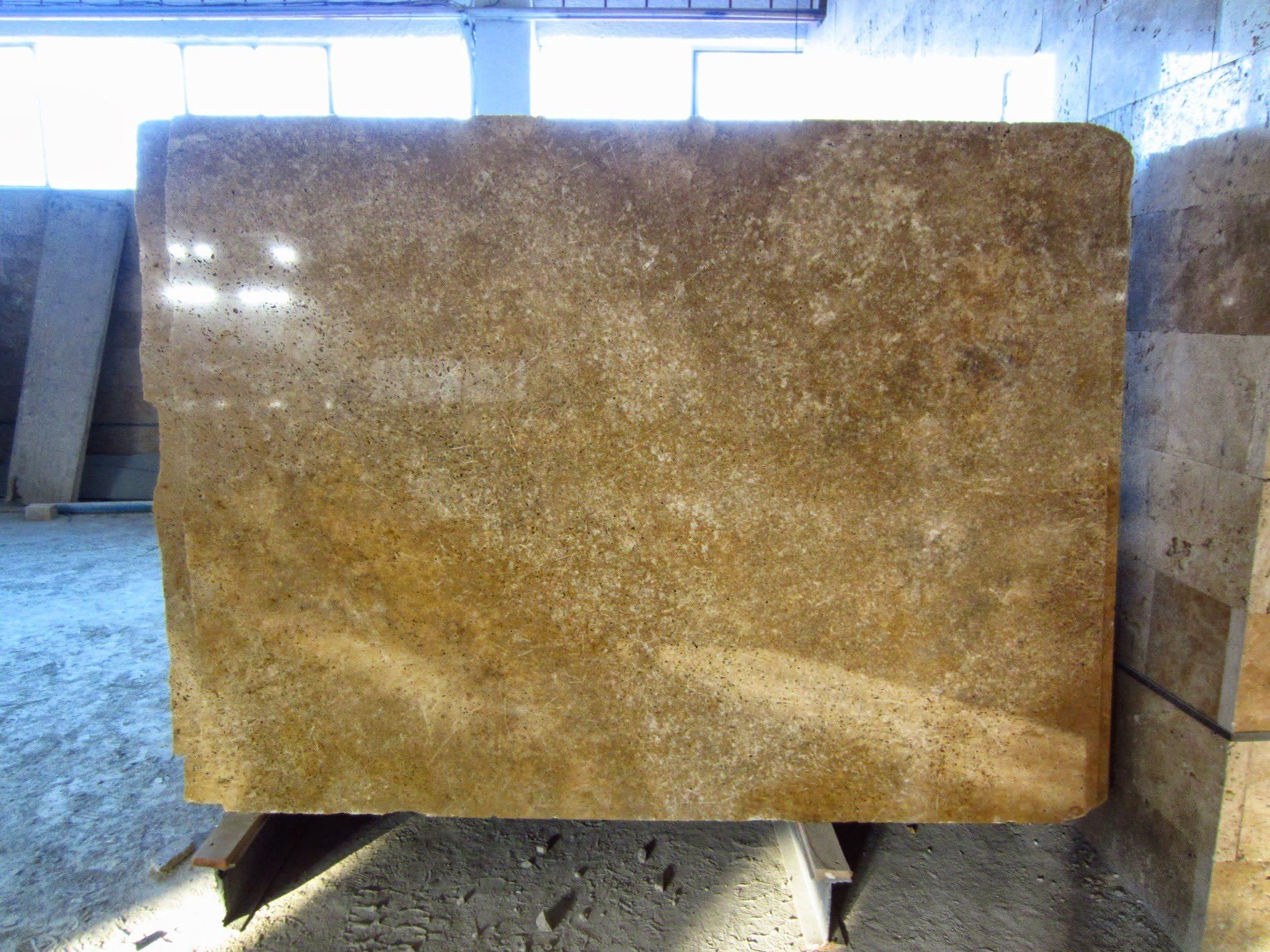
A polished surface is ground with progressively finer abrasives until it reflects light. Colour looks deeper and the pattern reads clearly. It is usually specified for interiors and sheltered areas. It has low friction when wet, and it shows scratches and acid etching more readily than other smooth finishes. On travertine it is normally combined with filled pores.
Honed
A honed surface is ground smooth but not taken to a gloss. It has a soft, low sheen and an even feel. Honed is one of the most common finishes for interior floors and walls. It hides marks better than polished, but acidic cleaners can still etch calcareous stone such as travertine.
Matt
A matt surface has little or no gloss and minimal reflection. Honed and matt are close, and suppliers use the two terms differently, so describe the sheen you expect and approve it on a sample. PetroStone lists matt as a finish of its own, alongside honed.
Aged and softened finishes: antiqued, tumbled and brushed
Antiqued
An antiqued finish gives a worn, aged look. Edges and corners are softened and the face is lightly textured, typically by tumbling or brushing. It suits exterior paving, cladding with a weathered character and restoration work. Softened edges make joints more visible, and texture varies from piece to piece, so approve a range of samples rather than one tile. PetroStone lists this finish as Antique.
Tumbled
Tumbled stone is processed in a drum with abrasives, which rounds the edges and corners and leaves a softly uneven surface. It resembles antiqued but is often more pronounced. Expect more variation in thickness and size, and allow for it in the joint width and the fixing method.
Brushed
Rotating wire or abrasive brushes wear away the softer parts of the surface and leave the harder structure standing slightly proud. The result is tactile and weathered, with muted colour. On travertine, brushing can open pores, so agree the pore treatment at the same time.
Textured finishes: bush-hammered and sandblasted
Bush-hammered
A bush hammer, a tool with a many-pointed head, strikes the surface repeatedly and leaves a pattern of small dimples. The face is coarse and tactile, with a lighter, more matt look than sawn stone. It is a common choice for exterior paving, ramps and stairs, where grip matters. Strong texture is harder to clean, so plan the maintenance, and state how the edges are treated.
Sandblasted
Abrasive grit is projected at the surface under pressure. The sheen is removed, the tone usually lightens, and the surface becomes uniformly rough at a fine scale. It is often used on dense stones where a non-slip surface is needed. The depth of the texture depends on the grit and the pressure, so specify it on a sample.
Tool-marked and riven surfaces: sawn, split-face and natural
Sawn
A sawn surface is left as it comes from the saw. The face is flat, with fine parallel marks, and the appearance is muted. It is the starting point for other finishes and is used in its own right for cladding and for flat top faces on pavers. Saw marks can show in raking light, and different saws leave different marks, so agree what is acceptable on a sample.
Split-face
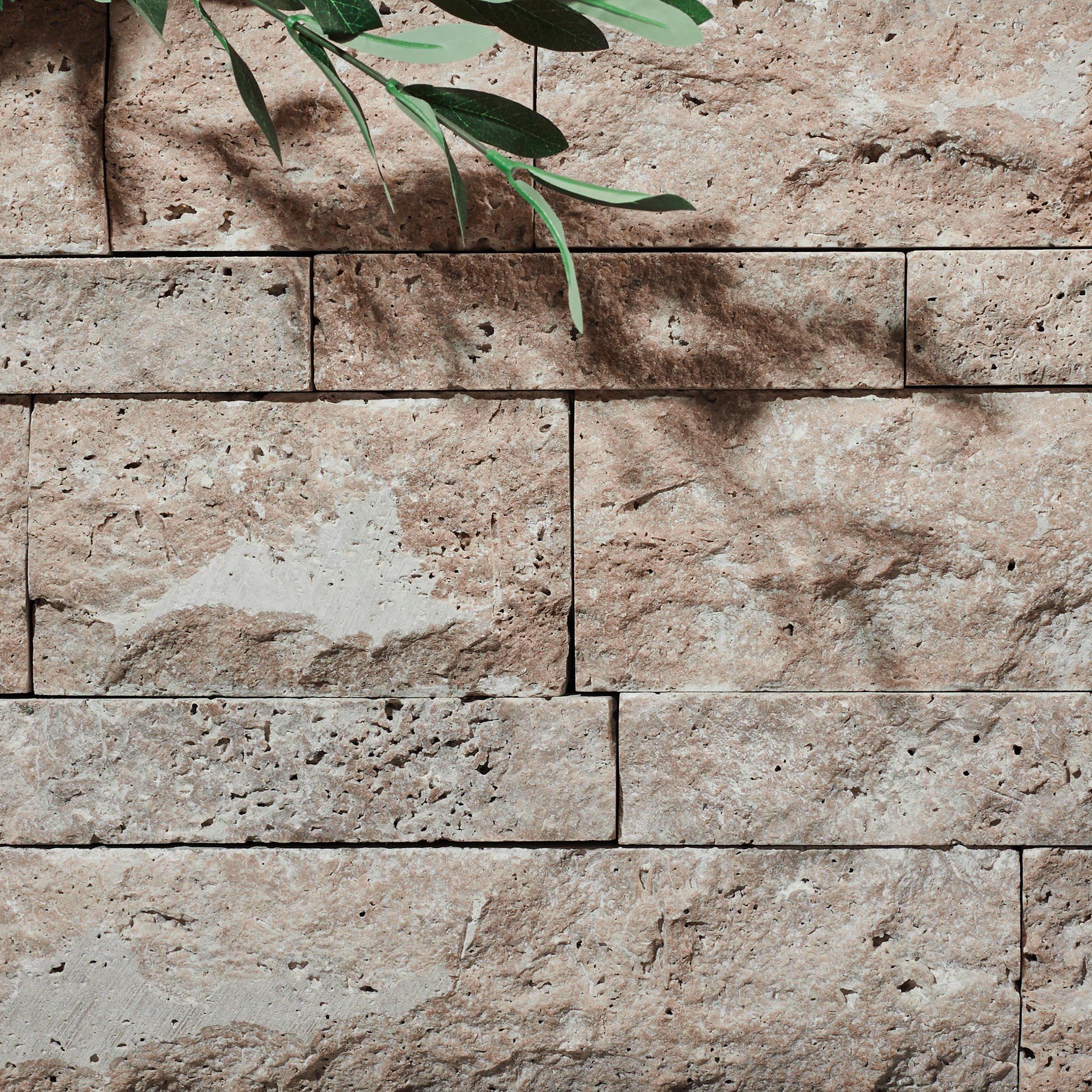
A split-face surface is made by splitting the stone along a plane, which leaves a rough face with natural relief. The beds, the top and bottom edges, are usually sawn so that units stack neatly. It is widely used for cladding strips, ledger panels and garden walls. Relief varies from piece to piece, so state the range you accept.
Natural
A natural finish is the surface the stone has when it leaves the quarry or the splitting process, with no grinding or tooling. The term is used differently by different suppliers, so define it with a reference sample. Thickness and flatness vary more than on sawn or ground surfaces, so it suits walls and landscape features, not floors.
Choosing a finish by use
- Interior floors and walls. Honed or matt for a calm surface, polished for a formal one, antiqued for a softer, aged look.
- Exterior paving, ramps and steps. Textured finishes such as bush-hammered, antiqued, sandblasted or split-face, depending on the stone.
- Facades. Sawn, honed, bush-hammered or split-face, chosen with the fixing system and the exposure in mind.
- Wall features. Split-face strips and ledger panels for relief; honed or sawn tiles for a flat plane.
- Wet areas and slopes. Ask for slip resistance test data for the product. A finish name does not promise a test value.
Slip resistance belongs to the product, not to the finish name
A rougher finish usually gives more grip, but the result depends on the stone, the depth of the texture, and how the surface wears and is cleaned. Slip resistance is measured on the finished product. When a surface will be wet or sloped, ask for test results for the stone and finish you will receive, and check them against the rules for the project. Do not infer a value from a finish name.
Approve a sample
A finish is judged by eye and by hand. Ask for a sample in the actual finish. Look at it in the light of the project, wet it, and keep it as the reference for the order. Natural stone varies, so a sample shows the character of the finish rather than an exact match for every piece. The sample form takes the stone, the finish and the size you want to see.
Finishes we offer
PetroStone’s own finish vocabulary is polished, honed, matt, antique, bush-hammered, sawn and custom. For travertine, polished, honed, matt, antiqued, bush-hammered, sawn and split-face are standard. For tumbled, brushed, sandblasted and natural surfaces, ask us: availability is confirmed per enquiry. For tuff and basalt, finishes are confirmed per enquiry. A custom finish can be specified in the RFQ; describe it and attach a reference photograph.
Compare the options on the finishes page, then send your specification through the RFQ form.