

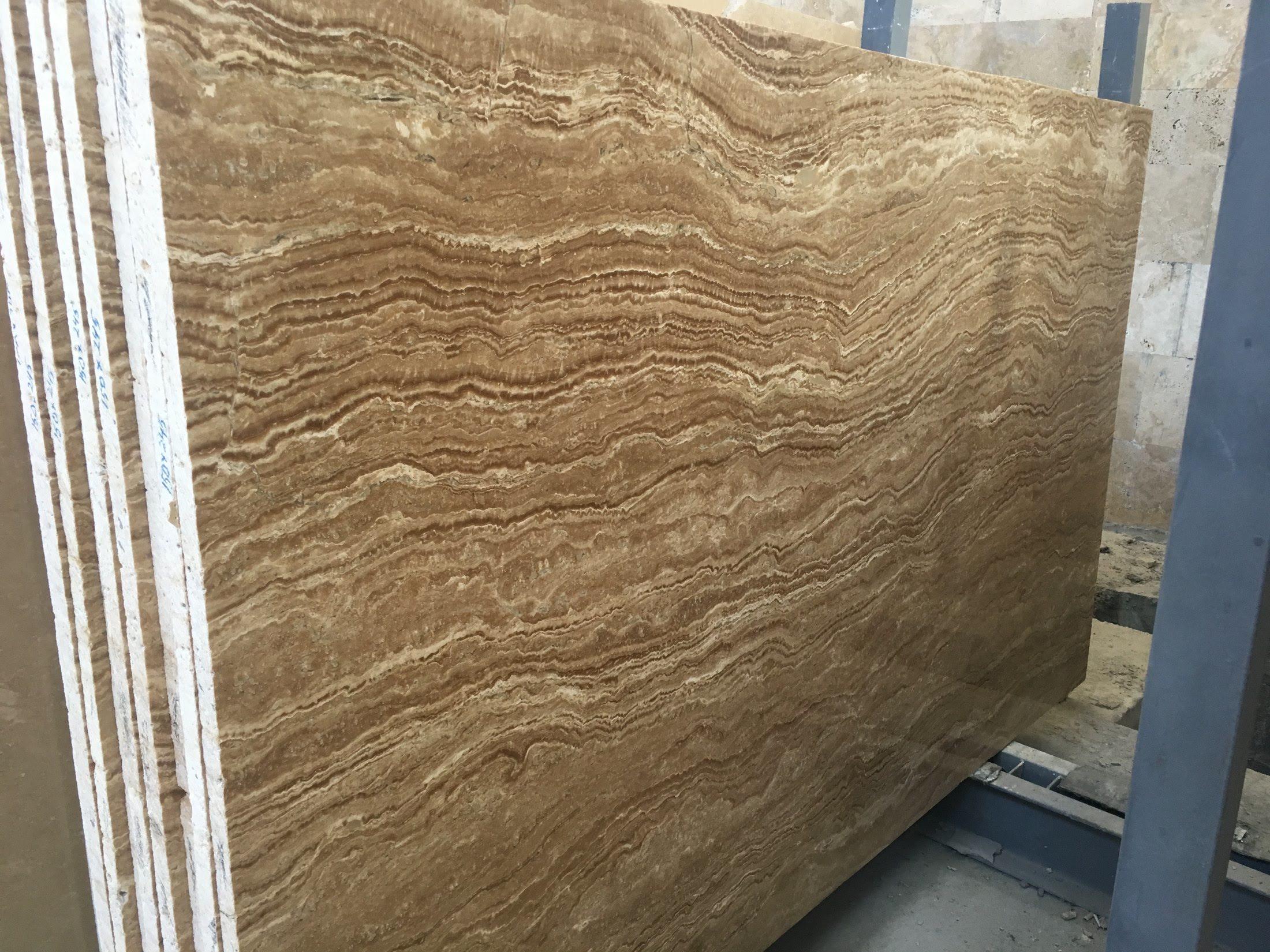
A clear request for quotation (RFQ) saves a round of questions. Stone is specified on more axes than most building materials: the stone itself, the format, the surface, the size, the quantity and the delivery. This guide lists what to state, in the order a supplier works through it. You can send everything through the RFQ form, or start with what you have and add detail as the project develops.
Start with the stone and the use
Name the stone: travertine, tuff or basalt. Do not describe it by colour alone. Black tuff and basalt are both dark, but they are different stones with different weight, porosity and behaviour. A dark tile is not necessarily basalt.
Then say where the stone will be used: facade, exterior paving, interior floor, stair, wall cladding or a detail. The use drives the finish, the thickness and the checks that matter, such as slip resistance for a ramp or frost exposure for a facade. The applications pages list what an architect usually checks in each case.
If you have a reference, send it. A photograph, a sample or a stone used on an earlier project says more about tone than any description. The pages on travertine, tuff and basalt show which formats and finishes each stone is quoted in.
Choose the format
State the product format, not a general description of what you need.
- Blocks, measured in m³, for buyers who cut and process the stone themselves.
- Slabs, measured in m².
- Tiles and strips. Tiles are measured in m², strips in linear metres (lm). French pattern sets are specified as a pattern rather than as a single size.
- Pavers: cobblestone and shaped paving units.
- Steps, made to a stair schedule.
- Cut-to-size pieces, made to your drawings.
- Architectural elements such as steps, sills, cornices, mouldings, balusters, capitals, columns, carved panels and basins, also made to drawings. Mouldings are measured in lm.
Kerbs are quoted per enquiry. Use one unit per line item and say which it is. Mixing square metres, linear metres and pieces in one line is a common cause of a wrong quotation. The products pages describe each format and what to specify for it.
Specify the surface and the stone options
Finish. Say how the face is worked: polished, honed, matt, antiqued, bush-hammered, sawn, split-face, or a custom finish that you describe. The finishes page compares them. If you need something that is not on the list, describe it and attach a reference photograph.
Cut and pores (travertine only). Travertine is specified by cut, vein cut or cross cut, and by pore treatment, filled or unfilled. Both are separate from the finish, and all three belong in the RFQ. The guide to vein cut and cross cut travertine explains the difference.
Tone and variation. Say how much variation you accept. If you need continuity across a large area, state it, because it affects how material is selected and packed.
Give sizes, thickness and tolerances
Sizes
List every size you need, with the quantity of each. For modular tiles, give the module. For anything that follows a layout, send the layout drawing and a schedule that matches it.
Thickness
Always state the thickness. It depends on the fixing method, the load and the format, and it cannot be assumed. If thickness must be consistent, say so, and say whether the pieces need to be calibrated.
Edges
State the edge for each piece: sawn, chamfered, rounded or profiled. Edges are visible on stairs, sills and cladding corners, so they are part of the appearance as well as the fit.
Tolerances
State any tolerance you require for thickness, flatness or dimensions, and ask for written confirmation. A tolerance is useful only when both sides agree it before production. Do not leave it to be assumed.
Send drawings and files in a usable form
For anything beyond standard sizes, a drawing is the clearest specification.
- Dimensioned plans and elevations in PDF.
- DWG or DXF files for custom shapes, profiles and curves.
- Schedules in XLSX, XLS or CSV with one row per piece: mark, description, dimensions, thickness, finish and quantity.
- Reference photographs in JPG or PNG.
- Specifications or notes in DOCX.
- A ZIP file to send several documents together.
The RFQ form accepts PDF, DWG, DXF, XLSX, XLS, CSV, DOCX, JPG, PNG and ZIP files. Name files so that they match the piece marks in your schedule, and state the revision of each drawing so that nobody quotes from an old issue.
State the quantity honestly
Give the net quantity first. Then say whether it includes an allowance for cutting waste and breakage. Allowances vary with the format and the layout, so give your own figure rather than leaving it to be assumed. If delivery is phased, give the quantity and the date for each phase.
Destination and delivery basis
State the country and the port or city. If you want delivery to site, give the site address and say how trucks reach it and what unloads them: forklift, crane or hand. Tell us whether you work with your own forwarder.
Name the delivery terms you prefer. We confirm the delivery basis in the quotation, so your preference is the starting point, not a commitment on either side. List the shipping and customs documents your country requires, such as origin documents and a packing list, so that they are prepared from the start.
Packing and marking
Packing is part of the specification. Say if your country requires ISPM-15 treated timber for crates and pallets, and whether you prefer crates or pallets. State how units should be marked and the maximum piece weight your site equipment can lift. The guide to how natural stone is packed for export explains typical practice.
Ask for samples and documents
If tone or finish matters, ask for a sample before you order. The sample form takes the stone, the finish and the size you want to see. A sample is a reference for tone, texture and finish, not an exact match for every piece in the order.
List the documents you need with the quotation. Technical documentation is provided with quotations when available for the selected stone, so name the properties and tests your project requires.
A short RFQ template
Copy this list and complete it.
- Project and application
- Stone, and a reference photograph
- Format and unit of sale
- Cut and pore treatment (travertine)
- Finish
- Sizes and thickness
- Edge profile
- Tolerances you require
- Quantity, with or without a waste allowance
- Packing and marking requirements
- Destination and preferred delivery terms
- Date required, and delivery phases
- Files attached
Common mistakes
- Describing the stone by colour only.
- Mixing units in one line item.
- Leaving out the thickness.
- Giving no destination.
- Writing “natural” as the finish without a reference. Suppliers use the word differently.
- Sending a drawing with no piece marks or revision.
When your list is ready, send it through the RFQ form. If a detail is not decided yet, say so. An RFQ with the open questions marked is more useful than one that guesses.